
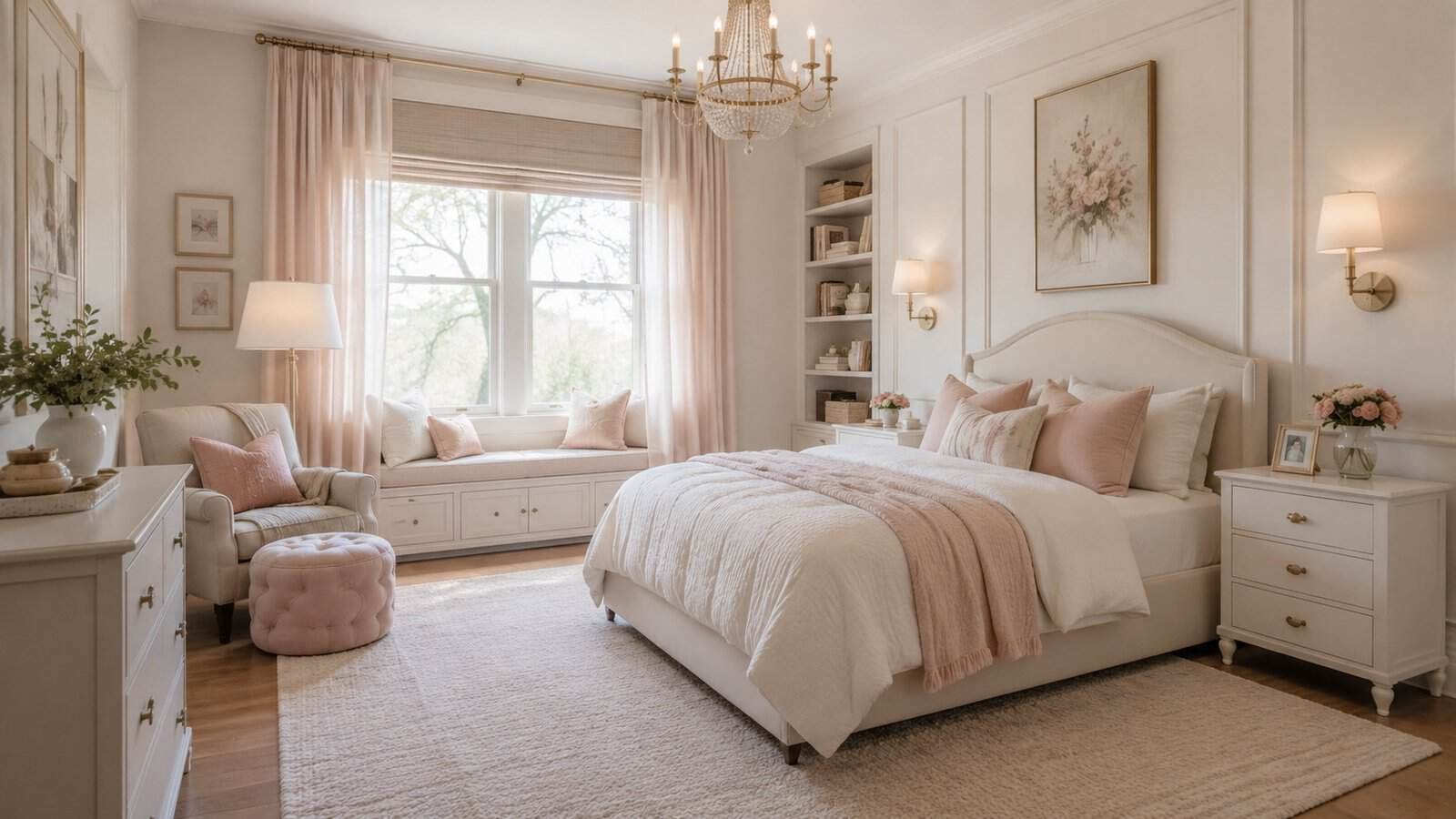

Soft transitional decor in a little girl’s room creates the perfect balance between playful charm and timeless elegance. Instead of choosing a room theme that feels outdated after a year or two, this design approach blends soft textures, calming colors, and classic furniture with modern simplicity.
Parents often struggle to create a bedroom that feels age-appropriate now while still growing beautifully with their child. This guide covers practical decorating ideas, color palettes, furniture choices, styling tips, and designer-inspired solutions that make a little girl’s room feel warm, stylish, and functional for years to come.
In This Article
Why Soft Transitional Decor Works So Well for a Little Girl’s Room
Transitional design sits comfortably between traditional and modern styles. In a child’s bedroom, that balance becomes incredibly useful because it avoids extremes. The room feels sweet without becoming overly themed, and elegant without looking too mature.
Soft transitional decor also adapts easily as children grow. Swapping accessories, bedding, or wall art can completely refresh the room without replacing major furniture pieces.
The Balance Between Cozy and Sophisticated
Many parents want a bedroom that feels magical while still looking polished. Transitional style accomplishes this by combining:
- Gentle color palettes
- Curved furniture silhouettes
- Layered textures
- Minimal clutter
- Timeless materials
Instead of loud cartoon themes or ultra-modern minimalism, the room feels calm and inviting.
Why This Style Ages Better Than Trend-Heavy Designs
Children’s tastes change quickly. A princess-themed bedroom that feels exciting at age five may feel childish by age eight.
Soft transitional decor solves that problem because the foundation remains neutral and flexible. Decorative accents can evolve over time without requiring a full redesign.
Here’s how transitional rooms stay versatile:
| Design Element | Timeless Choice | Easy Future Update |
| Bed Frame | Upholstered neutral bed | Change bedding |
| Wall Color | Warm white or blush beige | Add new art |
| Lighting | Classic chandelier | Replace lamp shades |
| Rugs | Soft textured neutral rug | Layer colorful accents |
Common Mistakes That Make Transitional Rooms Feel Off
Creating balance is important. Too many ornate details can make the room feel formal, while overly trendy pieces can disrupt the softness of the design.
Common decorating mistakes include:
- Using too many bright pastel colors at once
- Overcrowding shelves and walls
- Choosing furniture that’s too delicate for daily use
- Mixing too many patterns
- Ignoring storage needs
A well-designed little girl’s room should feel beautiful and livable.
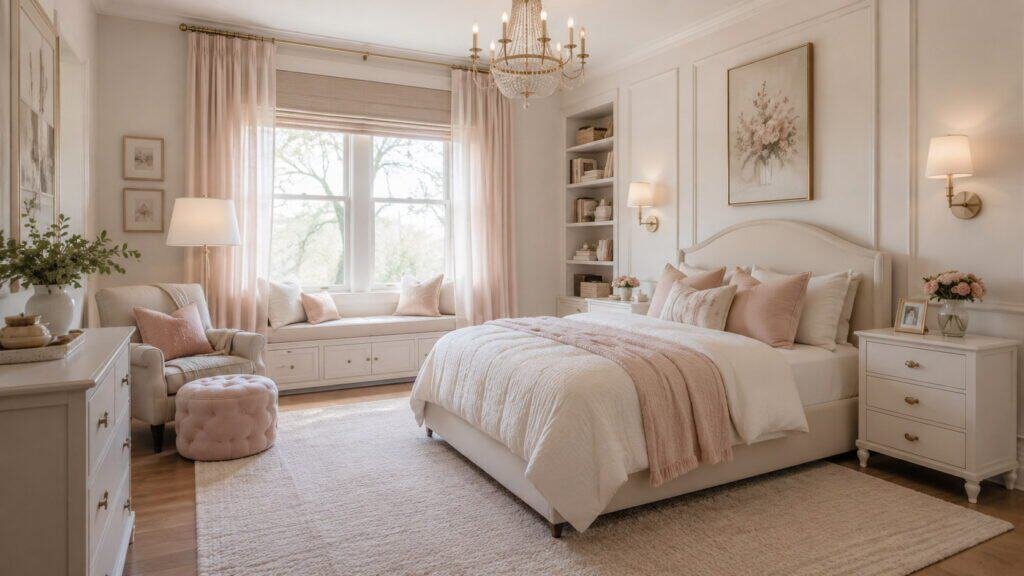
The Foundation of a Soft Transitional Color Palette
Color shapes the entire mood of the room. Soft transitional decor usually relies on muted, calming shades that feel layered instead of loud.
Warm neutrals create a timeless base, while soft accents add personality and warmth.
Best Color Combinations for a Little Girl’s Room
Some palettes naturally suit transitional spaces because they create softness without overwhelming the room.
Popular combinations include:
- Blush + ivory + warm taupe
- Dusty lavender + cream + light oak
- Sage green + soft beige + white
- Pale blue + greige + muted gold
- Peachy pink + sand + warm gray
Muted tones tend to feel more sophisticated than highly saturated colors.
Warm Neutrals vs Pastels
Both can work beautifully, but the key is balance.
Warm neutrals help the room feel grounded and timeless. Pastels bring softness and childlike charm. Combining the two usually creates the best result.
Warm Neutral Examples
- Oatmeal
- Ivory
- Greige
- Mushroom
- Soft camel
Soft Pastel Accents
- Dusty rose
- Powder blue
- Lavender mist
- Sage
- Pale peach
Too many pastels can make the room feel overly sweet. Too many neutrals may feel flat. Transitional design works best when those tones support each other.
How to Layer Colors Without Making the Room Feel Busy
Layering matters more than using lots of colors.
A simple approach often works best:
- Keep walls neutral
- Add color through textiles
- Use wood tones for warmth
- Introduce subtle metallic accents
Texture also helps create visual depth without requiring bold color.
Accent Colors That Add Personality
Small accent colors can elevate the room dramatically.
Beautiful transitional accent choices include:
- Muted gold
- Soft terracotta
- Dusty mauve
- Matte black
- Soft olive
Even tiny details like drawer hardware or lamp bases can make the room feel more custom and thoughtfully designed.
Furniture That Feels Elegant Without Looking Too Grown-Up
Furniture sets the tone for the entire bedroom. Transitional furniture blends classic curves with cleaner modern lines, creating a space that feels refined yet approachable.
The goal is choosing pieces that work now while still feeling relevant several years later.
Transitional Bed Styles That Grow With Your Child
The bed usually becomes the visual centerpiece of the room.
Popular soft transitional options include:
- Upholstered beds
- Arched headboards
- Spindle beds with modern finishes
- Scalloped headboards
- Low-profile canopy beds
Neutral upholstery often works especially well because bedding can easily change as styles evolve.
Mixing Curved Silhouettes With Clean Lines
One reason transitional rooms feel balanced is the combination of softness and structure.
For example:
- Pair a curved headboard with a streamlined dresser
- Use rounded mirrors above simple desks
- Combine soft bedding with tailored curtains
This contrast prevents the room from feeling too ornate or too minimal.
Smart Furniture Choices for Long-Term Flexibility
Investing in adaptable furniture usually saves money over time.
Look for pieces that can transition through multiple stages:
- Convertible desks
- Dressers that double as changing tables
- Neutral storage cabinets
- Adjustable shelving
- Nightstands with hidden storage
Furniture with classic proportions tends to outlast trend-driven designs.
Storage That Blends Into the Decor Naturally
Children’s rooms accumulate clutter quickly. Transitional spaces stay calming because storage is integrated into the design instead of competing with it.
Stylish storage ideas include:
- Woven baskets
- Upholstered storage benches
- Built-in shelves
- Under-bed drawers
- Decorative boxes in soft fabrics
Open shelving works best when styled sparingly. Leaving breathing room between decor items keeps the room feeling airy and intentional.
Soft Transitional Decor Ideas That Add Personality to the Room
A beautifully designed little girl’s room should feel personal, not staged. Soft transitional decor works best when the space reflects the child’s personality while maintaining a calm and cohesive look.
Small decorative details often make the biggest difference.
Upholstered Details, Scallops, and Gentle Curves
Soft shapes instantly make a bedroom feel warmer and more inviting. Transitional design avoids harsh lines in favor of subtle curves and elegant silhouettes.
Beautiful details to consider include:
- Scalloped mirrors
- Rounded nightstands
- Curved headboards
- Upholstered benches
- Arched bookcases
Even one or two curved elements can soften the entire room visually.
Layering Texture Instead of Overusing Color
Texture is one of the secrets behind high-end transitional interiors. Instead of relying on bold patterns, designers layer materials to create depth and comfort.
Try combining:
- Linen curtains
- Chunky knit throws
- Velvet accent pillows
- Woven baskets
- Soft wool or textured rugs
Rooms with varied textures tend to feel cozy and sophisticated at the same time.
Decorative Accents That Feel Playful Yet Refined
Children’s decor can still feel elegant. The key is choosing whimsical accents in restrained colors and timeless shapes.
Great examples include:
- Framed watercolor animal art
- Ceramic lamps with soft finishes
- Delicate floral prints
- Plush seating in neutral fabrics
- Dollhouses displayed as decor pieces
Personal touches matter too. Displaying favorite books, handmade crafts, or meaningful keepsakes helps the room feel authentic and lived-in.
How to Keep the Room Cozy Without Visual Clutter
Overdecorating is one of the easiest ways to lose the softness of transitional style.
A simple editing rule helps:
- Choose a few larger decor pieces instead of many tiny items
- Leave empty wall space intentionally
- Keep surfaces partially clear
- Rotate toys and decorative accessories seasonally
Visual calm makes the room feel more relaxing for both children and parents.
Lighting Choices That Instantly Soften the Space
Lighting changes how every color, texture, and fabric looks inside the room. Soft transitional decor relies heavily on warm, layered lighting to create a cozy atmosphere.
A poorly lit room can feel cold, even with beautiful furniture and decor.
Why Layered Lighting Matters
One overhead light rarely creates enough warmth.
The most inviting little girls’ rooms usually include multiple light sources:
- Ceiling fixtures
- Bedside lamps
- Wall sconces
- Reading lights
- Soft accent lighting
Layering light adds depth while making the space more functional throughout the day.
Chandeliers and Fixtures That Fit Transitional Style
A statement ceiling light often becomes the jewelry of the room.
Popular transitional lighting styles include:
- Petite chandeliers
- Linen drum pendants
- Soft gold fixtures
- Whitewashed wood bead chandeliers
- Frosted glass lighting
Oversized lighting can overwhelm smaller bedrooms, so scale matters.
Warm Lighting Creates a Better Bedtime Atmosphere
Light temperature affects mood more than many people realize.
Warm bulbs usually create the softest environment for children’s spaces. Cooler lighting may feel too clinical or harsh, especially in the evening.
Look for:
- Warm white bulbs
- Dimmable fixtures
- Fabric lamp shades
- Frosted finishes
Soft lighting also enhances neutral color palettes beautifully.
Combining Decorative and Functional Lighting
Every light source should serve a purpose.
Here’s a simple guide:
| Lighting Type | Best Purpose | Transitional Style Tip |
| Chandelier | Main lighting | Keep silhouettes soft |
| Sconces | Reading and ambiance | Use warm metallic finishes |
| Table Lamps | Cozy evening light | Choose textured shades |
| Night Lights | Comfort and safety | Hide them subtly within decor |
Battery-operated sconces can also work well in rooms without built-in wall wiring.
Creating a Dreamy Feature Wall Without Overdoing It
A feature wall can transform a little girl’s room instantly, but subtlety is what keeps transitional spaces timeless.
The goal is adding visual interest without creating a trendy focal point that feels dated too quickly.
Wallpaper Ideas for Soft Transitional Decor in a Little Girl’s Room
Wallpaper works especially well in transitional spaces because it introduces softness and pattern simultaneously.
Timeless wallpaper styles include:
- Watercolor florals
- Thin stripes
- Soft botanical prints
- Neutral toile patterns
- Delicate cloud motifs
Muted designs usually age much better than highly saturated prints.
Painted Wall Molding Adds Quiet Elegance
Decorative molding creates architectural interest while maintaining a calm appearance.
Popular options include:
- Picture frame molding
- Board and batten
- Vertical wall trim
- Arched panel designs
Painting molding the same color as the wall creates a subtle luxury effect often seen in professionally designed spaces.
When Texture Works Better Than Bold Color
Some rooms need dimension more than additional color.
Texture-focused wall treatments can include:
- Grasscloth wallpaper
- Limewash paint
- Wood slat accents
- Fabric wall panels
These options add depth while preserving the soft transitional aesthetic.
Choosing the Right Feature Wall for Small Rooms
Large patterns can overwhelm compact spaces. Smaller bedrooms usually benefit from softer visual contrast.
Helpful guidelines include:
- Use lighter tones on feature walls
- Keep patterns delicate
- Limit feature walls to one focal area
- Pair patterned walls with simpler bedding
The bed wall often works best because it naturally anchors the room design.
Bedding and Fabric Layers That Make the Room Feel Luxurious
Bedding often becomes the first thing people notice in a little girl’s bedroom. Soft transitional decor relies heavily on layered fabrics because they instantly create warmth, softness, and a more finished look.
A thoughtfully styled bed can make even a simple room feel elevated.
Choosing Child-Friendly Fabrics That Still Look Elegant
Beautiful bedding should also be practical. Children’s spaces need materials that feel soft, wash easily, and hold up over time.
Some of the best fabric choices include:
- Cotton percale for breathable comfort
- Linen blends for relaxed texture
- Quilted cotton for cozy layering
- Velvet accents for subtle richness
- Knit throws for softness
Performance fabrics can also help reduce stress around spills and daily wear.
How to Layer Bedding Like a Designer
Luxury bedrooms rarely rely on a single comforter set. Layering creates visual depth while making the bed feel more inviting.
A simple formula works well:
- Neutral fitted and flat sheets
- Textured quilt or coverlet
- Lightweight duvet
- Accent pillows in varied fabrics
- Soft throw blanket at the foot of the bed
The key is mixing textures instead of introducing too many competing colors.
Transitional Bedding Styles That Won’t Feel Dated Quickly
Trend-heavy bedding can age a room fast. Soft transitional spaces stay timeless by focusing on subtle patterns and refined details.
Beautiful long-lasting bedding ideas include:
- Thin stripes
- Tonal florals
- Ruffled edges
- Matelassé quilts
- Embroidered details
Muted patterns tend to grow with children more naturally than highly themed prints.
Styling Throw Pillows Without Overcrowding the Bed
Too many pillows can make a child’s bed impractical.
A balanced setup often includes:
- Two sleeping pillows
- One lumbar pillow
- One accent pillow with texture or shape
Scalloped edges, boucle fabrics, and soft velvet can add personality without overwhelming the room.
A Reading Nook, Canopy Corner, or Play Space? Small Additions That Make a Big Impact
Some of the most memorable little girls’ rooms include small cozy spaces designed specifically for comfort and imagination.
These additions do not require large square footage. Even compact rooms can include a charming corner that feels special.
Creating a Cozy Reading Nook
Reading areas naturally fit soft transitional decor because they encourage relaxation and quiet time.
Simple reading nook essentials include:
- Upholstered chair or floor cushion
- Soft throw blanket
- Small bookshelf
- Warm lighting
- Plush rug
Positioning the nook near a window can make the area feel even more inviting.
Why Canopies Instantly Add Softness
Canopies create a dreamy atmosphere without requiring major renovations.
Popular transitional canopy ideas include:
- Gauzy linen drapes
- Neutral fabric bed crowns
- Ceiling-mounted sheer curtains
- Soft ivory or blush fabrics
Heavy princess-style canopies often feel overly themed. Lighter fabrics maintain the airy transitional look.
Designing a Play Area Without Sacrificing Style
Play spaces can still look cohesive with the rest of the room.
Stylish solutions include:
- Woven toy baskets
- Neutral play mats
- Wood toy storage
- Small activity tables in muted finishes
- Fabric bins hidden inside cabinetry
Keeping toys organized visually helps preserve the calm feeling of the room.
Space-Saving Ideas for Smaller Bedrooms
Not every child’s room has generous dimensions. Fortunately, soft transitional design actually works beautifully in smaller spaces because it avoids visual heaviness.
Helpful small-room strategies:
- Use vertical storage
- Choose light-colored furniture
- Add mirrors to reflect light
- Keep window treatments airy
- Avoid oversized furniture pieces
A thoughtfully arranged room often feels larger than its actual size.
Decorating Shelves and Walls Without Creating Visual Chaos
Shelves and walls give the room personality, but too many decorative elements can quickly make the space feel cluttered.
Soft transitional decor depends on restraint and thoughtful styling.
Styling Shelves That Feel Balanced and Intentional
Open shelves work best when they combine decorative and functional items.
A simple shelf styling mix might include:
- Children’s books
- Framed art
- Ceramic decor
- Small baskets
- One or two sentimental objects
Leaving empty space between items creates breathing room and keeps shelves from feeling crowded.
Choosing Wall Art That Grows With Your Child
Art can dramatically influence the room’s mood.
Timeless artwork ideas include:
- Watercolor animals
- Botanical sketches
- Soft abstract prints
- Personalized name art
- Nature-inspired illustrations
Neutral frames usually blend better into transitional spaces than brightly colored ones.
How to Avoid Overdecorating the Walls
Many children’s rooms feel visually busy because every wall surface gets filled.
Instead:
- Focus on one statement wall
- Group smaller frames thoughtfully
- Use oversized art sparingly
- Leave some walls intentionally simple
Negative space helps the room feel more peaceful and elevated.
Functional Decor Can Still Look Beautiful
Practical items do not have to disrupt the aesthetic.
Beautiful functional decor ideas include:
- Decorative wall hooks
- Fabric pinboards
- Stylish growth charts
- Floating book ledges
- Soft woven hampers
When storage and decor work together, the room feels more cohesive overall.
Soft Transitional Decor for Shared or Small Little Girls’ Rooms
Designing for limited space requires careful planning, especially when the room needs to feel soft, functional, and visually open.
Transitional style helps because it naturally favors balance and simplicity over excess.
Layout Tricks That Maximize Space
Furniture placement affects how spacious the room feels.
Helpful layout strategies include:
- Positioning beds against the longest wall
- Keeping walkways open
- Using vertical shelving
- Avoiding bulky furniture near windows
- Choosing multi-functional pieces
Even small adjustments can improve flow dramatically.
Using Symmetry to Make Shared Rooms Feel Cohesive
Symmetry creates visual calm, especially in shared bedrooms.
Beautiful symmetrical ideas include:
- Matching beds
- Coordinated bedding palettes
- Identical sconces
- Shared nightstands
- Balanced wall art placement
Rooms instantly feel more polished when both sides visually relate to each other.
Bunk Beds and Double Beds That Still Feel Elegant
Functional furniture does not have to look utilitarian.
Transitional-friendly options include:
- Upholstered bunk beds
- White oak bunk frames
- Curved twin beds
- Soft neutral finishes
- Built-in sleeping alcoves
Simple silhouettes usually maintain the softest aesthetic.
Keeping Small Rooms Light and Airy
Heavy furniture and dark palettes can quickly shrink a room visually.
To maintain an open feeling:
- Use light wall colors
- Choose reflective finishes sparingly
- Keep curtains floor-length and airy
- Limit oversized decor
- Add soft lighting layers
A calm color palette often makes compact rooms feel far more spacious.
Budget-Friendly Ways to Achieve a High-End Transitional Look
Creating a beautiful little girl’s room does not require a luxury designer budget. Soft transitional decor actually works well with affordable updates because the style depends more on balance, texture, and thoughtful choices than expensive statement pieces.
Small upgrades often create the biggest visual transformation.
Affordable Changes That Instantly Elevate the Room
Some decor updates deliver a surprisingly expensive look without major spending.
High-impact budget ideas include:
- Replacing basic hardware with brass or matte black knobs
- Adding layered curtains
- Using oversized pillows
- Installing peel-and-stick molding
- Swapping harsh lighting for warm bulbs
Even changing lamp shades or adding a textured rug can soften the entire space.
Where to Splurge and Where to Save
Strategic spending matters more than buying everything new.
Here’s a smart breakdown:
| Worth the Investment | Save-Friendly Options |
| Mattress | Decorative pillows |
| Quality rug | Wall art prints |
| Durable bed frame | Peel-and-stick wallpaper |
| Window treatments | Storage baskets |
| Lighting fixture | DIY molding |
Large foundational pieces should prioritize durability, while accessories can change over time.
DIY Ideas That Still Look Sophisticated
DIY projects work especially well in transitional rooms because the style favors subtle elegance over flashy details.
Popular beginner-friendly projects include:
- Painted furniture makeovers
- DIY wall trim
- Custom bookshelf styling
- Handmade canopy installations
- Framed printable art galleries
Soft neutral paint colors often make secondhand furniture look dramatically more expensive.
Designer Tricks That Make Rooms Look More Expensive
Professional-looking spaces usually share a few common techniques.
Designers often:
- Use floor-length curtains
- Layer multiple light sources
- Repeat materials consistently
- Limit clutter intentionally
- Mix soft textures carefully
One well-styled corner often creates more impact than filling every inch of the room with decor.
Transitional Decor Trends That Still Feel Timeless
Trends constantly evolve, but some design ideas have enough versatility to remain beautiful for years.
Soft transitional decor succeeds because it borrows select modern influences while maintaining classic foundations.
What’s Popular Right Now in Little Girls’ Bedroom Design
Current trends lean toward softer, calmer interiors rather than highly themed bedrooms.
Popular elements include:
- Warm wood tones
- Muted floral patterns
- Scalloped furniture
- Neutral walls
- Vintage-inspired lighting
- Textured fabrics
Parents increasingly want bedrooms that feel peaceful rather than overstimulating.
Trends Worth Trying vs Trends That Fade Quickly
Some trends naturally adapt over time, while others date a room very quickly.
Trends With Staying Power
- Soft earth tones
- Layered textures
- Classic molding
- Natural materials
- Timeless upholstery
Trends That May Feel Dated Faster
- Overly bold neon colors
- Cartoon-heavy themes
- Excessive acrylic furniture
- Highly specific character decor
Using trendy accents in smaller doses keeps the room flexible and easier to refresh later.
Blending Pinterest Inspiration With Real-Life Functionality
Pinterest-perfect rooms often look beautiful online but may not function well for everyday life.
A practical transitional room should:
- Allow easy cleaning
- Include enough storage
- Support sleep and play
- Adapt as the child grows
- Feel comfortable instead of overly delicate
Beautiful spaces become far more valuable when they genuinely work for daily routines.
Related Decor Ideas That Pair Beautifully With Transitional Style
Soft transitional decor also connects naturally with other timeless design styles.
Related ideas worth exploring include:
- Cozy feminine bedroom decor
- Neutral nursery-to-big-kid room transitions
- Modern cottage children’s rooms
- Soft Scandinavian-inspired spaces
- Parisian-inspired girls’ bedrooms
These styles share the same emphasis on warmth, softness, and longevity.
Final Styling Checklist for a Soft Transitional Little Girl’s Room
Before finishing the room, stepping back and editing the space carefully can make everything feel more cohesive.
The most beautiful transitional bedrooms rarely feel overcrowded.
Quick Styling Checks Before the Room Is Finished
Ask yourself:
- Does the room feel calm or visually busy?
- Are textures layered naturally?
- Is there enough storage?
- Does the lighting feel warm?
- Can the design grow with the child?
Small adjustments often improve the room more than adding extra decor.
How to Maintain Balance Between Softness and Sophistication
Balance is what makes transitional design feel timeless.
Too much ornamentation can feel overly formal, while overly minimal spaces may lose warmth.
A successful soft transitional room usually includes:
- A neutral foundation
- Gentle color accents
- Layered textures
- Functional furniture
- Personal touches that feel meaningful
Easy Updates as Your Child Grows
One advantage of soft transitional decor in a little girl’s room is how easy it is to evolve.
Simple future updates might include:
- New bedding
- Updated artwork
- Different accent pillows
- Desk additions
- More mature lighting
Keeping the main design neutral allows the room to mature naturally over time.
FAQ About Soft Transitional Decor in a Little Girl’s Room
What colors work best for soft transitional decor in a little girl’s room?
Warm neutrals mixed with muted pastels usually work best. Shades like blush, ivory, sage, dusty blue, taupe, and lavender create a calm and timeless atmosphere.
How can I make a little girl’s room look elegant without feeling too grown-up?
Focus on soft textures, gentle curves, cozy lighting, and playful accents in restrained colors. Transitional decor works because it balances sophistication with warmth and comfort.
Is soft transitional decor good for small bedrooms?
Yes. Light color palettes, layered lighting, and simplified furniture silhouettes actually make smaller rooms feel more spacious and airy.
What furniture should I prioritize for a transitional girls’ bedroom?
Invest in durable foundational pieces like the bed frame, dresser, and rug. Neutral furniture styles usually adapt better as children grow.
How do I keep a transitional room from looking boring?
Texture is the key. Mixing fabrics like linen, velvet, boucle, cotton, and woven materials creates visual interest without relying on loud colors or heavy patterns.
Can transitional decor work for shared sisters’ rooms?
Absolutely. Symmetrical layouts, coordinated bedding, and soft neutral palettes help shared bedrooms feel cohesive while still leaving room for individual personalities.
For additional inspiration on creating calming and child-friendly interiors, the design experts at American Society of Interior Designers share helpful ideas and professional guidance here: https://www.asid.org/
A thoughtfully designed bedroom becomes more than just a pretty space. Soft transitional decor creates a room where a little girl can sleep, play, learn, and grow comfortably for years. Start with timeless foundations, layer in softness gradually, and focus on creating a space that feels both functional and genuinely comforting.

I’m the creator behind EasyDecora, a home–decor lover who enjoys discovering simple, beautiful ways to make every room feel cozy and intentional. I share practical tips, creative ideas, and inspiration for anyone who wants to build a home they truly love.