
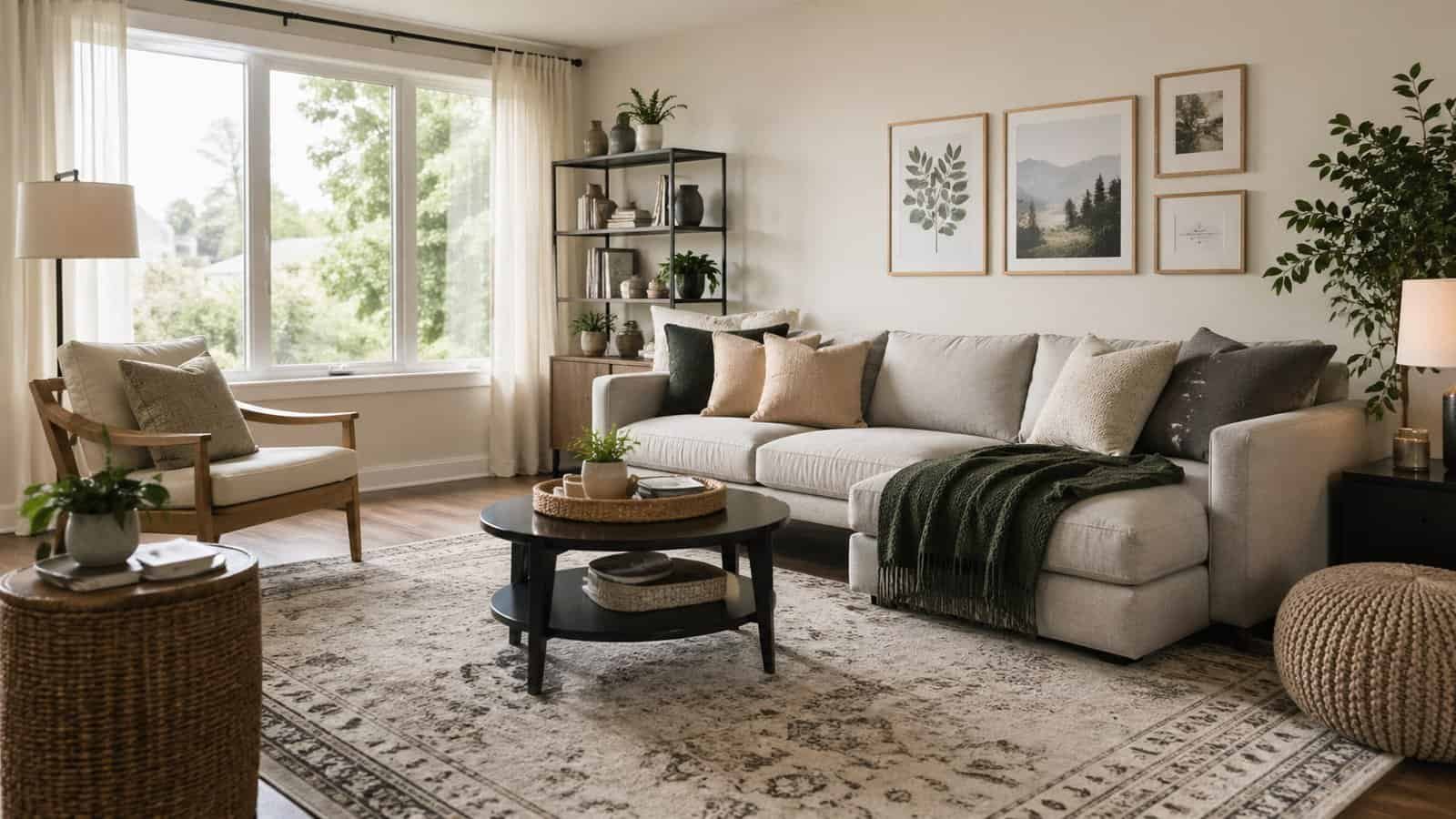

A beautiful living room doesn’t require a full renovation—easy living room furniture decor ideas can completely change how your space looks and feels in just a few simple steps. The right furniture choices, smart layouts, and a few styling tricks can turn even the most ordinary room into something inviting and stylish.
This guide breaks down practical, real-world ideas you can actually use. You’ll learn how to choose the right furniture foundation, upgrade your space without spending much, and create a layout that feels balanced and intentional.
In This Article
Why “Easy Living Room Furniture Decor Ideas” Are More Popular Than Ever
Living rooms have become more than just a place to sit. They’re now workspaces, entertainment hubs, and relaxation zones all in one. That shift has pushed homeowners toward simple, flexible decor solutions rather than complicated redesigns.
The rise of low-effort, high-impact styling
People want results without the hassle. Swapping a coffee table, rearranging a sofa, or adding a textured rug can create a dramatic difference without major effort.
Key reasons this approach is trending:
- Time-saving: No need for lengthy renovations
- Budget-friendly: Small updates cost far less than full makeovers
- Flexible: Easy to change styles anytime
Small upgrades vs. full renovations
Replacing everything at once often leads to overspending and decision fatigue. Strategic updates—like upgrading a statement chair or adding a layered rug—deliver a similar visual impact with far less commitment.
How furniture shapes the entire room
Furniture isn’t just functional. It defines:
- The flow of movement
- The visual balance of the room
- The overall style direction
A well-placed sofa or thoughtfully chosen table can instantly elevate the space without adding more decor.
Start Smart: Choosing the Right Furniture Foundation
Before styling, focus on the core pieces. A strong furniture foundation makes decorating easier and prevents costly mistakes later.
Picking a sofa that anchors the room
The sofa is the centerpiece of most living rooms. Choosing the right one sets the tone for everything else.
Look for:
- Proportion: Match the sofa size to your room dimensions
- Shape: L-shaped for open layouts, compact for smaller spaces
- Fabric: Durable and easy to clean for everyday use
Neutral tones work best if you like to refresh decor often.
Coffee tables: where function meets style
A coffee table should complement—not compete with—your sofa.
Quick guidelines:
- Keep height close to the seat level
- Choose round shapes for tight spaces
- Use wood or glass to add texture variation
A well-styled table can act as a subtle focal point.
TV units and storage that don’t clutter
Storage is essential, but bulky units can overwhelm the room. Opt for:
- Low-profile TV stands
- Open shelving for a lighter look
- Hidden storage to reduce visual mess
Clean lines help maintain a modern and organized feel.
Balancing proportions without overthinking
Many rooms feel “off” simply because of scale issues. A simple rule helps:
| Element | Ideal Approach |
| Sofa | Largest piece, anchors the layout |
| Coffee table | About 2/3 the sofa length |
| Side tables | Slightly lower than armrests |
| Chairs | Complement, don’t overpower |
Focus on balance rather than perfection. The goal is a room that feels natural, not staged.
Easy Living Room Furniture Decor Ideas That Instantly Upgrade Your Space
Once the basics are in place, small changes can completely transform the atmosphere. These ideas deliver maximum impact with minimal effort.
Rearranging furniture for better flow
Layout is often the biggest missed opportunity. Instead of pushing everything against the walls, try:
- Floating the sofa toward the center
- Creating conversation zones
- Leaving space for easy movement
This simple shift can make the room feel larger and more intentional.
Mixing textures without clashing
Flat, one-dimensional rooms often lack texture variety. Combining materials adds depth instantly.
Try mixing:
- Soft fabrics (linen, cotton)
- Natural wood finishes
- Metallic accents
The key is contrast—not chaos. Keep colors cohesive while varying materials.
Using rugs to define furniture zones
Rugs do more than add comfort—they visually anchor your furniture.
Tips for success:
- Ensure front legs of furniture sit on the rug
- Choose larger rugs to avoid a “floating” look
- Use patterns to add personality
A well-sized rug can tie the entire room together.
Swapping small pieces for a fresh look
You don’t need to replace major furniture to see a difference. Focus on smaller elements:
- Change side tables for a new style
- Add an ottoman for versatility
- Update accent chairs with bold designs
These updates are affordable yet highly effective.
The “Less But Better” Rule: Avoiding Overcrowded Layouts
A common mistake in living room design is trying to fit too much into one space. More furniture doesn’t mean more style—in fact, it often creates visual clutter and makes the room feel smaller.
Why too much furniture backfires
Overcrowding blocks natural movement and disrupts the flow of the room. Even high-quality furniture can lose its impact when everything competes for attention.
Watch for these signs:
- Tight walkways or awkward navigation
- Furniture overlapping or touching unnecessarily
- No clear focal point
A well-designed space should feel open, breathable, and easy to move through.
How to edit your space like a designer
Professional designers often remove items before adding anything new. That approach helps highlight what truly matters.
Start with this simple process:
- Remove one or two non-essential pieces
- Step back and evaluate the layout
- Keep only what adds function or visual value
Editing creates clarity—and clarity creates style.
Creating breathing room between pieces
Spacing is just as important as the furniture itself. Even a few extra centimeters between items can make a noticeable difference.
Practical tips:
- Leave space between sofa and coffee table for comfort
- Avoid placing chairs too close together
- Keep pathways clear and intuitive
Think of empty space as part of the design, not wasted space.
Multi-functional furniture for smarter living
When space is limited, every piece should earn its place. Multi-purpose furniture keeps things efficient without sacrificing style.
Examples include:
- Storage ottomans that double as seating
- Coffee tables with hidden compartments
- Sofa beds for guests
These choices help maintain a clean look while maximizing usability.
Easy Living Room Furniture Decor Ideas for Small Spaces
Small living rooms require smarter strategies, not more effort. The goal is to make the space feel bigger, lighter, and more functional without overcrowding it.
Slim-profile sofas that save space
Bulky sofas can dominate a small room. A streamlined design creates a more open feel.
Look for:
- Narrow arms and low backs
- Raised legs to show more floor space
- Compact sectionals for corner use
These subtle details make a room feel less cramped.
Nesting tables and flexible furniture
Flexibility is essential in smaller layouts. Furniture that adapts to your needs makes a big difference.
Smart options:
- Nesting tables that tuck away when not in use
- Foldable side tables for extra surface space
- Stackable stools for occasional seating
You get functionality without permanent clutter.
Vertical storage that doubles as decor
When floor space is limited, go vertical. Wall-mounted solutions keep things organized while adding visual interest.
Ideas to try:
- Floating shelves styled with books and decor
- Tall cabinets with a slim footprint
- Wall hooks or rails for practical storage
Vertical design draws the eye upward, making the room feel taller.
Layout tricks that create the illusion of space
Even small adjustments can visually expand a room.
Effective techniques:
- Place mirrors opposite windows to reflect light
- Keep furniture slightly away from walls for depth
- Use light-colored upholstery to brighten the space
A thoughtful layout can make a compact room feel surprisingly spacious.
Style It Like a Pro: Pairing Furniture With Decor Elements
Furniture alone doesn’t complete a room. The magic happens when it’s paired thoughtfully with decor, color, and lighting.
Matching furniture with wall colors and lighting
Harmony between furniture and surroundings creates a cohesive look.
Guidelines to follow:
- Pair neutral furniture with bold walls—or vice versa
- Use warm lighting to soften darker furniture tones
- Ensure lighting highlights key pieces like sofas or tables
Balance is key. Everything should feel connected, not random.
Layering cushions and throws for depth
Soft furnishings add comfort and visual richness without major changes.
Simple layering formula:
- Start with 2–3 cushions in different sizes
- Mix textures like velvet, cotton, or knit
- Add a throw blanket for a relaxed, inviting feel
This technique works in any style—from modern to cozy.
Adding plants to soften structured furniture
Furniture often has straight lines and rigid shapes. Plants introduce organic contrast.
Great options include:
- Small potted plants on side tables
- Medium floor plants near sofas
- Hanging plants for vertical interest
Greenery instantly makes a room feel more alive and welcoming.
Artwork placement around key furniture pieces
Art should enhance—not compete with—your furniture.
Placement tips:
- Hang artwork at eye level above sofas
- Keep spacing consistent for gallery walls
- Choose pieces that complement your color palette
Well-placed art ties everything together and elevates the overall design.
Budget-Friendly Furniture Decor Hacks That Look Expensive
Great style doesn’t have to come with a high price tag. A few clever updates can make your living room furniture look polished and intentional—without overspending.
Thrift flips and DIY upgrades
Secondhand furniture often has solid structure but outdated finishes. With a little creativity, it can feel brand new.
Easy upgrades to try:
- Sanding and repainting wooden tables
- Reupholstering chair seats with modern fabric
- Adding peel-and-stick finishes for a quick refresh
A simple DIY can turn a basic piece into a statement.
Change small details for big impact
Sometimes, the smallest changes create the biggest difference.
Focus on:
- Swapping out drawer handles or knobs
- Replacing furniture legs with modern styles
- Updating finishes with matte or natural tones
These subtle tweaks elevate furniture without replacing it.
Use slipcovers for instant transformation
Slipcovers are one of the fastest ways to refresh a sofa or chair. They’re affordable, removable, and perfect for seasonal updates.
Benefits include:
- Easy cleaning and maintenance
- Ability to switch colors or styles quickly
- Protection for existing furniture
A neutral slipcover can instantly modernize an outdated piece.
Styling surfaces like a designer
Tables and shelves shouldn’t feel random. A curated look makes even simple furniture feel high-end.
Follow this quick styling formula:
- Combine height variation (books, vases, decor)
- Stick to a consistent color palette
- Leave some empty space for balance
Less clutter creates a more refined appearance.
Easy Living Room Furniture Decor Ideas by Style Theme
Choosing a clear style direction helps your furniture feel cohesive instead of mismatched. These popular themes make decorating easier by giving you a framework to follow.
Minimalist: clean, calm, and intentional
Minimalist living rooms focus on simplicity and function.
Key elements:
- Neutral color palettes (white, beige, gray)
- Streamlined furniture with clean lines
- Limited decor for a clutter-free look
Every piece should serve a purpose.
Modern cozy: comfort meets simplicity
This style blends sleek furniture with soft, inviting textures.
How to achieve it:
- Pair structured sofas with plush cushions
- Use warm lighting for a relaxed mood
- Mix smooth surfaces with soft fabrics
The result feels both polished and comfortable.
Boho: relaxed and full of personality
Boho style embraces layers, patterns, and natural materials.
Try incorporating:
- Woven furniture or accents
- Patterned textiles and rugs
- Plants and earthy tones
It’s perfect for creating a laid-back, lived-in feel.
Scandinavian: light, functional, and timeless
Scandinavian design balances beauty and practicality.
Core features:
- Light wood finishes
- Bright, airy color schemes
- Functional furniture with subtle elegance
This style works especially well in smaller spaces.
Common Furniture Decorating Mistakes (and How to Fix Them Fast)
Even well-chosen furniture can fall flat if it’s not arranged or styled correctly. Fixing a few common mistakes can instantly improve your living room.
Pushing all furniture against the walls
This layout might seem logical, but it often makes the room feel disconnected.
Fix it by:
- Pulling furniture inward to create conversation areas
- Using rugs to anchor the layout
- Leaving space behind pieces for depth
A centered layout feels more intentional and inviting.
Ignoring scale and proportion
Oversized or undersized furniture throws off the balance of the room.
Quick solution:
- Match furniture size to room dimensions
- Pair large pieces with equally substantial elements
- Avoid mixing extremes without balance
Proportion is what makes a room feel “right.”
Poor lighting around furniture zones
Lighting is often overlooked but plays a major role in how furniture looks.
Improve it by:
- Adding floor or table lamps near seating
- Layering lighting (ambient, task, accent)
- Highlighting focal points like sofas or artwork
Good lighting enhances both function and style.
Overmatching furniture sets
Buying everything from the same collection can make a room feel flat and uninspired.
Instead:
- Mix materials and finishes
- Combine different shapes and styles
- Add contrast through decor elements
A bit of variation creates visual interest.
Seasonal Refresh: Simple Furniture Decor Updates Year-Round
Refreshing your living room doesn’t require new furniture every season. Small, thoughtful updates can keep the space feeling fresh all year.
Swap textiles to match the season
Textiles are the easiest way to shift the mood of your space.
Seasonal ideas:
- Light fabrics and bright tones for warmer months
- Cozy textures like knit or velvet for cooler seasons
- Neutral bases with seasonal accent colors
This keeps your room dynamic without major changes.
Rearrange layouts for a new perspective
Changing your furniture layout can completely transform the feel of a room.
Try:
- Rotating seating arrangements
- Repositioning focal points like the TV or coffee table
- Creating new zones for relaxation or work
A new layout can make the space feel brand new.
Add seasonal accents without replacing furniture
Small decor updates go a long way.
Consider:
- Decorative trays or centerpieces
- Fresh plants or seasonal greenery
- Updated artwork or wall decor
These details refresh your space while keeping your core furniture intact.
How to Create a Cohesive Look Without Buying Everything New
A stylish living room isn’t about having all-new furniture—it’s about making everything work together. Cohesion creates that “pulled-together” look you often see in professionally designed spaces.
Stick to a clear color palette
Color consistency is one of the easiest ways to unify a room.
A simple approach:
- Choose 2–3 main colors
- Add 1–2 accent shades for contrast
- Repeat these tones across furniture and decor
This keeps the space visually connected without feeling repetitive.
Repeat materials and finishes
Consistency in materials builds harmony.
For example:
- Wood tones echoed in coffee tables and shelving
- Metal finishes repeated in lighting and decor
- Fabric textures that complement each other
Repeating elements subtly ties the room together.
Blend old and new furniture seamlessly
Mixing pieces from different styles or time periods adds character—but only if done thoughtfully.
Make it work by:
- Using a consistent color palette
- Balancing modern and classic shapes
- Updating older pieces with small changes (like new hardware or finishes)
The goal is contrast with intention, not randomness.
Create visual anchors in the room
Every living room needs focal points that ground the design.
Common anchors include:
- A statement sofa
- A bold rug
- A large piece of artwork
Once you establish these, everything else can support them.
Final Thoughts: Effortless Changes That Make the Biggest Difference
Transforming your space doesn’t require a complete overhaul. The most effective easy living room furniture decor ideas often come from small, intentional changes rather than big purchases.
Focus on what truly matters:
- A layout that improves flow and comfort
- Furniture that fits your space and lifestyle
- Thoughtful styling that adds depth and personality
Consistency will always outperform complexity. A few well-chosen updates can make your living room feel completely new.
FAQ: Easy Living Room Furniture Decor Ideas
What is the easiest way to update living room furniture decor?
Rearranging your furniture layout and adding new textiles like cushions or throws can instantly refresh your space without spending much.
How do I make my living room look expensive on a budget?
Focus on small upgrades such as changing hardware, using slipcovers, and styling surfaces with a clean, curated approach.
What furniture should I prioritize in a living room?
Start with a comfortable, well-sized sofa, then add a functional coffee table and versatile seating to build a strong foundation.
How can I decorate a small living room with furniture?
Choose slim-profile furniture, use vertical storage, and keep the layout open to create the illusion of more space.
How do I mix different furniture styles without clashing?
Stick to a consistent color palette and repeat key materials or finishes to create balance across different pieces.
For deeper insights into how thoughtful spaces can improve well-being and daily interaction, this resource from the American Psychological Association offers useful perspective: https://www.apa.org/monitor/2020/04/nurtured-nature
Ready to transform your space? Start with one small change today—rearrange your layout, swap a piece, or restyle a surface—and watch how quickly your living room comes to life.

I’m the creator behind EasyDecora, a home–decor lover who enjoys discovering simple, beautiful ways to make every room feel cozy and intentional. I share practical tips, creative ideas, and inspiration for anyone who wants to build a home they truly love.