
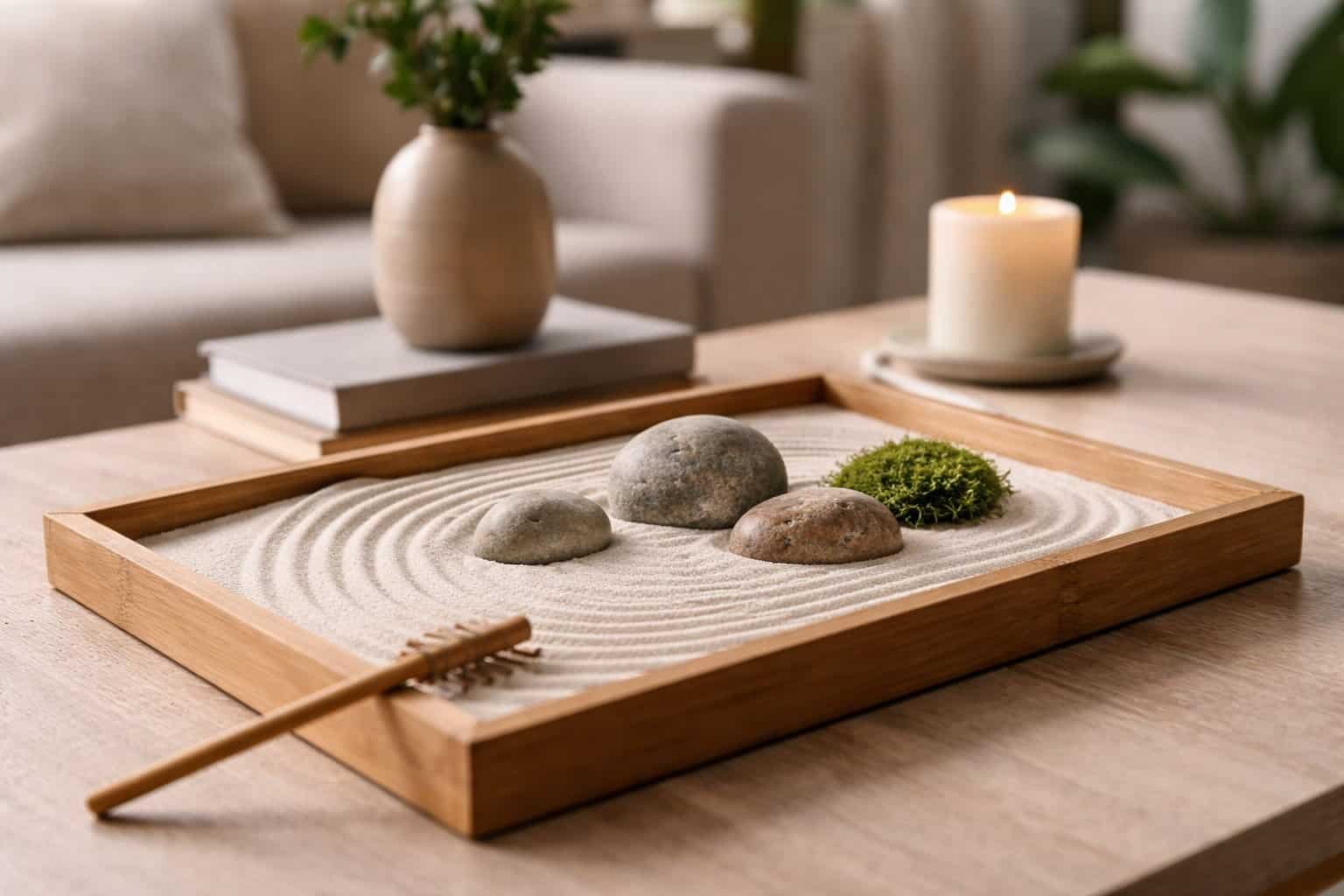

A tabletop decor piece with raked sand brings calm, texture, and artistic expression into everyday living spaces. Inspired by traditional Zen gardens, this compact decorative element transforms a simple surface into a serene focal point. Gentle lines in the sand, thoughtfully placed stones, and balanced composition create a peaceful atmosphere that supports relaxation and focus.
Homeowners, designers, and wellness enthusiasts have embraced this minimalist trend for its versatility. Compact size makes it suitable for desks, coffee tables, and shelves. Creative freedom allows endless pattern variations. Quiet elegance blends with modern, Japandi, and minimalist interiors.
Interest continues to grow as people seek decor that supports mindfulness. A tabletop decor piece with raked sand offers both visual appeal and emotional benefits. Smooth sand patterns can be reshaped daily, encouraging moments of calm and creativity.
Key benefits of a tabletop decor piece with raked sand:
- Encourages mindfulness and stress relief
- Adds texture and dimension to flat surfaces
- Complements minimalist and nature-inspired decor
- Requires minimal maintenance
- Easily customizable
Designers often use this decor element as a grounding feature. A carefully placed tray of sand paired with natural accents can soften harsh lines and create visual balance within a room.
Small details often create the strongest emotional impact in interior design.
In This Article
The Meaning and Inspiration Behind a Tabletop Decor Piece with Raked Sand
A tabletop decor piece with raked sand draws inspiration from Japanese Zen gardens, also known as karesansui. These gardens were designed for contemplation and meditation. Sand patterns symbolize water movement, while rocks represent mountains or islands.
Symbolism plays a major role in the appeal of this decor style. Each element carries visual meaning:
- Ripples in sand: Flow, calm, and continuity
- Circular patterns: Unity and focus
- Straight lines: Order and clarity
- Stones: Stability and strength
Traditional Zen monks used raking as a meditative practice. Repetitive movement helped quiet the mind and sharpen concentration. Today, miniature versions bring that same sense of calm into homes and workspaces.
Emotional Impact in Modern Living Spaces
A tabletop decor piece with raked sand can influence mood and atmosphere more than expected. Soft neutral tones create visual rest, which reduces sensory overload in busy environments.
Research in environmental psychology suggests that natural textures and patterns can:
- Lower stress levels
- Improve focus
- Enhance emotional balance
Even a small decorative tray can become a daily ritual object. Many people reshape the sand pattern each morning as a grounding practice before starting work.
Cultural Influence on Contemporary Decor
Modern interiors increasingly lean toward simplicity and intentional design. The rise of Japandi style—a blend of Japanese and Scandinavian aesthetics—has helped popularize the tabletop decor piece with raked sand.
Common characteristics shared across these styles include:
- Clean lines
- Natural materials
- Neutral color palettes
- Thoughtful placement
This cultural fusion creates spaces that feel both warm and uncluttered.
Key Elements of a Tabletop Decor Piece with Raked Sand
Every tabletop decor piece with raked sand relies on a few essential components. Each element contributes to balance, texture, and visual harmony.
Core Components and Their Purpose
| Element | Function | Popular Material Choices |
| Sand | Main design surface | White sand, black sand, fine quartz |
| Tray/Base | Holds composition together | Wood, ceramic, stone, glass |
| Mini Rake | Creates patterns and textures | Bamboo, metal |
| Stones | Adds structure and contrast | River rocks, polished pebbles |
| Accents | Enhances theme and mood | Moss, crystals, small figurines |
Fine sand works best because it holds patterns clearly. Coarser sand can create a rugged, natural look but may not capture delicate lines as effectively.
Choosing the Right Sand Texture
Sand type influences the final aesthetic and functionality.
- Ultra-fine sand: Smooth, detailed patterns
- Medium-grain sand: Balanced texture and durability
- Dark sand: Dramatic contrast against light stones
- White sand: Clean, minimalist feel
Interior stylists often recommend neutral-toned sand to match most decor schemes.
Accent Elements That Elevate the Design
Carefully selected accents transform a simple tray into an artistic composition.
Popular decorative additions:
- Natural stones for grounding energy
- Mini wooden bridges for visual storytelling
- Preserved moss for organic softness
- Ceramic ornaments for subtle personality
Less truly becomes more when creating a calm, balanced display.
Case Study: A Desk Transformation with a Tabletop Decor Piece with Raked Sand
A home office redesign introduced a small rectangular tray with white sand, three river stones, and gentle ripple patterns. Before the addition, the workspace felt visually cluttered and stressful. After placement, the desk became a calming focal point.
Results observed over several weeks:
- Increased focus during work sessions
- Reduced visual distraction
- Stronger sense of order
This example shows how a small decor change can significantly affect mood and productivity.
A thoughtfully designed tabletop decor piece with raked sand acts as more than decoration. It becomes a daily reminder to pause, breathe, and appreciate simplicity.
Types of Tabletop Decor Piece with Raked Sand Designs
A tabletop decor piece with raked sand can take on many forms depending on style preference, interior theme, and personal meaning. Design variety keeps this decor element fresh and adaptable to different spaces.
Minimalist Zen Style
Minimalist designs focus on simplicity and negative space. Clean sand patterns paired with a few carefully placed stones create a peaceful visual rhythm.
Key characteristics:
- Neutral-toned sand
- One to three stones only
- Symmetrical or evenly spaced patterns
- Smooth, flowing lines
This style works especially well in modern apartments and offices where visual clutter needs to stay minimal.
Nature-Inspired Arrangements
Nature-themed designs bring organic textures into indoor spaces. Sand becomes a symbolic landscape, while stones represent mountains, islands, or pathways.
Common natural elements:
- Driftwood pieces
- Pebbles with varied sizes
- Small patches of preserved moss
- Shells for coastal themes
Nature-inspired compositions help reconnect indoor environments with the outside world.
Modern Artistic Compositions
Some tabletop decor pieces with raked sand lean toward abstract art. Instead of following traditional Zen patterns, they experiment with shape, contrast, and asymmetry.
Examples include:
- Bold geometric raking patterns
- Black sand with white stones
- Sculptural placement of elements
- Mixed textures within one tray
This approach suits contemporary interiors where design feels expressive and creative.
Seasonal or Themed Designs
Decor lovers often update their tabletop decor piece with raked sand based on season or mood. Small changes keep the display visually interesting throughout the year.
Seasonal styling ideas:
| Season | Suggested Elements | Pattern Style |
| Spring | Moss, light stones, pastel accents | Soft waves |
| Summer | Shells, light sand, driftwood | Circular ripples |
| Autumn | Warm-toned pebbles, dried leaves | Layered lines |
| Winter | Dark sand, crystal accents | Minimal straight lines |
Refreshing the design regularly adds personality without needing to buy new decor.
How a Tabletop Decor Piece with Raked Sand Enhances Interior Spaces
A well-designed tabletop decor piece with raked sand does more than decorate a surface. It adds depth, balance, and a subtle sense of calm to the entire room.
Creating a Calming Focal Point
Every room benefits from a visual anchor. Raked sand designs naturally draw attention without overwhelming the space.
Effects on interior atmosphere:
- Softens harsh lines from furniture
- Adds organic texture to smooth surfaces
- Encourages slower, more mindful observation
Visitors often notice this decor piece immediately because of its quiet elegance.
Complementing Minimalist and Modern Decor Styles
Neutral tones and natural materials make this decor adaptable across many interior styles.
Design styles that pair well:
- Japandi
- Scandinavian
- Contemporary minimalism
- Modern organic interiors
Wood trays and natural stones blend seamlessly with these themes, strengthening the room’s cohesion.
Adding Texture and Contrast to Flat Surfaces
Flat surfaces like coffee tables and shelves sometimes feel visually empty. A tabletop decor piece with raked sand introduces contrast through texture and pattern.
Visual design advantages:
- Breaks monotony of smooth materials
- Creates depth through shadows and lines
- Balances shiny surfaces like glass or metal
Texture often matters more than color when creating visual interest.
Subtle Psychological Benefits
Interior environments affect mood more than most people realize. Gentle, repetitive patterns promote relaxation and focus.
Observed benefits:
- Encourages mental clarity
- Reduces visual stress
- Promotes quiet reflection
Many professionals place these decor pieces in workspaces to support concentration and calm energy.
Choosing the Right Location for a Tabletop Decor Piece with Raked Sand
Placement plays a major role in how effective a tabletop decor piece with raked sand feels within a room. A thoughtful location enhances both visibility and emotional impact.
Coffee Tables and Side Tables
Living rooms provide one of the best spots for this decor piece. Positioned at the center of a coffee table, it becomes a conversation starter and design highlight.
Benefits of living room placement:
- Easily visible to guests
- Enhances relaxation areas
- Balances decorative items like books and candles
Keep surrounding items minimal to avoid visual crowding.
Office Desks and Workspaces
Desks are ideal for smaller tabletop decor pieces with raked sand. Gentle patterns create a calming influence during busy workdays.
Advantages for work environments:
- Encourages brief mindful breaks
- Improves focus
- Adds personality without clutter
Many professionals reshape the sand between tasks as a quick stress-relief ritual.
Entryway Consoles and Shelves
Entryways set the tone for the entire home. A small, elegant sand display offers a peaceful welcome.
Placement tips:
- Position at eye level for maximum visibility
- Pair with soft lighting
- Avoid overcrowding with too many decorations
A clean entryway display communicates calm and order immediately.
Bedroom Nightstands
Bedrooms benefit from calming, low-stimulation decor. A tabletop decor piece with raked sand can support relaxation before sleep.
Best practices:
- Choose smaller trays
- Use simple patterns
- Avoid overly busy designs
Peaceful surroundings help the mind unwind naturally at the end of the day.
Strategic placement transforms this decor element from a simple accessory into a meaningful part of daily life.
Materials and Tools Needed to Create a Tabletop Decor Piece with Raked Sand
Building a beautiful tabletop decor piece with raked sand starts with selecting quality materials. Every component influences texture, durability, and visual harmony. Thoughtful choices lead to a more refined and long-lasting display.
Essential Materials for a Balanced Composition
Every setup requires a few core elements. Quality matters because finer materials hold patterns better and elevate the overall aesthetic.
Primary materials to prepare:
- Fine decorative sand
- A shallow tray or base
- Natural stones or pebbles
- A mini rake or sculpting tool
Additional accents can personalize the design while maintaining simplicity.
Optional decorative elements:
- Preserved moss for softness
- Driftwood for organic structure
- Small ceramic figurines
- Crystals for subtle shine
Comparing Tray Materials
The base determines the tone of the entire display. Texture, color, and shape all influence the final look.
| Tray Material | Visual Effect | Durability | Best For |
| Wood | Warm, natural feel | High | Japandi & rustic interiors |
| Ceramic | Clean, refined | Medium | Modern minimal spaces |
| Stone | Earthy, grounded | Very high | Nature-inspired themes |
| Glass | Light, airy | Medium | Contemporary decor |
Rectangular trays create structured designs, while round trays promote softer, flowing patterns.
Sand Types and Their Impact
Sand is the heart of a tabletop decor piece with raked sand. Texture and color change how patterns appear and how long they hold their shape.
Popular sand options:
- White quartz sand: Clean, bright, calming
- Black sand: Dramatic contrast, modern feel
- Beige natural sand: Warm and organic
- Fine silica sand: Best for detailed patterns
Fine grains create sharper lines. Coarser grains produce a rugged, natural look.
Tools That Make Pattern Creation Easier
A good rake defines the final design. Simple tools often work best.
Common tools include:
- Mini bamboo rakes
- Wooden comb tools
- Thin sticks for detail work
- Small brushes for smoothing
Precision tools allow subtle, controlled pattern creation.
Step-by-Step Guide to Creating a Tabletop Decor Piece with Raked Sand
Designing a tabletop decor piece with raked sand feels both creative and calming. The process itself can become a mindful activity that supports relaxation.
Preparing the Base and Sand Layer
Start by creating a smooth foundation. A balanced base helps patterns form clearly and stay intact.
Steps to prepare the surface:
- Pour sand evenly into the tray
- Spread it to a depth of about 1–2 cm
- Smooth the top layer using a flat tool
- Remove debris or uneven grains
A flat starting surface leads to cleaner lines later.
Arranging Stones and Accent Elements
Placement should feel natural and intentional. Stones act as anchors in the composition.
Placement tips:
- Use odd numbers for visual balance
- Position larger stones first
- Leave space around each element
- Avoid clustering everything in one corner
Designers often follow the principle of asymmetry to keep the display interesting.
Creating the First Raking Patterns
Raking transforms plain sand into an artistic landscape. Slow movements produce the best results.
Beginner-friendly techniques:
- Draw straight lines from edge to edge
- Create gentle waves around stones
- Form circular ripples starting from a center point
Each movement changes the mood of the piece.
Adjusting Composition for Visual Balance
Step back and observe the entire setup. Small adjustments can improve harmony.
Check for:
- Even spacing
- Clear pattern visibility
- Balanced placement of elements
- Consistent line depth
Great design often comes from subtle refinement rather than big changes.
Case Study: Creating a Calm Living Room Centerpiece
A homeowner placed a medium wooden tray with beige sand at the center of a coffee table. Three smooth black stones were positioned in a triangular layout. Gentle wave patterns were raked around them.
Within days, the area felt more inviting and peaceful. Guests noticed the detail immediately, and the homeowner reported using the raking process as a daily calming ritual.
This simple setup showed how a small tabletop decor piece with raked sand can transform the emotional tone of a room.
Creative Raking Patterns for a Tabletop Decor Piece with Raked Sand
Patterns define the personality of a tabletop decor piece with raked sand. Different styles evoke different emotions, from calm and order to movement and energy.
Wave and Ripple Effects
Wave patterns are among the most popular. They mimic the movement of water and create a gentle, flowing appearance.
How to create them:
- Use a mini rake with evenly spaced teeth
- Move slowly in curved motions
- Keep lines parallel for a clean finish
These patterns work beautifully around stones, symbolizing water flowing past islands.
Circular and Spiral Designs
Circular patterns draw the eye inward. They create a sense of focus and unity.
Best uses:
- Around a single central stone
- In round trays
- In small desk displays
Spirals add a dynamic, meditative feel.
Straight-Line Minimal Patterns
Straight lines represent structure and clarity. Many minimalist interiors benefit from this clean look.
Advantages:
- Easy to maintain
- Visually calm and organized
- Matches modern design styles
Parallel lines often make small trays appear larger.
Mixing Patterns for Depth and Movement
Combining styles adds dimension and visual interest. Thoughtful contrast makes the composition feel alive.
Examples of pattern combinations:
- Waves near edges, circles near stones
- Straight lines with soft ripples layered on top
- Alternating textures in different zones
| Pattern Type | Mood Created | Difficulty Level |
| Straight lines | Calm, organized | Easy |
| Waves | Gentle, relaxing | Medium |
| Circles | Focused, meditative | Medium |
| Spirals | Dynamic, artistic | Advanced |
Pattern variety keeps the decor piece engaging over time.
Changing the pattern regularly refreshes the entire display. Even a small shift in lines can make the tabletop decor piece with raked sand feel completely new.
Seasonal and Mood-Based Styling Ideas for a Tabletop Decor Piece with Raked Sand
A tabletop decor piece with raked sand can evolve throughout the year without replacing the base setup. Small seasonal adjustments keep the display fresh, relevant, and emotionally engaging. Changing colors, textures, or accent elements helps reflect mood, climate, and personal style.
Styling Based on Seasons
Seasonal decor updates bring life and variety to the arrangement while maintaining the calming presence of the sand base.
| Season | Styling Elements | Sand Pattern Suggestions | Visual Mood |
| Spring | Light stones, small moss patches | Gentle flowing waves | Fresh and uplifting |
| Summer | Shells, driftwood, pale sand | Circular ripples | Light and breezy |
| Autumn | Warm-toned pebbles, dried leaves | Layered curved lines | Cozy and grounded |
| Winter | Dark sand, white stones, crystals | Minimal straight lines | Calm and quiet |
Spring designs often feel airy and organic. Summer displays bring brightness and movement. Autumn themes emphasize warmth and texture. Winter arrangements lean toward simplicity and stillness.
Mood-Based Personal Styling
A tabletop decor piece with raked sand can reflect emotional states. Changing patterns and accents creates a subtle visual language.
Mood-inspired ideas:
- Calm: Smooth, evenly spaced lines with minimal stones
- Creative: Spirals mixed with asymmetrical elements
- Focused: Straight parallel lines with one central stone
- Relaxed: Soft wave patterns with natural accents
Personalizing the setup makes the decor feel more meaningful and connected to daily life.
Design that responds to emotion creates a deeper connection with space.
Micro-Changes That Make a Big Impact
Even small updates can transform the look instantly.
Quick refresh ideas:
- Swap stone positions
- Change the pattern weekly
- Add one seasonal accent
- Adjust lighting around the tray
These subtle changes keep the tabletop decor piece with raked sand feeling dynamic without requiring major effort.
Caring for and Maintaining a Tabletop Decor Piece with Raked Sand
Regular care helps a tabletop decor piece with raked sand stay clean, elegant, and visually sharp. Maintenance does not take much time, yet it ensures the patterns remain clear and the materials last longer.
Keeping the Sand Clean and Smooth
Dust and small debris can affect pattern quality. A simple routine keeps the surface looking fresh.
Maintenance checklist:
- Smooth the sand weekly
- Remove visible debris by hand
- Use a small brush to clean edges
- Replace sand every 6–12 months if needed
Fine sand tends to hold patterns better when kept clean and level.
Refreshing Patterns Regularly
Patterns naturally flatten over time due to air movement or minor vibrations. Refreshing them restores clarity.
Benefits of reshaping:
- Keeps the display visually interesting
- Encourages mindfulness
- Prevents the surface from looking dull
Many people enjoy re-raking as a daily relaxation activity.
Preventing Dust and Clutter Buildup
Location plays a role in cleanliness. Placing the tray away from heavy traffic areas helps preserve the design.
Helpful practices:
- Avoid placing under ceiling fans
- Keep away from open windows with strong airflow
- Clean surrounding surfaces regularly
Consistent care protects the calm visual effect.
Simple Maintenance Routine
| Task | Frequency | Purpose |
| Smooth sand surface | Weekly | Maintain clean appearance |
| Clean tray edges | Weekly | Prevent dust buildup |
| Refresh pattern | Every few days | Keep design engaging |
| Replace sand | 6–12 months | Maintain quality texture |
A few minutes of care each week keeps the tabletop decor piece with raked sand looking refined and intentional.
Styling Tips to Make Your Tabletop Decor Piece with Raked Sand Stand Out
Thoughtful styling transforms a tabletop decor piece with raked sand from a simple accent into a true focal point. Surrounding decor, lighting, and placement all influence how much attention it attracts.
Pairing with Complementary Decor Items
Balanced surroundings enhance the beauty of the sand display without overwhelming it.
Items that pair well:
- Small indoor plants
- Neutral-toned candles
- Minimalist books
- Soft fabric textures nearby
Keep supporting decor simple to maintain harmony.
Using Lighting to Highlight Texture
Light and shadow bring sand patterns to life. Proper lighting enhances depth and detail.
Best lighting approaches:
- Soft side lighting to create gentle shadows
- Warm-toned lamps for a cozy feel
- Natural daylight for clarity
Shadow contrast helps emphasize each line and ripple.
Balancing Scale and Proportion
Size matters when styling a tabletop decor piece with raked sand. The tray should match the surface without dominating it.
Guidelines for proportion:
- Large coffee tables suit medium trays
- Small desks work best with compact designs
- Leave breathing room around the tray
Too many surrounding objects can reduce the calming effect.
Creating a Visual Story Around the Display
Styling becomes more meaningful when the decor tells a subtle story.
Examples:
- A nature theme using stones and plants
- A coastal mood with shells and driftwood
- A minimalist theme with neutral tones only
Each approach creates a unique personality for the space.
Designer Insight
Interior stylists often follow one key principle:
“A single thoughtful piece can anchor an entire room more effectively than many scattered decorations.”
A carefully placed tabletop decor piece with raked sand does exactly that. Texture, movement, and simplicity combine to create a refined and memorable visual presence.
Common Mistakes to Avoid When Designing a Tabletop Decor Piece with Raked Sand
Even a beautifully crafted tabletop decor piece with raked sand can lose its impact when design choices feel unbalanced or overly complicated. Avoiding common mistakes helps maintain the calm, refined look that makes this decor style so appealing.
Overcrowding with Too Many Decorations
One of the most frequent errors is adding too many stones, figurines, or accents. Excess elements make the display feel cluttered and distract from the sand patterns.
Signs of overcrowding:
- Stones touching each other
- No open sand space visible
- Patterns difficult to notice
Minimalism remains the core strength of this decor style. Empty space allows the eyes to rest and the design to breathe.
Using the Wrong Sand Texture
Not all sand works equally well. Coarse grains may struggle to hold fine patterns, while overly fine sand can shift easily if disturbed.
Best practice tips:
- Choose fine to medium-grain sand for clarity
- Avoid colored craft sand that looks artificial
- Use clean, dust-free sand for smooth lines
Texture quality directly affects the visual result.
Ignoring Proportion and Placement
A tray that is too large or too small for its surface can throw off the balance of the room.
Common placement mistakes:
- Oversized trays on small side tables
- Tiny trays lost on large coffee tables
- Uneven spacing around the display
Proper proportion ensures the tabletop decor piece with raked sand enhances the room rather than competing with other items.
Overcomplicated Patterns
Intricate designs may look impressive initially but can feel visually busy over time. Simple patterns often create a stronger sense of calm.
Better alternatives:
- Gentle waves
- Soft circular ripples
- Straight parallel lines
Clarity often feels more peaceful than complexity.
Lack of Regular Maintenance
Neglecting the display can cause dust buildup and flattened patterns. This makes the piece look forgotten rather than intentional.
Quick fixes:
- Smooth the sand occasionally
- Refresh patterns weekly
- Clean surrounding surfaces
Small efforts keep the decor looking fresh and elegant.
Conclusion: Why a Tabletop Decor Piece with Raked Sand Is a Timeless Decor Choice
A thoughtfully designed tabletop decor piece with raked sand offers more than visual appeal. It blends art, mindfulness, and simplicity into one meaningful decorative feature. Clean patterns, natural materials, and gentle textures create a calming presence that complements modern interiors beautifully.
Growing interest in minimalist living and wellness-focused homes has made this decor style increasingly popular. Its versatility allows it to fit seamlessly into living rooms, offices, bedrooms, and entryways. Customization options provide endless creative possibilities without requiring large investments.
Key Reasons This Decor Style Continues to Thrive
- Encourages relaxation and mindfulness
- Fits a wide range of interior styles
- Easy to update with seasonal or mood-based changes
- Requires minimal space and maintenance
- Creates a unique, personal design statement
Long-Term Value in Interior Design
Unlike trend-driven decor that fades quickly, a tabletop decor piece with raked sand remains timeless. Its beauty comes from natural textures and thoughtful simplicity rather than bold colors or passing trends.
Interior design research has shown that natural elements in living spaces can positively influence mood and productivity. According to insights shared by the American Psychological Association, environments that include calming visual elements and natural textures can support emotional well-being and reduce stress. You can explore related research on environment and mental wellness at the American Psychological Association website: https://www.apa.org
Final Thought
A small tray of sand, a few carefully placed stones, and gentle patterns can transform an ordinary surface into a peaceful visual escape. More than decoration, this piece becomes a daily reminder to slow down, focus, and appreciate simplicity.
True elegance often lives in the smallest details.

I’m the creator behind EasyDecora, a home–decor lover who enjoys discovering simple, beautiful ways to make every room feel cozy and intentional. I share practical tips, creative ideas, and inspiration for anyone who wants to build a home they truly love.