
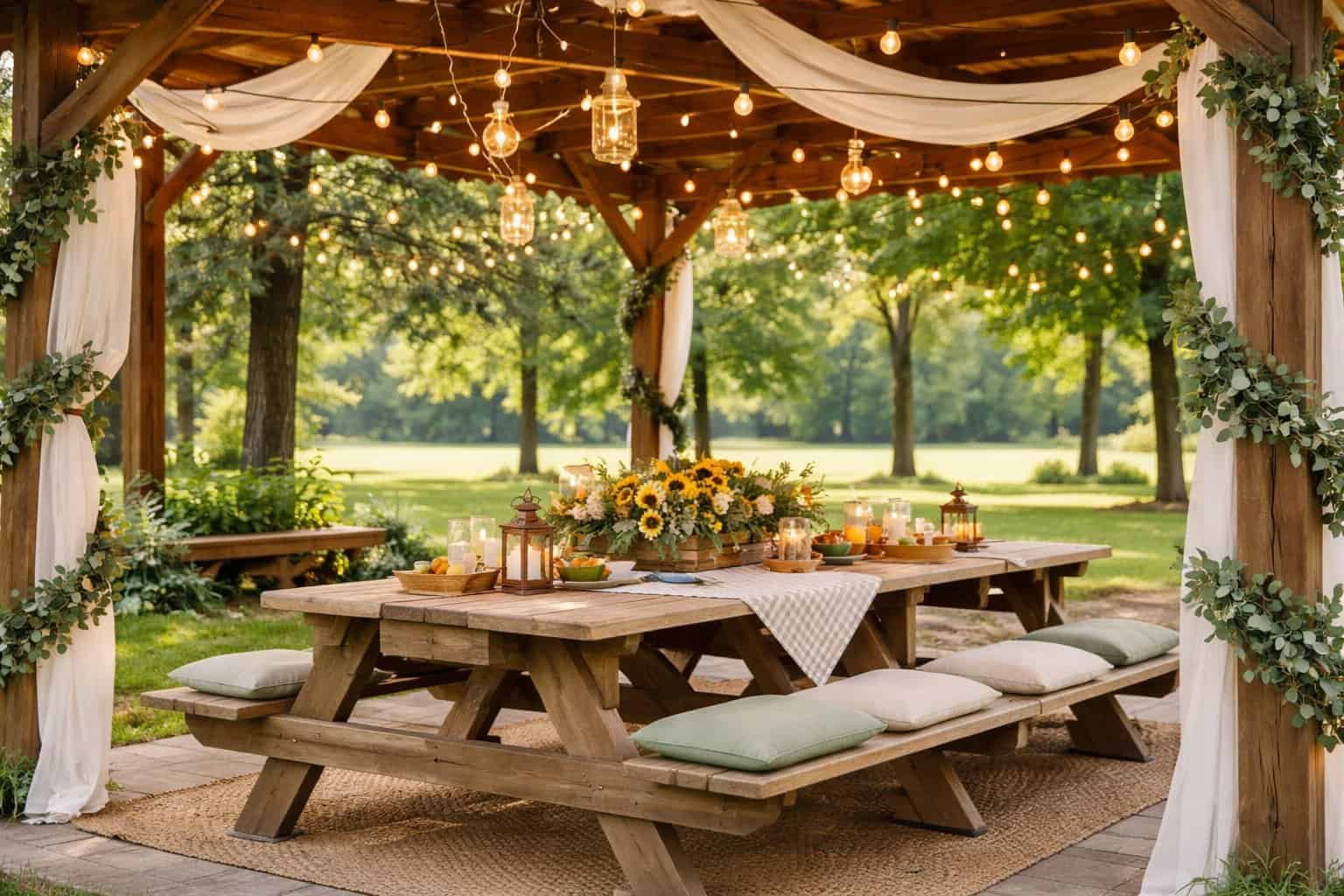

Learning how to decorate pavilion and picnic table setups can completely transform an ordinary outdoor shelter into a warm, inviting, and functional gathering space. A pavilion often serves as the centerpiece for outdoor events, while picnic tables act as both dining and social hubs. Thoughtful decoration enhances comfort, visual appeal, and usability without sacrificing practicality.
Well-decorated pavilion and picnic table areas create clear benefits:
- Improved atmosphere for family gatherings, parties, or community events
- Better organization of seating, food, and décor elements
- Stronger visual cohesion between the structure and surrounding landscape
- Increased comfort through smart fabric, lighting, and layout choices
Outdoor decorating requires a balance of style and durability. Materials must handle sun exposure, wind, and occasional moisture, while still looking polished. This guide focuses on realistic, proven methods that work for backyards, parks, and event spaces alike.
“Outdoor spaces feel complete when design supports both beauty and function.”
In This Article
Understanding the Pavilion Space Before Decorating
Successful pavilion decoration starts with understanding the structure itself. Pavilion size, layout, and environment determine which décor ideas will work best and which should be avoided.
Pavilion Types and Layout Considerations
Different pavilion styles influence decorating choices:
| Pavilion Type | Common Features | Decorating Focus |
| Backyard pavilion | Permanent roof, wood or metal posts | Comfort, style coordination |
| Park pavilion | Open sides, concrete floor | Durability, easy setup |
| Event pavilion | Larger footprint, higher ceilings | Visual impact, lighting |
| Temporary pavilion | Lightweight materials | Minimal, secure décor |
Post placement, roof height, and open sides affect how decorations hang, flow, and withstand weather. Measuring the space before planning décor prevents overcrowding and ensures visual balance.
Environmental and Weather Factors
Outdoor conditions shape every decorating decision. Sun exposure fades fabrics, wind shifts lightweight décor, and humidity affects materials.
Key factors to assess:
- Sun direction during peak hours
- Wind patterns around open sides
- Nearby greenery that can complement décor
- Ground surface such as grass, gravel, or concrete
Weather-aware decorating saves time and money while extending the life of decorations.
Choosing a Decorating Theme for Pavilion and Picnic Table
A cohesive theme simplifies decisions and ties the pavilion and picnic table together visually. Theme selection should match the purpose of the gathering and the surrounding environment.
Popular Pavilion and Picnic Table Decorating Themes
Common themes that work especially well outdoors include:
- Rustic natural: wood textures, burlap, greenery
- Seasonal: spring florals, summer brights, fall earth tones
- Casual picnic: gingham patterns, simple centerpieces
- Elegant outdoor: neutral fabrics, soft lighting, minimal accents
Each theme guides color selection, fabric choices, and decorative accents, keeping the space intentional rather than cluttered.
Coordinating Pavilion and Picnic Table Décor
Consistency creates a polished look. Pavilion décor should echo picnic table styling through shared colors, textures, or materials.
Effective coordination strategies:
- Matching table linens with pavilion draping
- Repeating accent colors in lighting and centerpieces
- Using similar materials such as wood, metal, or fabric
Strong visual continuity ensures the pavilion feels like a complete environment instead of separate decorated pieces.
How to Decorate Pavilion and Picnic Table with Table Linens and Covers
Table linens play a major role in defining the overall look of a pavilion and picnic table setup. Properly chosen fabrics instantly elevate plain wooden or metal tables while protecting surfaces from spills and heat.
Selecting the Right Tablecloths and Runners
Picnic tables require linens that balance style with durability. Standard picnic tables typically measure 72–96 inches long, making fitted or extra-long tablecloths the most practical choice.
Best fabric options include:
- Polyester blends for wrinkle resistance and easy cleaning
- Vinyl-backed cloths for high-traffic or family-friendly events
- Cotton canvas for rustic or farmhouse-style décor
Table runners add visual interest without overwhelming the surface. Layering a runner over a neutral tablecloth introduces color and texture while keeping the design grounded.
Color Coordination and Pattern Balance
Color selection should reflect the chosen theme while remaining visually calm.
Helpful guidelines:
- Neutral bases like beige, gray, or white create flexibility
- Patterned runners work best when paired with solid tablecloths
- Darker colors hide stains during food-heavy gatherings
A cohesive palette across all picnic tables strengthens the pavilion’s visual flow.
“Well-chosen linens can make even the simplest picnic table feel intentional.”
Pavilion Ceiling and Post Decorations
The pavilion structure itself offers valuable decorating opportunities. Ceiling space and support posts help frame the area and draw the eye upward, making the pavilion feel more complete and welcoming.
Hanging Decorations for Pavilion Ceilings
Ceiling décor adds depth without using valuable floor space.
Popular hanging options include:
- String lights draped in straight lines or soft curves
- Lanterns suspended at varying heights
- Lightweight fabric panels for a soft, flowing effect
When hanging décor, securing items with outdoor-rated hooks or zip ties prevents shifting during wind gusts.
Decorating Pavilion Posts and Columns
Posts anchor the pavilion visually and work well for subtle decoration.
Effective post decoration ideas:
- Wrapping posts with greenery or faux vines
- Adding ribbon or fabric in theme colors
- Twining LED lights around posts for evening events
Keeping post décor vertical and minimal maintains clear walkways and avoids visual clutter.
Centerpiece Ideas for Decorating Picnic Tables
Centerpieces define the picnic table’s focal point and reinforce the overall theme. Outdoor centerpieces should remain low-profile, stable, and practical.
Simple and Functional Centerpiece Styles
Outdoor gatherings benefit from centerpieces that allow easy conversation and food sharing.
Reliable centerpiece options include:
- Low floral arrangements in weighted containers
- Wooden trays with candles and small décor accents
- Potted plants that double as guest favors
Avoid tall or top-heavy designs, which can tip over in windy conditions.
Seasonal and Themed Centerpiece Ideas
Seasonal centerpieces feel fresh and relevant:
| Season | Centerpiece Ideas |
| Spring | Fresh flowers, pastel accents |
| Summer | Citrus bowls, greenery |
| Fall | Pumpkins, dried leaves |
| Winter | Pinecones, lanterns |
Centerpieces should enhance the table, not dominate it. Leaving enough space for plates and serving dishes keeps the picnic table functional.
How to Decorate Pavilion and Picnic Table Using Lighting
Lighting determines how welcoming and usable a pavilion feels, especially during late afternoon and evening gatherings. Thoughtful lighting choices enhance safety while setting the mood without overwhelming the space.
Outdoor Lighting Options That Work Best
Outdoor-rated lighting performs reliably in open-air environments. Popular choices include:
- String lights for soft, ambient illumination
- Solar-powered lights for eco-friendly, wire-free setup
- LED lanterns for portable and flexible lighting placement
String lights typically provide 2,700–3,000 Kelvin warm light, which creates a cozy atmosphere ideal for social gatherings. Cooler light temperatures suit functional events but feel less inviting.
Placement Tips for Balanced Illumination
Strategic placement prevents dark spots and glare:
- Outline pavilion ceilings or beams for even light spread
- Wrap lights around posts to define boundaries
- Position lanterns near picnic table ends, not center food areas
“Good outdoor lighting should guide movement while enhancing ambiance.”
Flameless LED candles remain the safest option for picnic tables, especially where children are present.
Adding Greenery and Natural Elements
Greenery connects the pavilion décor to its natural surroundings. Whether using fresh plants or faux accents, natural elements soften hard lines and add texture.
Greenery Ideas for Pavilion and Picnic Table Décor
Greenery can be incorporated in several ways:
- Garlands draped along picnic tables or railings
- Potted plants placed at pavilion corners
- Hanging baskets attached to pavilion beams
Hardy plants like ferns, eucalyptus, and boxwood perform well outdoors and maintain shape throughout an event.
Blending Décor with the Surrounding Landscape
Using plants that match nearby trees or garden beds creates seamless visual flow. Neutral containers such as wood, terracotta, or metal allow greenery to stand out naturally.
Greenery benefits include:
- Visual cooling effect in hot weather
- Reduced need for bold artificial décor
- Timeless appearance across seasons
Decorative Seating and Comfort Enhancements
Comfort-focused decorating ensures guests stay longer and enjoy the pavilion fully. Picnic tables often lack built-in comfort, making soft enhancements especially valuable.
Bench Cushions and Seat Pads
Bench cushions improve seating while adding color and texture.
Key features to look for:
- Water-resistant covers for durability
- Non-slip backing to prevent sliding
- Standard lengths of 36–72 inches for picnic benches
Neutral cushions paired with patterned pillows create layered interest without overpowering the table décor.
Coordinating Seating with Table Styling
Seat décor should complement table linens and pavilion accents. Matching colors across cushions, runners, and lighting creates a cohesive look.
Practical comfort additions include:
- Lightweight throws for cooler evenings
- Removable cushions for easy cleanup
- Stackable pads for quick storage
Comfort enhancements transform picnic tables from purely functional seating into inviting gathering spots.
Wall, Fence, and Backdrop Decoration Ideas
Wall and backdrop decorations help define the pavilion visually and create a sense of purpose for the space. Open-sided pavilions benefit the most from subtle backdrops that add structure without closing the area in.
Backdrop Ideas That Work Outdoors
Backdrops should remain lightweight, removable, and weather-aware.
Effective options include:
- Fabric panels secured to pavilion rails
- Wooden pallets styled with greenery
- Simple rope lines with hanging décor or photos
Backdrops work especially well behind the main picnic table or food-serving area, helping anchor the layout visually.
Signs, Banners, and Functional Décor
Decorative signs add personality while serving a purpose.
Common uses include:
- Welcome signs for guests
- Menu boards for food tables
- Directional signs for large gatherings
Weatherproof materials such as chalkboard paint, sealed wood, or metal signs last longer and maintain a polished look.
Budget-Friendly Ways to Decorate Pavilion and Picnic Table
Decorating a pavilion does not require a large budget. Smart planning and reusable elements deliver strong visual impact at a lower cost.
Affordable Decorating Strategies
Cost-effective ideas that still look intentional include:
- Reusing indoor décor designed for outdoor use
- Choosing neutral base pieces and changing accents seasonally
- DIY centerpieces using jars, wood trays, or recycled containers
Many pavilion decorations can be reused multiple times, making the cost per event very low.
High-Impact, Low-Cost Décor Elements
Some items offer excellent value:
| Item | Cost Range | Reusability |
| String lights | Low–medium | Very high |
| Fabric runners | Low | High |
| Potted plants | Medium | Long-term |
| LED candles | Low | Very high |
Focusing spending on lighting and linens provides the biggest visual return.
Decorating Pavilion and Picnic Table for Different Events
Different gatherings call for different decorating priorities. Adjusting décor based on event type ensures the pavilion remains functional and welcoming.
Casual Family and Picnic Gatherings
Casual events benefit from simplicity:
- Easy-to-clean table covers
- Minimal centerpieces
- Comfortable seating cushions
The goal remains relaxed comfort rather than formal styling.
Parties, Celebrations, and Community Events
Larger events allow for more visual emphasis:
- Coordinated color themes
- Decorative backdrops
- Layered lighting for evening use
Clear walkways and uncluttered picnic tables remain essential, even with heavier décor.
Practical Tips for Outdoor Decoration Success
Outdoor decorating requires preparation. A few practical strategies prevent common issues and improve efficiency.
Helpful tips include:
- Arriving early to test lighting and layout
- Securing décor with weather-resistant fasteners
- Keeping décor off food preparation areas
Packing décor in labeled bins speeds up setup and teardown, especially for larger pavilions.
Common Decorating Mistakes to Avoid
Even well-intentioned décor plans can fall short without balance.
Mistakes to avoid:
- Overcrowding picnic tables with decorations
- Ignoring wind and sun exposure
- Mixing too many colors or patterns
Clean, intentional decorating almost always looks better than excessive styling.
“Outdoor décor works best when function leads and style follows.”
Conclusion: Final Thoughts on How to Decorate Pavilion and Picnic Table
Mastering how to decorate pavilion and picnic table spaces comes down to balance, comfort, and cohesion. Successful décor enhances the structure without overpowering it, supports guest comfort, and aligns with the surrounding environment.
Key takeaways include:
- Start with a clear theme
- Prioritize lighting, linens, and comfort
- Use greenery to soften the space
- Choose décor that works with weather and layout
With thoughtful planning and smart material choices, any pavilion can become a welcoming, memorable gathering place. For additional guidance on outdoor-safe materials and setup recommendations, resources from organizations like the National Recreation and Park Association provide reliable insights into pavilion use and outdoor space planning: https://www.nrpa.org.
A well-decorated pavilion and picnic table setup turns simple outdoor structures into inviting destinations that people enjoy using again and again.

I’m the creator behind EasyDecora, a home–decor lover who enjoys discovering simple, beautiful ways to make every room feel cozy and intentional. I share practical tips, creative ideas, and inspiration for anyone who wants to build a home they truly love.