
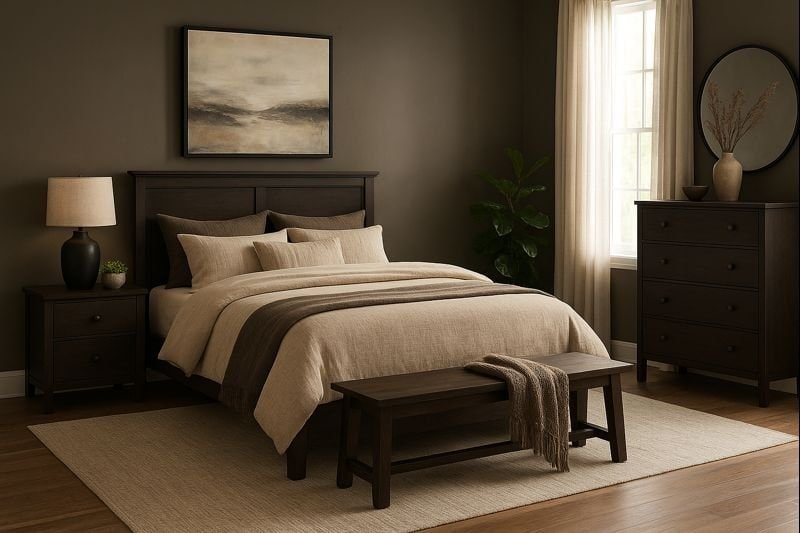

Master bedroom decor ideas with dark furniture are gaining massive popularity because homeowners are moving toward richer, moodier, and more sophisticated bedroom aesthetics. Dark wood tones—whether espresso, walnut, onyx, or charcoal-stained finishes—bring instant depth to a bedroom. They ground the space, add a sense of luxury, and create a timeless backdrop for both modern and classic interiors.
Designing with dark furniture requires intentional choices in color, lighting, texture, and layout. When these elements work together, the room becomes warm, inviting, and visually striking instead of heavy or closed-in. This guide explores practical and inspiring ways to style a master bedroom using dark furniture, offering clear examples, stylist-approved knowledge, and actionable ideas you can apply immediately.
To help you make design decisions more confidently, this article includes visual strategies, case studies, and helpful lists so you can confidently build a bedroom that feels elegant and deeply personal.
In This Article
The Impact of Dark Furniture in a Master Bedroom
Using dark furniture in a master bedroom changes the atmosphere instantly. Dark tones create contrast, shape the visual mood, and set the stage for a more layered, designer-level look.
How Dark Furniture Influences Mood
Dark furniture has a natural ability to:
- Make the room feel grounded and secure
- Add visual weight and sophistication
- Create a calm, moody environment ideal for sleep
- Highlight lighter décor elements through contrast
A study by interior color experts shows that darker tones often evoke feelings of comfort and refuge, making them ideal for bedrooms where rest and relaxation matter most.
How Dark Pieces Affect Space Perception
It’s a misconception that dark furniture always makes a room look smaller. In balanced layouts, dark tones can actually:
- Add contrast that increases depth
- Make lighter walls appear brighter
- Anchor the space visually, preventing it from feeling “floaty”
Rooms with ample lighting (natural or artificial) can handle darker furnishings easily. It’s more about balance than avoiding dark colors.
Matching Dark Furniture With the Overall Theme
Your dark furniture should feel integrated within the larger design direction. Here are common themes and how dark pieces fit in:
| Bedroom Style | How Dark Furniture Complements It |
| Modern | Sharp lines + matte black décor → sleek, high-end look |
| Traditional | Rich walnut or mahogany pieces → timeless and refined |
| Minimalist | Dark furniture becomes a bold focal point in a simple space |
| Scandinavian | Dark wood paired with soft neutrals → warm and balanced |
| Industrial | Charcoal tones + metal details → urban and edgy |
Real Case Study: The “Small Room, Big Impact” Approach
A client with a 12 m² master bedroom believed dark furniture would shrink the room. Instead of avoiding it, we:
- Used a dark walnut bed frame
- Paired it with warm cream walls
- Added brass lighting
- Introduced a large neutral rug
The result? The room looked more spacious. The contrast created structure, and the layered lighting softened the heavy tones. This shows that dark furniture enhances small rooms when balanced strategically.
Choosing the Right Dark Furniture for Your Master Bedroom
Selecting the right dark pieces is the foundation of your design. The furniture style, finishes, and materials determine how cohesive and visually appealing your bedroom becomes.
Popular Dark Wood Types and Their Aesthetic Effects
Here’s a quick comparison to help you choose:
| Wood Type | Tone | Best For | Style Impression |
| Espresso | Deep brown with black undertones | Modern bedrooms | Sleek and contemporary |
| Walnut | Rich chocolate brown | Traditional or transitional spaces | Warm and classic |
| Ebony | Jet black | Minimalist or glam rooms | Bold and dramatic |
| Mahogany | Reddish-brown | Luxury interiors | Regal and timeless |
Choosing Dark Bed Frames, Nightstands, and Dressers
When choosing your pieces, consider:
Bed Frames
- Platform beds look modern and clean.
- Four-poster beds in dark wood add drama and luxury.
- Upholstered beds with dark wooden legs soften the look.
Nightstands
- Mix matte and glossy finishes for visual interest.
- Consider nightstands with metallic handles to lighten the tone.
Dressers & Wardrobes
- Tall dressers work well in small rooms.
- Wide dressers help anchor large rooms.
- Built-in wardrobes with dark doors create a seamless, hotel-like finish.
Mixing Dark Furniture Styles Without Clashing
You can mix dark furniture styles if you follow these rules:
- Match undertones (cool undertones with cool undertones, warm with warm).
- Use one dominant piece (like the bed) and let others complement it.
- Keep hardware consistent—brushed gold, matte black, or nickel.
- Add soft furnishings to blend design eras.
Expert Quote
“Dark furniture isn’t the enemy of bright spaces. It’s the element that gives light something to contrast with—and that’s what makes a room feel intentional.”
— Interior Designer L. Hartwell
Color Palettes That Work Best With Master Bedroom Decor Ideas With Dark Furniture
Choosing the right color palette is one of the most important decisions you’ll make when designing a master bedroom with dark furniture. The right colors keep the room feeling open, comfortable, and visually balanced.
Soft Neutrals That Brighten the Room
Soft, airy neutrals lift the weight of dark furniture and create a refreshing contrast. These shades help bounce light around the room and prevent the space from feeling enclosed.
Ideal light-neutral tones include:
- Cream
- Warm white
- Taupe
- Pale gray
- Beige
- Ivory
These colors work well both on walls and textiles. For example, pairing a dark espresso bed frame with cream walls and ivory bedding instantly lightens the room while keeping a cozy and serene feel.
Why it works:
Neutrals act as a backdrop, allowing the dark furniture to shine without overwhelming the senses.
Cool Tones for a Calming Vibe
Cool hues blend beautifully with deep wood tones, making the space feel grounded yet refreshing.
Great cool colors include:
- Dusty blue
- Sage green
- Slate gray
- Muted teal
- Cool charcoal
Dark furniture + cool tones = calming, spa-like energy.
Warm Tones for a Sophisticated Atmosphere
Warm tones create a luxurious and intimate setting, especially when paired with rich wood finishes.
Try:
- Terracotta
- Deep mustard
- Muted gold
- Soft clay
- Warm mocha
These tones bring warmth that complements walnut, mahogany, and ebony furniture.
Sample Palette Table
| Palette Theme | Wall Color | Accent Textiles | Works Best With |
| Bright Neutral | Cream | Ivory, Linen | Espresso, Ebony |
| Cool Calm | Sage Green | Mist Blue, Grey | Charcoal, Walnut |
| Warm Luxury | Terracotta | Gold, Beige | Mahogany, Dark Cherry |
| Modern Contrast | Pure White | Black, Gray | Matte Black Furniture |
Wall Treatments and Paint Colors That Enhance Dark Furniture
Walls play a huge role in how dark furniture looks in a master bedroom. From paint to textures, choosing the right treatment can take your design from average to editorial.
Best Wall Paint Colors for Contrast or Harmony
Dark furniture can harmonize beautifully with both light and bold walls. Here’s how to approach each:
For High Contrast
Go for lighter walls:
- Soft white
- Eggshell cream
- Pale greige
Contrast gives the room brightness and highlights the furniture’s shape.
For Harmonious Depth
Use medium or darker walls:
- Storm gray
- Midnight blue
- Olive green
- Charcoal
This creates a moody, designer-inspired look without sacrificing elegance.
Textured Walls and Paneling
Textures add dimension and richness, complementing the weight of dark furniture.
Popular options:
- Board and batten paneling
- Vertical fluted wood panels
- Grasscloth wallpaper
- Soft geometric wallpaper
- Subtle stone or plaster textures
Tip: Don’t use overly busy patterns—dark furniture pairs best with refined, understated textures.
Avoiding an Overly Dark Room
A common concern when using dark furniture is making the room too heavy. Avoid this by:
- Keeping ceilings bright white
- Adding mirrors to reflect light
- Using warm bulbs instead of cool, stark lighting
- Balancing dark walls with light bedding or rugs
Mini Case Study Example
A client wanted moody walls with dark furniture, fearing the space might look cave-like. By pairing:
- Charcoal accent wall
- Light taupe surrounding walls
- Large gold-framed mirror
- Sheer off-white curtains
…the room looked luxurious and balanced, proving dark-on-dark can work beautifully when supported with the right lighting and accents.
Layering Textiles to Soften the Look of Dark Furniture
Textiles are your secret weapon when decorating a master bedroom with dark furniture. They soften edges, introduce warmth, and add personality.
Choosing Bedding That Elevates Dark Furniture
Your bedding should complement the furniture while preventing it from feeling too heavy.
Great bedding options include:
- Crisp white or cream sheets
- Textured quilts (waffle, linen, or matelassé)
- Soft pastels for contrast
- Layered throw blankets for warmth
Stick to a mixture of textures instead of overly bold patterns. Dark furniture pairs beautifully with tactile, high-quality fabrics.
Rugs That Lighten or Ground the Room
Rugs are powerful design tools. They help either lighten the mood or provide grounding warmth.
To Brighten
Use:
- Light woven rugs
- Ivory shag rugs
- Cream geometric patterns
To Add Depth
Choose:
- Charcoal rugs
- Patterned oriental rugs
- Earth-toned kilims
Tip: Select a rug large enough to extend at least 20–30 cm beyond each side of the bed for a high-end look.
Curtains and Drapery That Create Balance
Dark furniture benefits from drapery that softens and brightens the room.
Suggested fabrics:
- Linen blend curtains
- Sheer white curtains for softness
- Velvet curtains for a luxurious contrast
How Textiles Create Mood
Here’s what different textile styles evoke:
| Textile Type | Mood Created | Best For |
| Linen | Relaxed and airy | Modern, Scandinavian |
| Velvet | Elegant and glamorous | Classic, Hotel-inspired |
| Cotton | Clean and simple | Minimalist |
| Wool | Cozy and warm | Rustic, Traditional |
Expert Tip
Interior stylists often use the 3-2-1 layering rule:
- 3 types of pillows
- 2 blankets or quilts
- 1 accent textile (bench cushion, ottoman throw, etc.)
This creates dimension without clutter.
Lighting Strategies for Master Bedroom Decor Ideas With Dark Furniture
Lighting plays a crucial role in making master bedroom decor ideas with dark furniture feel inviting rather than heavy. Dark pieces absorb more light than lighter furniture, which means your lighting choices must be intentional and layered to achieve a balanced atmosphere.
Why Layered Lighting Matters
Using only one overhead light creates harsh shadows and makes dark furniture look heavier. Layered lighting evenly disperses brightness, enhances texture, and softens shadows.
A well-lit master bedroom typically includes:
- Ambient lighting – general brightness from ceiling fixtures or track lighting
- Task lighting – bedside lamps, reading lights, or wall sconces
- Accent lighting – soft lights behind headboards, LED strip lighting, or art lights
Types of Fixtures That Work Best With Dark Furniture
Not all lighting pieces pair equally well with moody, dark-toned interiors. Here are designer-approved choices:
Warm Brass Fixtures
Brass warms up the richness of dark wood and adds a sophisticated glow.
Matte Black Fixtures
Offer a clean, modern look that blends seamlessly without clashing.
Soft-Glow Table Lamps
Look for:
- Ivory or linen shades
- Dimmable bulbs
- Curved silhouettes
These soften the boldness of dark furniture.
Oversized Pendants or Chandeliers
A statement piece above the bed draws attention upward, balancing the visual weight of the furniture below.
Lighting Temperature for Best Results
Use 2700K to 3000K warm white bulbs to:
- Create a soothing sleep environment
- Bring warmth to dark furniture
- Highlight wood grain and texture
Avoid cool white bulbs (above 4000K), which make dark furniture appear stark and dull.
Quick Lighting Guide Table
| Lighting Type | Best Fixtures | Effect on Dark Furniture |
| Ambient | Flush mount, chandelier | Softens heavy tones |
| Task | Table lamps, sconces | Adds functional warmth |
| Accent | LED strips, picture lights | Highlights texture and detail |
Decorative Accessories That Complement Dark Furniture
Accessories bring personality to master bedroom decor ideas with dark furniture. Thoughtful styling prevents the room from feeling flat and transforms it into a polished, curated retreat.
Choosing Artwork That Enhances Dark Tones
Art is one of the easiest ways to introduce light and interest.
Recommended choices:
- Large-scale neutral-toned prints
- Minimalist line drawings
- Abstract art with gold or soft beige accents
- Nature-inspired pieces (botanical sketches, soft landscapes)
A gallery wall above a dark dresser also creates beautiful contrast.
Adding Mirrors for Light and Balance
Mirrors are a must-have when styling dark furniture because they:
- Reflect natural light
- Make the room appear larger
- Break up the weight of deep colors
Popular mirror styles:
- Oversized round mirrors
- Gold-framed rectangle mirrors
- Vintage-inspired arch mirrors
Metallic Accents That Bring Elegance
Small metal details can completely transform the space.
Choose metals like:
- Brass (warm, luxurious)
- Champagne gold (modern, subtle)
- Brushed nickel (clean, contemporary)
Metal finishes pair beautifully with espresso, walnut, and black-stained furniture.
Plants and Natural Elements
Greenery adds a refreshing contrast to dark wood tones.
Excellent low-maintenance choices:
- Snake plant
- Monstera
- ZZ plant
- Olive tree
- Pothos
Natural woven baskets or wooden bowls also introduce organic warmth.
Thoughtful Styling Ideas
- A textured ceramic vase on the nightstand
- Linen-framed photos above the dresser
- A tray with candles and books to create a hotel-inspired look
- Layered textiles at the foot of the bed
Mini Case Study: The Accessory Reset
A couple with a heavy-looking bedroom replaced their dark, bulky accessories with:
- Two brass lamps
- Light-toned ceramic pottery
- A large round mirror
- Linen bedding
The space transformed instantly—brighter, balanced, and far more welcoming.
Creating Contrast Without Losing Coziness
Contrast is essential when decorating a master bedroom with dark furniture. It keeps the space visually dynamic while maintaining warmth and comfort.
Using Light Flooring for Balance
Light floors make dark furniture pop without overwhelming the room. Excellent flooring options include:
- Light oak
- Whitewashed laminate
- Soft beige carpet
- Cream-toned area rugs
High-Contrast Bedding That Still Feels Warm
A simple formula:
Light bedding + dark furniture = clean contrast with cozy energy.
Best bedding combinations:
- White duvet + cream knit throw
- Soft gray bedding + patterned pillows
- Linen beige sheets + white quilt
Avoid all-dark bedding—it makes everything blend together.
Accent Walls That Add Visual Interest
Accent walls introduce depth without overpowering the space.
Try:
- Soft sage or muted olive
- Pale dusty blue
- Warm greige
- Textured wallpaper in subtle patterns
These tones complement dark furniture while keeping the room calm and comfortable.
How to Keep the Room Cozy
To maintain warmth while adding contrast:
- Choose warm lighting instead of cool-toned bulbs
- Mix textures like linen, cotton, velvet, and wool
- Add natural wood accessories
- Keep plush rugs underfoot
Quick Guide: Cozy vs. Cold Contrast
| Design Feature | Cozy Result | Cold Result |
| Lighting | Warm bulbs | Cool white bulbs |
| Bedding | Layered neutrals | Flat, single-tone bedding |
| Accessories | Plants, woven textures | Stark metallic-only décor |
| Walls | Soft tones | Pure black + dark furniture |
For additional color theory guidance, the information from Sherwin-Williams’ color education section is extremely helpful and reliable: https://www.sherwin-williams.com
Master Bedroom Layout Ideas With Dark Furniture
A well-planned layout is essential when using dark furniture in a master bedroom. Dark pieces have visual weight, so arranging them thoughtfully prevents the room from feeling cramped or unbalanced.
Positioning a Dark Bed Frame for the Best Visual Impact
The bed is the anchor of the room, and its placement determines how harmonious the space feels.
Best bed placement strategies:
- Against the longest uninterrupted wall:
This stabilizes the room and helps the bed feel proportionate within the space. - Centered between two windows:
Creates a symmetrical, polished look—especially effective with dark furniture. - Opposite a focal feature:
Such as a fireplace, large window, or accent wall, to maximize visual depth.
Balancing Dark Furniture With Symmetrical Layouts
Symmetry works beautifully with dark furniture because it balances the strong presence of deep wood tones.
Try incorporating:
- Matching nightstands
- Twin lamps
- Equal artwork placement
- Mirrored décor on each side
This makes the room feel calm and orderly, which naturally softens the intensity of darker colors.
Asymmetrical Layouts for More Creative Styles
For more eclectic or modern rooms, asymmetry can look just as beautiful:
- Use one nightstand instead of two
- Offset wall art
- Add a lounge chair on one side of the bed
Asymmetry helps modern spaces feel more relaxed and less formal while still showcasing dark furniture as a statement element.
Layout Differences for Small vs. Large Rooms
| Room Size | Layout Strategy | Why It Works |
| Small Master Bedrooms | Minimal furniture, wall-mounted lighting, one dresser | Keeps the space airy while showcasing dark pieces |
| Large Master Bedrooms | Seating area, oversized rug, multiple dressers | Fills visual gaps so the dark furniture doesn’t feel isolated |
Pro Tip
Place the darkest, heaviest piece (usually the bed or dresser) furthest from the entry door.
This creates a visually welcoming path into the room and reduces the sense of heaviness upon entry.
Incorporating Texture for Depth and Dimension
Texture is a powerful design tool that elevates master bedroom decor ideas with dark furniture from simple to sophisticated. When dark furniture is paired with rich textures, the space feels warm, tactile, and multi-layered.
Why Texture Matters With Dark Furniture
Dark furniture has smooth, solid surfaces that can feel heavy or flat if not balanced with softer, tactile materials.
Texture adds:
- Softness
- Warmth
- Visual interest
- Dimensional contrast
Best Textures to Use in a Master Bedroom With Dark Furniture
Soft Fabrics:
- Linen bedding
- Chunky knit blankets
- Velvet throw pillows
- Cotton quilts
Natural Materials:
- Rattan baskets
- Woven jute rugs
- Cane nightstand accents
Tactile Wall Elements:
- Vertical slatted panels
- Subtle geometric wallpaper
- Limewash or plaster finishes
Each of these introduces dimension and softens the visual weight of dark tones.
How to Build a Textural Layering Plan
Use the High-Low Texture Technique:
- High texture (thick, bold materials) → rugs, throws, upholstered headboards
- Low texture (smooth, subtle materials) → furniture finish, mirror frames
Layering high- and low-texture elements creates balance and avoids monotony.
Texture Mood Board Table
| Texture Type | Ideal Placement | Effect on Dark Furniture |
| Velvet | Pillows, headboard | Adds elegance and warmth |
| Wool | Throws, rugs | Enhances coziness |
| Linen | Bedding, curtains | Creates breezy lightness |
| Rattan/Wicker | Baskets, wall décor | Adds natural contrast |
| Stone/Concrete | Lamps, side tables | Introduces modern earthiness |
Case Study: Texture Transformation
A modern bedroom with an ebony bed frame once felt too rigid and masculine. By adding:
- A linen duvet,
- Textured rug,
- Velvet pillows, and
- A rattan basket—
the room transformed into a warm and balanced retreat without removing any dark furniture.
Mixing Dark Furniture With Modern, Classic, and Minimalist Styles
Dark furniture is incredibly versatile and adapts well to different interior styles. The key is understanding how each style interacts with deep color tones.
Modern Styling With Dark Furniture
Modern bedrooms thrive on contrast, clean lines, and minimal clutter.
How to achieve the look:
- Use matte black or brass lighting
- Add monochrome artwork
- Choose sleek dressers and low-profile bed frames
- Keep décor simple and structured
Dark furniture feels bold and architectural in a modern setting.
Classic or Traditional Styling
Dark furniture naturally complements classic interiors thanks to rich wood finishes and timeless craftsmanship.
Classic elements that elevate dark furniture:
- Ornate frames
- Tufted headboards
- Persian-style rugs
- Warm neutrals like beige, gold, or dusty mauve
This creates a refined, elegant atmosphere.
Minimalist Styling With Dark Furniture
Minimalism doesn’t mean avoiding dark tones—it’s about intentional simplicity.
Minimalist pairing tips:
- Limit furniture to essential pieces
- Use solid-color bedding
- Choose clean, uninterrupted wall colors
- Add one statement décor element (large plant or sculptural lamp)
Dark furniture becomes the focal point in a minimalist bedroom, adding depth without clutter.
Scandinavian Styling With Dark Wood
For a European-inspired approach:
- Combine dark furniture with light oak flooring
- Add white or cream textiles
- Mix soft curves with clean edges
- Use natural materials like wool and cotton
The contrast creates a calm, cozy, and stylish feel.
Style Comparison Table
| Style | Dark Furniture Pairing | Result |
| Modern | Matte finishes, graphic art | Bold, sleek |
| Classic | Rich fabrics, warm colors | Timeless and luxurious |
| Minimalist | Clean lines, neutral palette | Calm and structured |
| Scandinavian | Soft textures, light flooring | Warm, balanced |
Expert Quote
“Dark furniture adapts to every design style because it behaves like a neutral—deep, grounding, and timeless.”
— Interior Stylist M. Ryland
Storage Solutions That Work With Dark Furniture
Storage plays a crucial role in shaping how a master bedroom feels, especially when dark furniture is the focal point. Dark pieces already carry visual weight, so storage must support organization, prevent clutter, and maintain a harmonious flow.
Choosing Storage That Complements Dark Furniture
Matching dark storage furniture with the existing pieces helps maintain consistency. Consider:
- Built-in wardrobes with matte black or deep walnut panels
- Tall dressers in espresso or charcoal finishes
- Floating nightstands to reduce heaviness at eye level
- Low-profile benches at the foot of the bed for extra storage
These options allow the room to remain balanced while keeping frequently used items within easy reach.
Open vs. Closed Storage
Both types serve a purpose, but choosing the right one depends on how you use your space.
| Storage Type | Best For | Visual Impact | Notes |
| Open shelves | Displaying décor, books, small plants | Lightens dark furniture by adding visual openness | Works best when items are neatly arranged |
| Closed cabinets | Clothes, linens, electronics | Clean and streamlined | Keeps clutter concealed and maintains a calm atmosphere |
| Mixed storage | Shared bedrooms, multipurpose rooms | Balanced | Provides flexibility and keeps style cohesive |
How to Let Dark Furniture Shine
When the room is tidy, dark furniture becomes a dramatic feature instead of overpowering the design. Use baskets, drawer organizers, and labeled bins to maximize order without sacrificing style.
A small case study makes the concept clearer.
Case Study: Organizing With Minimal Visual Bulk
A homeowner with an espresso bed frame found the room felt crowded after adding a matching dresser and two nightstands. Instead of replacing furniture, they swapped bulky nightstands with slim floating shelves, added soft-beige storage bins inside the dresser, and installed a wall-mounted wardrobe with mirrored doors.
The result: the space felt brighter, more open, and the dark furniture became a bold yet elegant anchor instead of feeling overwhelming.
Common Mistakes to Avoid When Decorating With Dark Furniture
Mistakes are easy to make when working with moody tones. Identifying common pitfalls helps ensure your master bedroom decor ideas with dark furniture stay cohesive and inviting.
Using Too Many Dark Elements at Once
An overload of dark pieces can flatten the space. Aim for 40–60% dark furnishings and let the remaining elements—including walls, textiles, and décor—lift the overall atmosphere.
Ignoring Lighting Needs
Dark furniture absorbs light, so a room without properly layered lighting ends up dim and heavy.
Use:
- Soft ambient lighting
- Bedside lamps
- A statement chandelier or pendant
- Accent lighting behind headboards or shelves
Good lighting turns dark furniture into a sophisticated highlight rather than a sink for brightness.
Choosing the Wrong Color Palette
Cool grays, overly saturated shades, or muddy tones can make the room feel unbalanced. Opt for complementary palettes:
- Warm neutrals (cream, camel, sand)
- Earthy tones (sage, terracotta, clay)
- Muted jewel colors (midnight blue, hunter green)
Overcrowding the Room
Large dark pieces demand breathing room. Avoid placing too many accessories on top of dressers or cramming in unnecessary furniture.
Neglecting Texture
Smooth dark furniture needs balance from textured items such as:
- Chunky knit throws
- Woven rugs
- Linen curtains
- Rattan baskets
Texture prevents the room from feeling flat and gives depth to the darker colors.
Quote for Inspiration
“Dark furniture isn’t heavy—it’s grounding. The key is giving it light, texture, and space to shine.”
Conclusion: Bringing Master Bedroom Decor Ideas With Dark Furniture to Life
Master bedroom decor ideas with dark furniture blend elegance, warmth, and personality when executed with intention. The richness of espresso, walnut, and charcoal pieces adds presence, while well-balanced textiles, lighting, and color choices prevent the room from feeling overwhelming. Every detail—from wall treatments and bedding to layout and accessories—plays a role in creating a space that feels luxurious and deeply personal.
A beautifully designed master bedroom with dark furniture is not just visually appealing—it’s restful, atmospheric, and timeless. By choosing the right storage, avoiding common mistakes, and layering elements thoughtfully, your bedroom becomes a sanctuary that reflects both style and comfort.
For further reading on choosing harmonious color palettes, you can explore helpful color theory fundamentals at Color Theory Basics.

I’m the creator behind EasyDecora, a home–decor lover who enjoys discovering simple, beautiful ways to make every room feel cozy and intentional. I share practical tips, creative ideas, and inspiration for anyone who wants to build a home they truly love.