
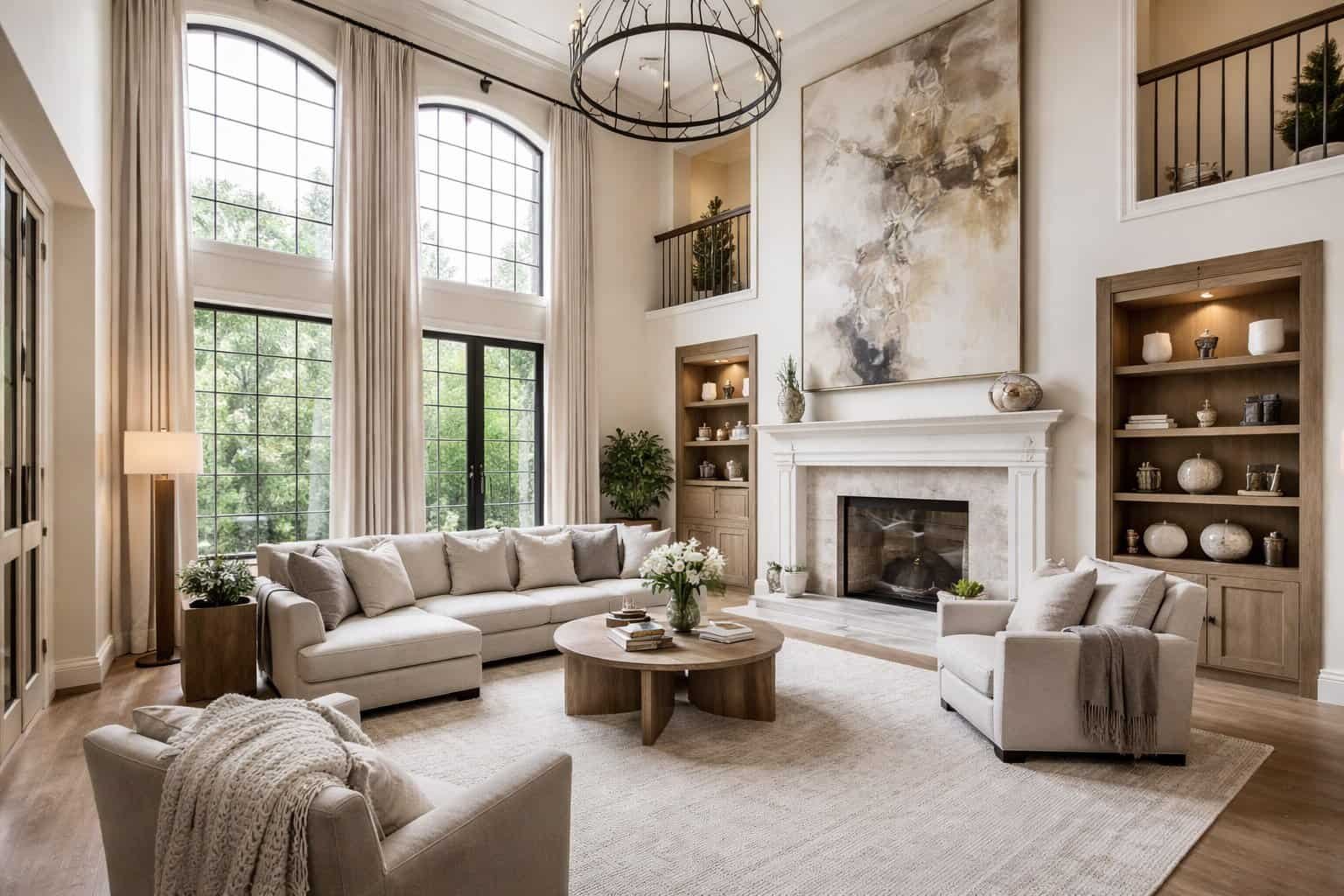

Two story living room wall decorating ideas require a completely different mindset than decorating standard-height spaces. A wall that stretches from floor to ceiling instantly becomes the focal point of the home, influencing how the entire living room feels, flows, and functions. When decorated thoughtfully, this vertical canvas adds drama, elegance, and architectural character. When ignored or handled poorly, it can feel empty, awkward, or visually overwhelming.
A two story living room wall is not just “extra wall space.” It is a design opportunity that can define your interior style. Successful decorating blends scale, proportion, texture, and visual rhythm to make the height feel intentional rather than accidental. Whether the goal is modern minimalism, cozy warmth, or bold luxury, the wall design plays a leading role.
“Large walls don’t ask for more decoration — they ask for better decisions.”
— Interior Design Principle
This guide explores practical, design-forward solutions that work specifically for tall living rooms, starting with the most important foundations: understanding scale and using large-scale art effectively.
In This Article
Scale and Proportion in Two Story Living Rooms
Scale and proportion form the backbone of all effective two story living room wall decorating ideas. Without them, even expensive décor can look misplaced or unfinished.
Why Scale Matters More Than Style
A common mistake in tall living rooms is using décor sized for standard walls. Small artwork, narrow mirrors, or short shelves tend to disappear against a two story wall, creating visual imbalance. Height demands presence.
Key facts to keep in mind:
- Two story living room walls often measure 18–25 feet tall
- Standard wall art (24–36 inches) visually occupies less than 15% of the wall height
- Design elements should ideally fill 60–75% of the visible wall space
Proportion Rules That Actually Work
Effective proportion keeps the wall from feeling top-heavy or empty at the bottom.
Practical proportion guidelines:
- Wall décor should align visually with furniture below
- The main focal element should sit slightly above eye level when viewed from the seating area
- Vertical elements should extend upward to visually connect both stories
| Wall Height | Ideal Decor Height | Best Decor Type |
| 18–20 ft | 9–14 ft | Oversized art, vertical panels |
| 20–25 ft | 12–18 ft | Multi-panel art, tall shelving |
| 25+ ft | 15–22 ft | Statement installations |
Balanced proportion creates a natural flow from floor to ceiling, helping the room feel cohesive rather than cavernous.
Two Story Living Room Wall Decorating Ideas Using Large-Scale Art
Large-scale art remains one of the most effective and visually striking ways to decorate a two story living room wall. Unlike clustered small pieces, oversized art commands attention and grounds the entire space.
Why Oversized Art Works So Well
Large art mirrors the scale of the wall itself, preventing the space from feeling empty. It also simplifies design decisions by creating a single, powerful focal point.
Benefits of large-scale art include:
- Immediate visual impact
- Reduced clutter compared to gallery walls
- Strong alignment with modern and transitional interiors
Popular choices include:
- Abstract canvases
- Nature-inspired murals
- Textured or mixed-media installations
Oversized Single Art vs. Multi-Panel Sets
Both options work well, but each serves a different purpose.
Single oversized artwork
- Creates a bold, dramatic statement
- Works best in minimalist or modern living rooms
- Ideal for symmetrical layouts
Multi-panel art sets
- Adds movement and visual rhythm
- Helps guide the eye vertically
- Works beautifully in transitional and contemporary spaces
| Art Style | Best Room Style | Visual Effect |
| Abstract | Modern, Minimal | Bold, artistic |
| Landscape | Transitional | Calm, expansive |
| Textured | Contemporary | Depth and dimension |
Placement Tips That Prevent Common Mistakes
Correct placement ensures the art feels intentional rather than floating.
Best placement practices:
- Center artwork visually, not mathematically
- Leave breathing space at the top and bottom
- Align the lower edge with architectural features or furniture
Well-placed large-scale art turns height into harmony.
Creating Visual Flow from Floor to Ceiling
Two story living room wall decorating ideas work best when the eye can travel naturally from the lower level to the upper level without interruption. Visual flow connects both stories into a single, intentional design instead of two separate zones competing for attention.
Connecting Lower and Upper Wall Zones
A tall wall often feels disjointed when décor is placed only at eye level or only near the ceiling. Visual continuity is created by repeating elements vertically.
Effective ways to connect both levels:
- Align artwork or décor with furniture edges below
- Extend colors, textures, or materials upward
- Stack visual elements in a deliberate vertical line
For example, a console table topped with sculptural décor can visually transition into tall artwork above it. This creates a natural upward movement that feels grounded and balanced.
Using Vertical Alignment to Guide the Eye
Vertical alignment helps prevent the wall from feeling chaotic. When items line up intentionally, the height feels elegant rather than overwhelming.
Strong vertical alignment techniques include:
- Tall art pieces centered above seating
- Stacked frames arranged in a single column
- Lighting fixtures that emphasize height
Designers often describe this effect as “visual breathing,” where the eye pauses and moves smoothly upward.
Avoiding Disconnected or Floating Decor
Floating décor happens when items lack reference points. It makes the wall feel accidental rather than curated.
Common mistakes to avoid:
- Hanging artwork too high without anchoring it below
- Spreading décor randomly across the wall
- Leaving large empty gaps between elements
A well-designed two story wall should feel anchored at the bottom and expressive at the top, not divided.
Two Story Living Room Wall Decorating Ideas with Gallery Walls
Gallery walls are often associated with small spaces, but when designed correctly, they can be powerful two story living room wall decorating ideas that add personality and depth.
When Gallery Walls Work Best in Tall Spaces
Gallery walls work best when the living room has:
- A wide wall surface
- Neutral wall colors
- Minimal architectural obstructions
Instead of spreading frames horizontally, tall spaces benefit from vertical or cascading layouts that emphasize height.
Gallery Wall Layout Styles for Two Story Walls
Certain layouts are especially effective for tall living rooms:
Vertical column layout
- Frames stacked upward in a clean line
- Ideal for modern and minimalist spaces
Staggered vertical layout
- Frames shift slightly left and right
- Creates movement and visual interest
Symmetrical grid layout
- Balanced and structured
- Works well in formal or transitional interiors
| Layout Style | Visual Impact | Best For |
| Vertical Column | Elegant, tall | Modern rooms |
| Staggered | Dynamic | Eclectic styles |
| Symmetrical Grid | Balanced | Classic interiors |
Mixing Frames Without Visual Chaos
Successful gallery walls rely on cohesion.
Tips for a polished look:
- Limit frame finishes to two or three styles
- Repeat colors throughout the arrangement
- Mix photography, artwork, and negative space
Gallery walls in two story living rooms should feel curated, not crowded.
Architectural Features as Wall Decor
Some of the most effective two story living room wall decorating ideas involve enhancing what is already there. Architectural features often provide built-in beauty that only needs emphasis.
Highlighting Windows, Beams, and Ledges
Tall windows, exposed beams, and upper ledges are natural focal points. Rather than competing with them, successful wall décor works around these elements.
Ways to highlight architectural features:
- Frame windows with tall drapery panels
- Use accent lighting to emphasize beams
- Style ledges with oversized decorative objects
Adding Molding and Wall Paneling for Depth
Wall treatments add structure and texture, making tall walls feel intentional and luxurious.
Popular options include:
- Vertical shiplap or slatted panels
- Picture-frame molding
- Board-and-batten designs
These features visually break up the wall while reinforcing its height.
Creating a Custom, Built-In Look
Architectural enhancements elevate the space beyond surface décor.
Benefits of architectural wall treatments:
- Increase perceived home value
- Reduce the need for excessive décor
- Add timeless character
When the wall itself becomes the design, less decoration is needed.
Two Story Living Room Wall Decorating Ideas Using Mirrors
Mirrors are one of the most effective two story living room wall decorating ideas because they work on both a visual and functional level. Beyond style, mirrors amplify light, expand space, and soften the heaviness that tall walls can sometimes create.
Why Mirrors Are Ideal for Two Story Walls
Tall living rooms often struggle with shadows, especially in corners or upper levels. Mirrors help redistribute natural and artificial light throughout the space.
Key advantages of mirrors in tall spaces:
- Reflect natural daylight from large windows
- Reduce visual heaviness on expansive walls
- Add elegance without clutter
According to interior lighting studies, reflective surfaces can increase perceived brightness by up to 30%, making mirrors especially valuable in high-ceiling spaces.
Choosing the Right Mirror Size and Shape
Scale matters more than shape, but both influence the final result.
Best mirror styles for two story walls:
- Oversized rectangular mirrors for modern interiors
- Tall arched mirrors for transitional or classic styles
- Grouped vertical mirrors for contemporary spaces
| Mirror Shape | Visual Effect | Ideal Placement |
| Rectangular | Clean, bold | Centered above seating |
| Arched | Soft, elegant | Between windows |
| Grouped Panels | Modern | Narrow wall sections |
Placement Tips That Maximize Impact
Mirrors should align with architectural or furniture elements to avoid a floating effect.
Smart placement ideas:
- Align mirror edges with windows or door frames
- Position mirrors opposite light sources
- Anchor large mirrors with furniture below
In two story living rooms, mirrors work best when they feel integrated rather than decorative.
Incorporating Texture for Visual Interest
Texture plays a crucial role in two story living room wall decorating ideas. Without it, tall walls can feel flat, cold, or overly formal. Texture introduces warmth and dimension without overwhelming the space.
Best Textured Materials for Tall Walls
Textured surfaces visually break up large areas and add depth.
Popular texture options include:
- Natural wood panels
- Exposed brick or stone veneer
- Fabric or upholstered wall panels
- Textured wallpaper with subtle patterns
Each material brings a different mood, from rustic warmth to modern sophistication.
Balancing Texture with Clean Lines
Texture should enhance the wall, not dominate it. Combining textured surfaces with smooth finishes creates balance.
Effective texture pairings:
- Wood paneling with neutral paint
- Stone accents with minimalist furniture
- Fabric panels paired with metal décor
| Texture Type | Style Impact | Best Room Style |
| Wood | Warm, organic | Farmhouse, Modern |
| Stone | Dramatic | Contemporary |
| Fabric | Soft | Luxury interiors |
Preventing Visual Overload
Too much texture can feel heavy, especially in tall spaces.
Guidelines for restraint:
- Use one primary textured surface
- Keep surrounding décor minimal
- Maintain consistent color tones
Texture should invite touch and comfort, not distraction.
Statement Lighting as a Wall-Focused Feature
Lighting is often overlooked in two story living room wall decorating ideas, yet it can define how the wall is perceived at every hour of the day.
Using Lighting to Enhance Wall Height
Strategic lighting draws attention upward and emphasizes architectural scale.
Effective lighting choices include:
- Wall sconces placed vertically
- Accent lighting aimed upward
- Sculptural lighting fixtures
These options create depth and movement without filling the wall with objects.
Choosing Lighting That Complements the Wall
Lighting should enhance, not compete with wall décor.
Best practices for lighting selection:
- Match metal finishes with existing décor
- Choose warm lighting for cozy interiors
- Use dimmers for flexibility
Lighting designers recommend layered lighting to improve comfort and functionality in tall living rooms.
Creating Ambiance Without Overpowering the Space
Oversized lighting can overwhelm if not balanced correctly.
Smart lighting strategies:
- Use multiple smaller fixtures instead of one large one
- Highlight textures and art with soft illumination
- Keep brightness adjustable
Great lighting turns height into atmosphere.
Decorating with Shelving and Vertical Displays
Shelving offers some of the most practical and visually engaging two story living room wall decorating ideas. When done right, shelving fills vertical space while adding personality, storage, and rhythm to the wall.
Tall Shelving Units vs. Floating Shelves
Both options work well, but the choice depends on the room’s style and layout.
Tall shelving units
- Anchor the wall from floor to ceiling
- Work well in modern and transitional homes
- Provide strong vertical emphasis
Floating shelves
- Feel lighter and more flexible
- Ideal for staggered or asymmetrical layouts
- Allow negative space to breathe
| Shelf Type | Visual Weight | Best Use |
| Floor-to-ceiling | Strong | Large open walls |
| Floating | Light | Accent sections |
| Built-in | Seamless | Custom interiors |
Styling Shelves for Height and Balance
Shelf styling should guide the eye upward without clutter.
Effective styling principles:
- Vary object heights
- Mix décor with empty space
- Repeat colors and materials
Tall vases, sculptural objects, and stacked books help reinforce vertical flow.
Combining Decor, Books, and Greenery
A balanced shelf includes:
- 40% décor (vases, sculptures)
- 40% functional items (books, baskets)
- 20% greenery
This mix keeps shelves dynamic and livable rather than staged.
Using Color and Accent Walls Strategically
Color is one of the most powerful two story living room wall decorating ideas because it instantly affects how height and scale are perceived.
Best Colors for Tall Living Room Walls
Color choice can visually stretch or soften a tall wall.
Popular color directions include:
- Warm neutrals for balance and comfort
- Soft grays for modern elegance
- Deep accent colors for drama
Design research shows darker colors can reduce perceived height by up to 10%, making them useful in overly tall spaces.
When to Use Bold vs. Neutral Tones
Bold colors work best when applied with intention.
Use bold colors when:
- The wall has architectural interest
- The furniture palette is neutral
- Lighting is abundant
Neutral tones shine when décor and texture take center stage.
Color Techniques That Influence Height
Smart color placement reshapes perception.
Effective techniques:
- Paint the upper wall slightly darker to ground height
- Use vertical color blocking to guide the eye
- Match trim color to wall color for seamless flow
Color doesn’t just decorate—it reshapes space.
Two Story Living Room Wall Decorating Ideas with Greenery
Greenery softens large walls and introduces life, making it one of the most approachable two story living room wall decorating ideas.
Hanging Plants and Tall Indoor Trees
Plants naturally complement vertical spaces.
Best greenery choices include:
- Fiddle leaf figs
- Olive trees
- Hanging pothos or philodendrons
Tall plants visually connect floor and ceiling while adding organic movement.
Using Greenery to Soften Large Wall Areas
Plants break up solid surfaces without clutter.
Placement tips:
- Position tall plants near wall corners
- Hang planters at varying heights
- Pair greenery with neutral backdrops
Low-Maintenance Plant Options
For ease and longevity, consider:
- Snake plants
- ZZ plants
- Preserved or high-quality faux greenery
Greenery brings warmth that no artwork can replicate.
Common Decorating Mistakes to Avoid
Even well-intentioned designs can miss the mark without proper planning.
Most common mistakes include:
- Using décor that’s too small
- Overcrowding the wall
- Ignoring the lower wall zone
- Mixing too many unrelated styles
Avoiding these pitfalls ensures the wall feels cohesive and intentional.
Final Thoughts on Two Story Living Room Wall Decorating Ideas
Two story living room wall decorating ideas succeed when scale, flow, texture, and balance work together. Instead of filling space, thoughtful design shapes it. Large-scale art, architectural features, mirrors, lighting, and greenery each play a role in turning height into harmony.
The most successful designs:
- Respect the wall’s scale
- Create visual flow from floor to ceiling
- Reflect personal style without excess
Interior design professionals consistently emphasize that tall spaces benefit from fewer, stronger statements rather than many small ones. For deeper insight into spatial design principles, resources from the American Society of Interior Designers provide valuable guidance on proportion and scale in large interiors: https://www.asid.org
When approached with intention, a two story living room wall becomes more than a backdrop—it becomes the heart of the home.

I’m the creator behind EasyDecora, a home–decor lover who enjoys discovering simple, beautiful ways to make every room feel cozy and intentional. I share practical tips, creative ideas, and inspiration for anyone who wants to build a home they truly love.