
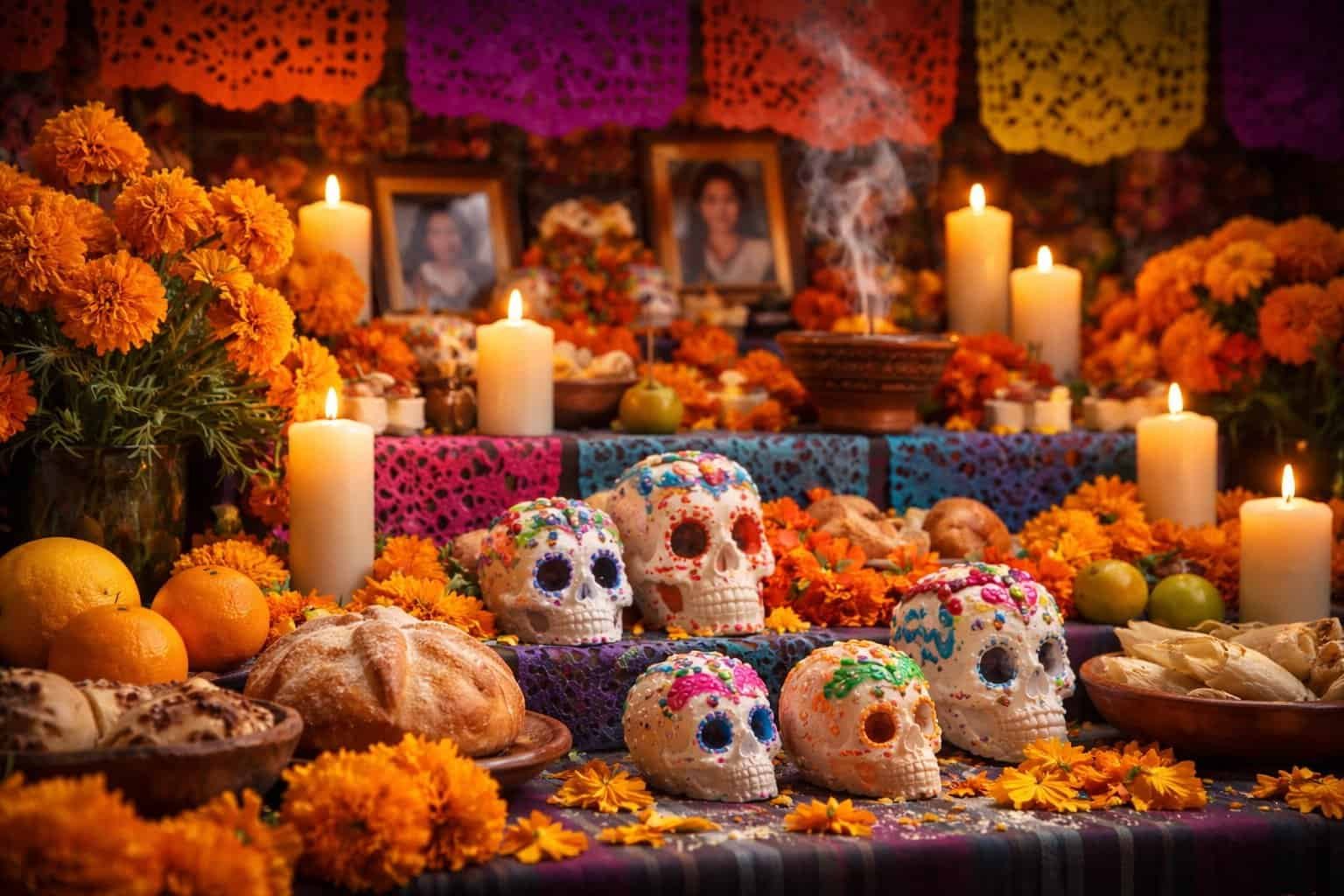

Traditional Day of the Dead decorations form the heart of Día de los Muertos, a deeply meaningful celebration that honors loved ones who have passed away. Rather than mourning, families create vibrant, symbolic displays that welcome the spirits back home. Every decorative element carries a message, a memory, and a sense of connection that stretches across generations.
Rich color palettes, handmade items, flowers, candles, and offerings transform homes, cemeteries, and public spaces into sacred environments filled with warmth and remembrance. Cultural roots trace back thousands of years to Indigenous Mexican traditions, later blending with Spanish influence to shape what is now known worldwide as Día de los Muertos.
Decorations are never random. Each item placed with care reflects belief, respect, and love. Purposeful design creates a bridge between the living and the dead, using symbols that guide spirits back to their families.
Key elements often included in traditional settings:
- Altars (ofrendas) filled with personal objects
- Marigold flowers believed to guide spirits home
- Candles representing hope and remembrance
- Sugar skulls symbolizing both life and death
- Papel picado representing the fragility of existence
Celebrations typically take place from October 31 to November 2, with millions of families across Mexico and beyond participating. UNESCO officially recognized Día de los Muertos as an Intangible Cultural Heritage of Humanity in 2008, emphasizing its global cultural importance.
In This Article
The Meaning Behind Traditional Day of the Dead Decorations
Deep symbolism defines traditional Day of the Dead decorations. Each object represents a belief rooted in memory, spirituality, and respect for ancestors. Decorative items serve as invitations, guiding spirits to return and visit loved ones.
Rather than expressing grief, the celebration focuses on continuity, connection, and celebration of life. Decorations reflect a worldview where death is seen as part of a natural cycle rather than an ending.
Cultural and Spiritual Symbolism
Spiritual meanings behind decorations include:
- Marigolds: Light the path back to the living world
- Candles: Represent hope, guidance, and faith
- Photos: Ensure the correct spirit is welcomed
- Favorite foods: Nourish visiting souls
- Water: Helps quench thirst after a long journey
Many traditions stem from ancient Aztec rituals honoring the goddess Mictecacihuatl, often called the Lady of the Dead. Spanish influence introduced Catholic elements, creating a layered tradition rich in meaning.
“The dead are not forgotten; they are welcomed home.”
This belief shapes every decorative decision made during the celebration.
Emotional Purpose of Decorative Traditions
Traditional Day of the Dead decorations serve emotional roles that go far beyond visual beauty:
- Create space for remembrance
- Offer comfort to grieving families
- Strengthen family identity and continuity
- Teach children about heritage and respect
Families often spend weeks preparing decorations, especially handmade pieces. Personal touches make each setup unique and deeply meaningful.
Symbolism Table of Traditional Day of the Dead Decorations
| Decorative Element | Symbolic Meaning | Traditional Purpose |
| Marigold flowers | Guidance and warmth | Lead spirits home |
| Candles | Light and faith | Illuminate the path |
| Sugar skulls | Life’s sweetness and fragility | Honor individuals |
| Papel picado | Fragility of existence | Represent the wind |
| Photos | Identity and remembrance | Invite specific souls |
Visual impact may draw attention, yet emotional meaning gives these decorations their true power.
The Ofrenda: The Heart of Traditional Day of the Dead Decorations
Central focus of traditional Day of the Dead decorations is the ofrenda, or altar. Families build these sacred spaces to honor loved ones and welcome their spirits back home.
Ofrendas vary widely in size and complexity. Some families create simple altars on a table, while others build elaborate multi-level displays filled with symbolic items. Every detail reflects memory and devotion.
Structure and Layout of the Ofrenda
Traditional altars often feature multiple levels. Each level holds symbolic meaning connected to the spiritual journey.
Common altar structures:
- Two levels: Represent heaven and earth
- Three levels: Heaven, earth, and the underworld
- Seven levels: Symbolize the seven steps needed to reach eternal rest
Placement of items follows thoughtful patterns. Candles often sit at the front, while photos remain central to ensure spirits recognize the altar.
Essential Elements Found on an Ofrenda
Important components found on many altars include:
- Framed photograph of the departed
- Favorite foods and drinks
- Personal belongings
- Candles arranged in crosses or circles
- Incense for purification
- Marigold petals leading to the altar
Handmade details add emotional depth. Paper crafts, embroidered cloth, and clay figures often come from family traditions passed down for generations.
Case Study: A Family Ofrenda Tradition
A family in Oaxaca creates a new altar each year using items connected to their grandmother’s life. Her sewing tools, favorite sweet bread, and a small radio she loved listening to remain permanent parts of the display.
Family members gather annually to rebuild the altar together. Stories are shared while decorating, keeping memories alive. Younger generations learn traditions through participation, ensuring continuity.
Why the Ofrenda Defines Traditional Day of the Dead Decorations
Ofrendas serve as the centerpiece because they bring every symbolic decoration together into one meaningful space. Rather than a single decorative item, the altar becomes a living tribute.
Important reasons altars hold such value:
- Honor specific individuals personally
- Create a sacred gathering place
- Preserve memories through objects
- Strengthen cultural identity
Deep respect surrounds the process of building an altar. Each item placed tells a story and reflects a life remembered. For more cultural insight into this tradition, the UNESCO heritage page provides valuable background on its significance: https://ich.unesco.org/en/RL/indigenous-festivity-dedicated-to-the-dead-00054
Marigolds in Traditional Day of the Dead Decorations
Golden marigolds stand among the most recognizable elements of traditional Day of the Dead decorations. Known in Mexico as cempasúchil, these flowers carry powerful symbolic meaning rooted in ancient beliefs. Bright orange and yellow petals create a visual path believed to guide spirits back to their families.
Many communities call marigolds the flower of the dead. Their strong scent and vibrant color are thought to attract souls and lead them home safely.
Symbolism of Cempasúchil Flowers
Marigolds represent more than beauty. Cultural traditions associate them with light, life, and remembrance.
Key meanings connected to marigolds:
- Guidance: Petals form paths from doors to altars
- Sunlight connection: Bright color reflects warmth and hope
- Life cycle reminder: Flowers bloom briefly, symbolizing mortality
- Spiritual invitation: Scent helps spirits find their way
Petals are often scattered on floors, stairways, and graves, creating a visible trail. Families may form intricate patterns leading to the ofrenda.
Common Ways Marigolds Are Used
Creative arrangements turn marigolds into one of the most visually striking traditional Day of the Dead decorations.
Popular uses include:
- Garlands placed around altars
- Bouquets arranged in vases
- Petal pathways from entrance to altar
- Floral arches over doorways
- Grave decorations in cemeteries
Rural communities often grow marigolds specifically for the celebration. Fields filled with orange blossoms signal the arrival of the season.
Quick Facts About Marigolds
| Feature | Detail |
| Traditional name | Cempasúchil |
| Cultural origin | Aztec ceremonial traditions |
| Main colors | Bright orange and yellow |
| Peak use | October 31 – November 2 |
| Symbolism | Guidance, remembrance, warmth |
Petals glow under candlelight, creating a warm and sacred atmosphere that feels welcoming and peaceful.
Sugar Skulls as Traditional Day of the Dead Decorations
Colorful sugar skulls, called calaveras, form a playful yet meaningful part of traditional Day of the Dead decorations. Though shaped like skulls, they do not represent fear. Instead, they celebrate individuality and the sweetness of life.
Families often personalize sugar skulls with names written across the forehead. Each piece honors a specific person, making the decoration deeply personal.
History and Cultural Meaning
Sugar skulls originated during colonial times when sugar became widely available. Artisans began shaping it into symbolic figures, blending Indigenous traditions with European influence.
Symbolic interpretations include:
- Sweetness of life: Life should be celebrated, not feared
- Memory: Names ensure loved ones are remembered
- Acceptance: Death seen as a natural part of existence
Handmade skulls traditionally include colorful icing, foil, and decorative patterns. Modern versions also use clay or chocolate.
Types of Sugar Skulls Used
Different materials and sizes serve different purposes.
Common varieties include:
- Small skulls for children’s altars
- Medium-sized skulls for home displays
- Large decorative skulls for public celebrations
- Edible skulls placed among offerings
Each one becomes a piece of storytelling.
Personalization Traditions
Families add creative touches that make sugar skulls unique:
- Names written in icing
- Favorite colors of the loved one
- Decorative patterns reflecting personality
- Small accessories like hats or flowers
Personalization turns a simple decoration into a heartfelt tribute.
“Every skull tells a story, every name carries a memory.”
Papel Picado in Traditional Day of the Dead Decorations
Delicate paper banners known as papel picado add movement, color, and symbolism to traditional Day of the Dead decorations. Hand-cut designs flutter above altars, representing the presence of wind and the fragility of life.
Thin tissue paper allows light to pass through, creating a soft glow when candles are lit. Gentle movement of the banners brings a sense of energy to the space.
Cultural Meaning Behind Papel Picado
Ancient cultures believed in four natural elements that must be present on the altar: earth, water, fire, and air. Papel picado represents air.
Symbolic meanings include:
- Fragility of life
- Connection between worlds
- Celebration of movement and spirit
Traditional designs often feature:
- Skeleton figures
- Flowers and birds
- Religious symbols
- Decorative patterns
Each cut-out pattern tells a story connected to remembrance.
Traditional Colors and Their Meanings
Color choices in papel picado carry important messages.
| Color | Meaning |
| Purple | Mourning and spirituality |
| Orange | Sun and life |
| Pink | Celebration and joy |
| White | Purity and hope |
| Yellow | Memory and guidance |
Hanging multiple colors together creates a balanced and meaningful visual display.
Placement and Decorative Style
Families hang papel picado in ways that bring life to the space:
- Across walls above altars
- Over doorways to welcome spirits
- Strung across rooms and courtyards
- Draped in layers for depth and texture
Hand-cut versions remain highly valued. Each piece reflects time, patience, and tradition passed through generations.
Artisans often spend hours crafting a single banner. Intricate patterns show incredible skill and cultural pride. Gentle rustling of the paper adds a sense of presence, almost as if the air itself carries memories.
Candles and Light in Traditional Day of the Dead Decorations
Soft candlelight plays a sacred role in traditional Day of the Dead decorations, creating warmth, guidance, and spiritual comfort. Flickering flames symbolize hope and serve as beacons that help spirits find their way back to the living world.
Ancient traditions viewed fire as a purifier. Candlelight became a sign of protection, remembrance, and eternal connection. Homes and cemeteries glow with dozens, sometimes hundreds, of candles during the celebration nights.
Spiritual Symbolism of Candlelight
Each flame holds meaning that goes beyond illumination. Placement and number of candles often reflect intention and respect.
Important symbolic roles include:
- Guiding spirits home through lighted paths
- Representing faith and prayer for the departed
- Offering warmth to visiting souls
- Creating a sacred atmosphere for remembrance
Families sometimes light one candle per deceased loved one. Large altars may contain entire rows of candles arranged in meaningful patterns.
Types of Candles Traditionally Used
Different styles and sizes appear across regions, yet each contributes to the altar’s spiritual presence.
Common candle types include:
- Tall white candles symbolizing purity
- Colored candles reflecting personality or emotion
- Thick pillar candles for long-lasting glow
- Small votive candles for children being honored
White remains the most traditional color, representing peace and spiritual clarity.
Placement Traditions on the Altar
Positioning of candles follows symbolic customs that have been practiced for generations.
Typical placement ideas:
- At the four corners of the altar to represent directions
- Around photographs to highlight the person being honored
- Along petal pathways to guide spirits inside
- Near incense for a stronger sacred atmosphere
Gentle candlelight transforms the space into something peaceful and welcoming. Glow reflecting off marigold petals and papel picado creates a visual scene filled with emotion and reverence.
Traditional Day of the Dead Decorations Using Food and Offerings
Food serves both as decoration and spiritual offering within traditional Day of the Dead decorations. Carefully prepared dishes, sweets, and drinks create an inviting altar that reflects love and remembrance.
Families believe spirits return to enjoy the essence and aroma of their favorite foods. Plates placed on altars represent care, respect, and deep personal connection.
Symbolic Foods Used as Decorative Offerings
Many items carry specific meanings tied to life, nourishment, and memory.
Common offerings include:
- Pan de muerto: A sweet bread symbolizing life and death
- Fresh fruit: Represents abundance and nature
- Salt: Purifies and protects the soul
- Water: Refreshes the spirit after a long journey
- Traditional meals: Favorite dishes of the departed
Pan de muerto often becomes the visual centerpiece of the altar due to its unique design. Rounded shapes represent the cycle of life, while cross-shaped decorations on top symbolize bones.
Decorative Arrangement of Offerings
Food placement is done with care and intention, transforming everyday items into meaningful displays.
Popular presentation styles:
- Plates arranged symmetrically around photos
- Fruits stacked to create height and balance
- Bread placed in the center of the altar
- Drinks positioned beside personal items
Fresh scents and vibrant colors add warmth to the altar’s overall look. Aromas of chocolate, cinnamon, and baked goods fill the space with comfort.
Table: Traditional Food Offerings and Their Meanings
| Food Item | Symbolic Meaning | Decorative Purpose |
| Pan de muerto | Cycle of life | Centerpiece display |
| Fruit | Abundance and gratitude | Colorful visual balance |
| Tamales | Family unity | Cultural connection |
| Sugar candy | Sweetness of life | Tribute to children |
| Coffee or tea | Comfort and familiarity | Personal memory |
Every offering tells a story. Meals prepared with love keep memories alive through taste, scent, and tradition.
Case Study: A Family Food Tradition
A family in central Mexico prepares mole each year because it was their grandfather’s favorite dish. Grandchildren help cook and place the dish on the altar while sharing stories about his life.
Food becomes more than decoration. It turns into a ritual of remembrance that strengthens bonds between generations.
Photos and Personal Items in Traditional Day of the Dead Decorations
Photographs and personal belongings add deep emotional meaning to traditional Day of the Dead decorations. Faces displayed on the altar ensure the right spirit is welcomed and remembered.
Objects connected to a person’s life help tell their story without words. Each item placed on the altar carries a memory that brings presence to the space.
Importance of Photographs on the Altar
Photos act as a visual invitation. They help guide spirits and create a strong emotional connection for the living.
Key roles of photographs:
- Identify the loved one being honored
- Strengthen personal remembrance
- Create a focal point on the altar
- Connect younger generations to family history
Black-and-white portraits often carry a sense of timeless respect, while modern photos reflect recent memories.
Personal Objects That Carry Meaning
Many families include items that represent hobbies, passions, or daily life. These objects add authenticity and personality to the display.
Examples of meaningful objects:
- Musical instruments
- Jewelry or watches
- Favorite books
- Handmade crafts
- Clothing or hats
Personal items create a sense that the loved one is truly present. Each object reflects a unique life story.
Emotional Impact of Personal Decorations
Personal touches bring warmth and depth to traditional Day of the Dead decorations.
Powerful emotional benefits include:
- Helping families process grief in a positive way
- Keeping memories active and alive
- Strengthening identity and heritage
- Encouraging storytelling among relatives
Memories live through objects. A simple pair of glasses, a handwritten note, or a favorite cup can hold powerful meaning.
Table: Personal Items and Their Symbolism
| Personal Item | What It Represents | Why It Matters |
| Jewelry | Identity and style | Reflects personality |
| Favorite book | Interests and passions | Shows character |
| Musical item | Joy and expression | Recalls happy moments |
| Clothing | Daily life presence | Feels personal and real |
Altars filled with photos and belongings transform traditional decorations into heartfelt storytelling spaces. Every object placed carefully brings the past into the present and keeps memory alive.
Incense and Fragrance in Traditional Day of the Dead Decorations
Gentle waves of fragrance play an essential role in traditional Day of the Dead decorations, adding a sensory layer that goes beyond what the eye can see. Scent holds deep spiritual meaning, believed to purify the space and guide spirits toward the altar.
Copal incense remains the most traditional choice. Ancient Mesoamerican cultures burned copal resin during sacred rituals long before modern celebrations existed. Smoke rising slowly into the air symbolizes prayers, remembrance, and the connection between worlds.
The Role of Copal Incense
Copal serves both symbolic and practical purposes. Sacred smoke is thought to clear negative energy and prepare the environment for visiting souls.
Important meanings connected to incense include:
- Purification: Cleanses the space spiritually
- Guidance: Helps souls recognize the path home
- Protection: Creates a sacred atmosphere
- Respect: Honors ancient traditions
Families often light incense when placing the final decorations on the altar. Smoke drifting across candles, flowers, and photos creates a calm, spiritual feeling.
Types of Fragrances Used in Altars
Traditional scents enhance the emotional experience and make the altar feel alive.
Common fragrance sources include:
- Copal resin incense
- Marigold flowers with strong natural scent
- Scented candles
- Fresh herbs like rosemary or basil
Scent triggers memory. Familiar aromas remind families of shared meals, celebrations, and moments spent together.
Placement and Usage Traditions
Placement of incense follows thoughtful practices that maintain balance and harmony.
Popular placement choices:
- Near the center of the altar for symbolic strength
- Beside photographs to welcome spirits
- At entryways to guide souls indoors
- Near candles to amplify the sacred atmosphere
Rising smoke is often described as a visual prayer. Movement of the fragrance through the air creates a quiet sense of presence and reflection.
Color Symbolism in Traditional Day of the Dead Decorations
Color holds powerful meaning in traditional Day of the Dead decorations, shaping the emotional tone of the altar. Bright shades create a joyful and welcoming environment, reflecting the belief that the return of loved ones should be celebrated.
Each color tells a story. Careful selection ensures balance between remembrance and celebration.
Meaning of Traditional Colors
Colors used during Día de los Muertos carry deep symbolic messages.
| Color | Symbolism | Emotional Meaning |
| Orange | Sunlight and life | Warmth and guidance |
| Purple | Mourning and spirituality | Reflection and respect |
| Pink | Joy and celebration | Happiness and love |
| White | Purity and hope | Peace and remembrance |
| Yellow | Memory and light | Spiritual connection |
Orange and yellow often dominate due to the presence of marigolds. Purple cloths and papel picado frequently appear to express reverence and spiritual depth.
How Color Influences the Atmosphere
Color choices shape the mood of the altar. Bright tones create energy, while softer tones bring calm and reflection.
Families often combine colors to create emotional balance:
- Orange and yellow for warmth and guidance
- Purple and white for peace and spirituality
- Pink accents for celebration and joy
Layering colors through fabric, candles, flowers, and paper decorations adds depth and visual harmony.
Decorative Materials That Showcase Color
Traditional Day of the Dead decorations highlight color through many materials:
- Papel picado banners
- Painted clay skulls
- Embroidered altar cloths
- Fresh flowers and petals
- Decorative candles
Visual richness makes altars stand out, turning them into heartfelt displays filled with symbolism.
Color becomes a language of emotion. Even without words, each shade communicates love, memory, and presence.
Regional Variations of Traditional Day of the Dead Decorations
Diversity across Mexico creates unique styles of traditional Day of the Dead decorations. Cultural influences, local materials, and regional beliefs shape how families decorate altars and graves.
Despite differences, the core purpose remains the same: honoring loved ones and welcoming their return.
Distinct Regional Styles
Different regions bring their own identity to the celebration.
Notable variations include:
- Oaxaca: Highly artistic altars with elaborate marigold displays
- Michoacán: Candlelit cemetery gatherings beside decorated graves
- Yucatán: Simpler altars with strong Mayan influence
- Mexico City: Large public installations and community events
Rural areas often emphasize handmade decorations, while cities blend tradition with modern artistic expression.
Indigenous Influence on Decorative Practices
Ancient cultures shaped many customs still seen today. Aztec, Maya, and other Indigenous traditions continue to influence decorative choices.
Indigenous elements include:
- Use of natural materials like clay and wood
- Handwoven textiles for altar coverings
- Copal incense from ancient rituals
- Symbolic patterns passed down through generations
Cultural heritage remains strong through these preserved traditions.
Unique Materials Used Across Regions
Local resources shape how decorations look and feel. Communities use what is available nearby, adding authenticity to each altar.
Common regional materials:
- Palm leaves and woven baskets
- Clay figurines
- Hand-painted ceramics
- Local flowers and plants
Case Study: Michoacán Cemetery Traditions
Families in Michoacán gather overnight at cemeteries, decorating graves with hundreds of candles and marigolds. Entire burial grounds glow with soft golden light.
Relatives bring food, music, and stories to share. Decoration becomes a community experience rather than a private one.
Atmosphere feels peaceful, respectful, and deeply emotional. Light, scent, and color blend into a powerful tribute to those who have passed.
Regional diversity keeps traditional Day of the Dead decorations vibrant and evolving while preserving the deep cultural roots that define the celebration.
How Families Preserve Traditional Day of the Dead Decorations Over Time
Cultural continuity stands at the center of traditional Day of the Dead decorations. Families pass knowledge, skills, and meaning from one generation to the next, keeping traditions alive through shared participation. Children learn by watching, helping, and listening to stories while altars are built.
Each year brings a chance to remember, teach, and preserve heritage. Grandparents often guide the process, explaining the meaning behind every flower, candle, and photograph.
Ways Traditions Are Passed Down
Family involvement keeps customs strong and meaningful. Learning happens naturally during preparation and celebration.
Common preservation practices include:
- Teaching children how to arrange altars
- Sharing stories while placing decorations
- Passing down handmade items through generations
- Repeating yearly rituals to build familiarity
Memory becomes a living tradition. Personal stories told during decorating sessions give emotional depth to the celebration.
Handmade vs. Store-Bought Decorations
Modern times have introduced ready-made decorations, yet many families still value handcrafted items. Handmade pieces carry emotional significance and reflect personal effort.
Comparison between handmade and store-bought decorations:
| Type | Advantages | Emotional Value |
| Handmade | Unique, personal, culturally authentic | Very high |
| Store-bought | Convenient, affordable, widely available | Moderate |
| Mixed approach | Balance of tradition and practicality | High |
Handmade papel picado, embroidered cloths, and clay skulls often become family heirlooms. These objects hold history and memory beyond their visual beauty.
Adapting Tradition in Modern Homes
Urban living has changed how altars are created. Smaller spaces encourage creativity while maintaining tradition.
Modern adaptation examples:
- Compact tabletop altars in apartments
- Digital photo frames alongside printed pictures
- Artificial marigolds used when fresh flowers are unavailable
- Portable decorations for families who travel
Tradition evolves without losing its heart. Meaning matters more than size or complexity.
Common Mistakes to Avoid with Traditional Day of the Dead Decorations
Respect remains essential when creating traditional Day of the Dead decorations. Misunderstanding symbols or blending unrelated themes can reduce the cultural and spiritual meaning of the celebration.
Awareness helps preserve authenticity and honor the tradition properly.
Confusing Day of the Dead with Halloween
Many people mistakenly combine Halloween imagery with Día de los Muertos. Cultural purposes are very different.
Key differences:
- Day of the Dead celebrates remembrance and love
- Halloween focuses on costumes and fear-based themes
Avoid using:
- Horror decorations
- Fake cobwebs
- Scary props unrelated to tradition
Traditional Day of the Dead decorations emphasize warmth, respect, and celebration rather than fright.
Misusing Sacred Symbols
Symbols used on altars carry deep meaning. Placement should be thoughtful and intentional.
Common mistakes include:
- Using sugar skulls only as trendy décor without honoring anyone
- Displaying altars without photos or personal connection
- Treating sacred objects as casual decorations
Respectful intention transforms decorations into meaningful tributes.
Overcrowding the Altar
Too many items can reduce the emotional clarity of the altar.
Helpful tips for balance:
- Focus on meaningful objects rather than quantity
- Keep a clear central space for photos
- Arrange items with care and symmetry
Simple, thoughtful arrangements often carry more emotional impact than overly crowded displays.
Conclusion: Honoring Memory Through Traditional Day of the Dead Decorations
Traditional Day of the Dead decorations carry stories, emotions, and cultural identity across generations. Every candle, flower, and photograph becomes part of a living tribute that keeps memories present and meaningful.
Careful preparation transforms homes into sacred spaces filled with warmth and remembrance. Altars reflect love through thoughtful details and personal touches. Families gather not only to honor those who passed but also to celebrate the bond that continues beyond life.
Key takeaways from the tradition:
- Decorations serve as spiritual invitations
- Personal items strengthen emotional connection
- Colors, scents, and lights create a welcoming atmosphere
- Handmade pieces preserve heritage and identity
Cultural depth behind these practices continues to inspire people around the world. Many communities outside Mexico now respectfully learn about these traditions, helping spread appreciation for their meaning and beauty.
Those interested in exploring more about the history and cultural significance can learn from the Smithsonian’s educational resource on Día de los Muertos traditions:
https://www.smithsonianmag.com/travel/day-dead-history-180971911/
Lasting power of this tradition comes from its ability to connect past and present. Decorations turn memory into something visible, tangible, and deeply human. Each year brings another opportunity to honor loved ones through care, creativity, and respect.

I’m the creator behind EasyDecora, a home–decor lover who enjoys discovering simple, beautiful ways to make every room feel cozy and intentional. I share practical tips, creative ideas, and inspiration for anyone who wants to build a home they truly love.