
Mexican Day of the Dead home decor is far more than seasonal decoration. It represents a deeply rooted cultural tradition that honors loved ones who have passed while celebrating life, memory, and family connection. Known as Día de los Muertos, this observance takes place every year on November 1st and 2nd across Mexico and in Mexican communities worldwide.
Homes become sacred yet joyful spaces during this time. Altars glow with candlelight, marigold petals guide spirits, and meaningful objects tell personal stories of remembrance. Unlike Halloween decor, which often focuses on fear or fantasy, Mexican Day of the Dead home decor centers on respect, symbolism, and emotional connection.
This article explores the foundations of authentic Día de los Muertos decorating, beginning with its cultural meaning and the essential elements that define traditional home decor.
In This Article
Cultural Meaning Behind Mexican Day of the Dead Home Decor
Understanding the symbolism behind Mexican Day of the Dead home decor is essential before placing a single decorative item. Every color, object, and arrangement carries intentional meaning rooted in Indigenous beliefs blended with Catholic traditions.
Why Home Decor Matters During Día de los Muertos
Homes serve as the primary place where families welcome the spirits of deceased relatives. Decor transforms everyday living spaces into spiritual environments meant to guide, nourish, and honor returning souls.
Core beliefs reflected in home decor include:
- Death is a continuation of life, not an end
- Loved ones return annually to reconnect with family
- Memory keeps spirits alive across generations
“To live in the hearts of those we love is never to die.” — Mexican proverb
Symbolism Found Throughout the Home
Mexican Day of the Dead home decor communicates meaning through carefully chosen elements rather than excess decoration.
Common symbolic themes include:
- Remembrance: Photographs and personal items
- Guidance: Candles and marigold paths
- Celebration: Bright colors and joyful motifs
- Connection: Shared family spaces decorated together
Respect remains central. Decorative choices reflect love and intention, not trend-driven styling.
Essential Elements of Traditional Mexican Day of the Dead Home Decor
Traditional Mexican Day of the Dead home decor follows time-honored practices passed down through generations. While variations exist across regions, several core elements appear in nearly every home.
The Ofrenda as the Heart of Home Decor
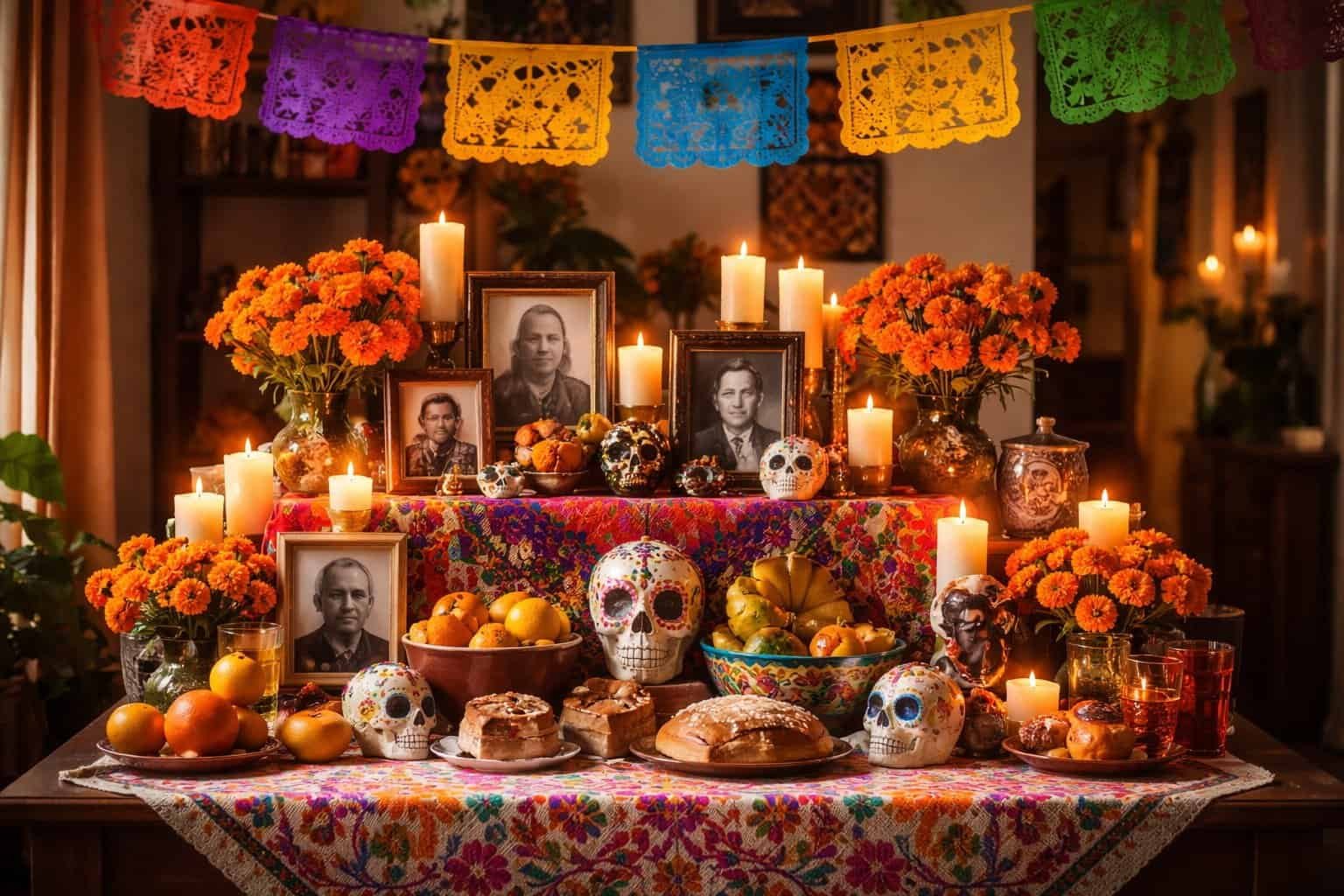
An ofrenda, or altar, forms the centerpiece of Day of the Dead decorating. Families typically place it in a living room, dining area, or entryway.
Key components of a traditional ofrenda include:
- Photographs of deceased loved ones
- Candles representing light and guidance
- Offerings of favorite foods and drinks
- Religious or spiritual symbols
- Flowers and decorative textiles
Traditional Decor Elements and Their Meanings
| Decor Element | Meaning in Day of the Dead Tradition |
| Marigolds (Cempasúchil) | Guide spirits with scent and color |
| Candles | Illuminate the path for souls |
| Papel Picado | Represent air and the fragility of life |
| Sugar Skulls | Celebrate individuality of the departed |
| Copal Incense | Purify the space spiritually |
Materials Commonly Used in Home Decor
Authentic Mexican Day of the Dead home decor often features handcrafted or natural materials.
Traditional materials include:
- Tissue paper and handmade papel picado
- Clay, ceramic, and wood decorations
- Fresh flowers and natural fibers
- Hand-embroidered cloths and runners
Each material reinforces the handmade, heartfelt nature of the celebration.
Creating a Day of the Dead Ofrenda at Home
An ofrenda is the emotional and spiritual centerpiece of Mexican Day of the Dead home decor. More than a decorative display, it functions as a sacred space where families honor loved ones through memory, scent, light, and food.
Choosing the Right Location for an Ofrenda
Placement matters because the altar should feel intentional, peaceful, and accessible to family members.
Ideal locations inside the home include:
- Living rooms where families gather
- Entryways to symbolically welcome spirits
- Dining areas connected to shared meals
Avoid cluttered or high-traffic zones that disrupt the reflective atmosphere.
Understanding Multi-Level Ofrendas
Traditional ofrendas often have multiple tiers, each representing a spiritual concept.
| Number of Levels | Symbolic Meaning |
| Two levels | Earth and Heaven |
| Three levels | Heaven, Earth, and Underworld |
| Seven levels | Spiritual stages the soul passes through |
Families choose the structure that best reflects their beliefs and available space.
Proper Placement of Offerings
Balance and meaning guide how items are arranged.
Common altar placement principles:
- Photographs placed at the highest level
- Candles positioned symmetrically
- Food offerings centered and uncovered
- Water placed to refresh returning spirits
Every object should feel purposeful rather than decorative filler.
Color Palette Used in Mexican Day of the Dead Home Decor
Color defines the visual identity of Mexican Day of the Dead home decor. Bold, saturated hues express joy, celebration, and spiritual connection rather than mourning.
Traditional Colors and Their Meanings
Each color carries symbolic weight rooted in cultural history.
| Color | Symbolic Meaning |
| Orange | Sunlight and marigolds guiding spirits |
| Purple | Mourning, spirituality, and reflection |
| Pink | Celebration and happiness |
| Yellow | Life, warmth, and remembrance |
| White | Purity and hope |
| Red | Love and the blood of life |
Using these shades thoughtfully keeps decor vibrant without appearing chaotic.
Balancing Bright Colors Indoors
Homes decorated for Día de los Muertos benefit from visual harmony.
Practical color-balancing tips:
- Anchor bright accents with neutral backdrops
- Limit dominant colors to two or three per space
- Use textiles to introduce color without overwhelming rooms
This approach maintains cultural authenticity while respecting modern interiors.
Incorporating Color into Everyday Decor
Mexican Day of the Dead home decor often integrates seamlessly into existing furnishings.
Simple color integration ideas:
- Marigold-toned table runners
- Purple candles on neutral shelves
- Bright papel picado against white walls
These touches create impact without requiring full-room transformations.
Papel Picado and Textiles in Mexican Day of the Dead Home Decor
Paper art and fabric play a vital role in expressing the soul of Mexican Day of the Dead home decor. These lightweight elements symbolize both celebration and the fragility of life.
Meaning of Papel Picado
Papel picado represents the element of air, one of the four sacred elements in Día de los Muertos traditions.
Common papel picado designs include:
- Skulls and skeletons
- Flowers and religious symbols
- Nature-inspired patterns
The delicate movement of paper honors the fleeting nature of existence.
Where to Display Papel Picado Indoors
Strategic placement enhances both beauty and symbolism.
Effective hanging locations include:
- Above ofrendas
- Along doorways and windows
- Across dining spaces and walls
Avoid placing papel picado outdoors where weather may damage its fragile structure.
Traditional Textiles Used in Home Decor
Textiles ground the visual lightness of paper decor.
Common fabric elements include:
- Embroidered tablecloths
- Lace-trimmed altar cloths
- Woven runners with floral motifs
Handmade fabrics add warmth, authenticity, and generational continuity to the home.
Calaveras (Skulls) as Decorative Symbols
Calaveras are among the most recognizable elements of Mexican Day of the Dead home decor, yet they are also one of the most misunderstood. These skulls do not represent fear or death in a dark sense. Instead, they symbolize individuality, memory, and the joyful acceptance of life’s impermanence.
Cultural Meaning of Sugar Skulls
Sugar skulls originated in the 17th century when sugar was widely available in Mexico. Families began crafting skulls as offerings, often inscribing the names of deceased loved ones on the forehead.
Key symbolic meanings include:
- Celebration of the person’s life rather than mourning
- A reminder that death is part of the human experience
- Recognition of personal identity beyond physical life
Skulls are frequently decorated with bright colors, floral patterns, and expressive designs to reflect the spirit of the individual being honored.
Types of Calaveras Used in Home Decor
Mexican Day of the Dead home decor incorporates skulls in many artistic forms.
| Calavera Type | Common Use |
| Sugar skulls | Altar offerings |
| Ceramic skulls | Long-lasting decorative pieces |
| Paper mâché skulls | Lightweight home accents |
| Wooden skulls | Folk-art inspired displays |
Each material offers a different aesthetic while maintaining symbolic integrity.
Styling Skulls Tastefully Indoors
Respectful presentation matters more than quantity.
Best practices for skull decor:
- Place skulls near altars or remembrance displays
- Pair with flowers or candles for balance
- Avoid mixing with Halloween-themed items
When displayed thoughtfully, calaveras feel meaningful rather than decorative gimmicks.
Marigolds and Flowers in Mexican Day of the Dead Home Decor
Flowers breathe life into Mexican Day of the Dead home decor, serving both symbolic and sensory purposes. Among all blooms, marigolds hold the highest cultural significance.
Why Marigolds Are Essential
Known as cempasúchil, marigolds are believed to guide spirits with their vibrant color and distinct fragrance.
Symbolic roles of marigolds include:
- Acting as spiritual pathways
- Representing the sun and renewal
- Creating warmth and visual continuity
Petals are often scattered from doorways to altars, forming a welcoming trail.
Fresh vs. Artificial Flowers
Choosing between fresh and artificial flowers depends on availability and practicality.
| Flower Type | Benefits |
| Fresh marigolds | Authentic scent and tradition |
| Silk or paper flowers | Longer-lasting and reusable |
| Dried flowers | Subtle, earthy aesthetic |
Many households combine both options to balance authenticity and longevity.
Floral Arrangements for the Home
Thoughtful placement enhances the emotional tone of the space.
Effective floral decorating ideas:
- Bouquets framing altar photographs
- Garlands draped along shelves
- Centerpieces on dining tables
Flowers should support the altar, not overwhelm it.
Lighting and Candle Arrangements
Lighting sets the emotional atmosphere of Mexican Day of the Dead home decor. Candlelight represents hope, remembrance, and guidance for returning souls.
Symbolism of Candles
Each candle is traditionally lit for a specific purpose.
Common candle meanings include:
- Four candles for the cardinal directions
- One candle per honored soul
- White candles for purity and peace
Flames are believed to help spirits find their way home.
Safe Candle Placement Inside the Home
Safety remains essential, especially when decorating shared living spaces.
Recommended safety practices:
- Use sturdy, heat-resistant holders
- Keep candles away from fabrics and paper
- Never leave burning candles unattended
Modern Lighting Alternatives
LED candles and lanterns provide a safe option while preserving ambiance.
Popular alternatives include:
- Flickering LED candles
- Glass-enclosed lanterns
- Soft string lights near altars
These solutions allow households to honor tradition without compromising safety.
Room-by-Room Mexican Day of the Dead Home Decor Ideas
Thoughtful placement throughout the home allows Mexican Day of the Dead home decor to feel immersive and intentional rather than confined to a single corner. Each room serves a different purpose in welcoming and honoring spirits.
Living Room Decor for Día de los Muertos
Living rooms often host the main ofrenda, making them the spiritual heart of the home.
Decor ideas that work well in living spaces include:
- A central altar placed against a wall or console table
- Marigold arrangements flanking photographs
- Papel picado strung above seating areas
- Candles grouped symmetrically for balance
Furniture should remain functional while decor accents create a calm, reverent atmosphere.
Dining Area Styling Inspired by Tradition
Dining spaces symbolize nourishment and shared memory, making them ideal for subtle decorative touches.
Effective dining room decor ideas:
- Embroidered tablecloths or runners
- Traditional pottery holding offerings
- A small remembrance centerpiece
- Candles placed safely at table edges
Food offerings displayed nearby reinforce the cultural importance of sharing meals with returning souls.
Entryway Decor to Welcome Spirits
Entryways act as symbolic thresholds between worlds.
Entryway decorating tips include:
- Marigold petal pathways leading inward
- A candle or lantern near the doorway
- A framed photo or spiritual symbol
These details gently invite spirits into the home without overwhelming the space.
Blending Modern Style with Mexican Day of the Dead Home Decor
Modern homes can honor tradition without sacrificing personal style. Mexican Day of the Dead home decor adapts beautifully when cultural meaning remains intact.
Minimalist Interpretations That Respect Tradition
Less decoration does not mean less meaning.
Minimalist-friendly ideas include:
- One well-curated altar instead of multiple displays
- Neutral furniture paired with bold accent colors
- Limited symbolic items placed intentionally
Fewer elements often allow symbolism to stand out more clearly.
Mixing Contemporary Furniture with Traditional Decor
Contrast enhances visual impact when done thoughtfully.
Successful blending strategies:
- Modern shelving holding traditional objects
- Clean-lined tables topped with embroidered cloths
- Neutral walls highlighting colorful papel picado
This fusion keeps decor relevant without diluting cultural value.
Avoiding Cultural Misrepresentation
Respect remains essential when blending styles.
Key principles to follow:
- Learn the meaning behind each decor element
- Avoid novelty or mass-produced caricatures
- Separate Day of the Dead decor from Halloween themes
Intentional choices reflect appreciation rather than imitation.
DIY Mexican Day of the Dead Home Decor Projects
Handmade decor adds emotional depth to Mexican Day of the Dead home decor. DIY projects connect families to the tradition while allowing creative expression.
Simple Papel Picado Crafts
Creating papel picado at home requires minimal materials.
Basic supplies include:
- Colored tissue paper
- Scissors or craft knives
- Printable traditional patterns
Hand-cut designs bring authenticity and personal meaning to the decor.
Handmade Altar Accessories
Personal items often hold the greatest significance.
Meaningful DIY altar additions:
- Framed handwritten notes or poems
- Painted clay candle holders
- Memory boxes with small keepsakes
These details transform an altar into a deeply personal tribute.
Budget-Friendly Decorating Ideas
Authentic decor does not require expensive purchases.
| DIY Idea | Estimated Cost |
| Paper flower garlands | Low |
| Handmade candles | Moderate |
| Fabric altar runners | Low |
| Recycled jar lanterns | Very low |
Creativity and intention matter more than cost when honoring tradition.
Common Mistakes to Avoid When Decorating
Even with good intentions, certain choices can unintentionally undermine the meaning of Mexican Day of the Dead home decor. Awareness helps preserve the cultural integrity of the tradition.
Over-Commercializing Sacred Symbols
Mass-produced decorations often strip symbolism of its meaning.
Common examples to avoid include:
- Cartoonish skulls with no cultural context
- Plastic props designed for Halloween
- Decorations that emphasize fear over remembrance
Authentic decor should feel personal, thoughtful, and rooted in tradition rather than novelty.
Using Decor Without Understanding Its Meaning
Every object placed on an altar carries symbolic weight.
Potential issues include:
- Incorrect placement of offerings
- Mixing unrelated religious symbols
- Using colors without cultural awareness
Learning the purpose behind each element ensures respectful representation.
Mixing Halloween Themes with Day of the Dead Decor
Despite similar seasonal timing, Día de los Muertos and Halloween are fundamentally different.
Key distinctions to respect:
- Day of the Dead celebrates remembrance, not fear
- Traditional decor avoids horror imagery
- Cultural symbols deserve contextual use
Keeping these celebrations separate honors their unique identities.
Respectful Decorating Tips for Non-Mexican Households
Mexican Day of the Dead home decor welcomes participation from people of all backgrounds when approached with respect and understanding.
Cultural Appreciation Versus Appropriation
Intent and education define the difference.
Respectful decorating principles include:
- Acknowledging the tradition’s origins
- Avoiding stereotypes or exaggerated imagery
- Sharing the cultural meaning with family members
Decor becomes a bridge to understanding rather than a surface-level trend.
Learning Before Decorating
Research enriches the decorating experience.
Helpful learning methods include:
- Reading cultural histories
- Visiting museums or cultural centers
- Watching interviews with Mexican artisans
Knowledge deepens emotional connection and authenticity.
Creating a Thoughtful and Educational Display
Decor can spark meaningful conversations.
Ways to add educational value:
- Written explanations near altars
- Family discussions about remembrance
- Involving children in respectful DIY projects
This approach fosters appreciation across generations.
Honoring Tradition Through Mexican Day of the Dead Home Decor
Mexican Day of the Dead home decor transforms a house into a place of memory, love, and spiritual connection. Each candle, flower, and offering tells a story that bridges the living and the departed.
Celebrating Día de los Muertos at home encourages reflection, gratitude, and continuity. Whether following long-standing traditions or adapting them thoughtfully, respect and intention remain the foundation of meaningful decor.
Families worldwide continue to embrace this practice as a way to remember loved ones with joy rather than sorrow, creating spaces filled with warmth, color, and remembrance.
For deeper cultural insight into Día de los Muertos traditions and symbolism, visit the Smithsonian National Museum of the American Indian for educational resources and historical context.

I’m the creator behind EasyDecora, a home–decor lover who enjoys discovering simple, beautiful ways to make every room feel cozy and intentional. I share practical tips, creative ideas, and inspiration for anyone who wants to build a home they truly love.