
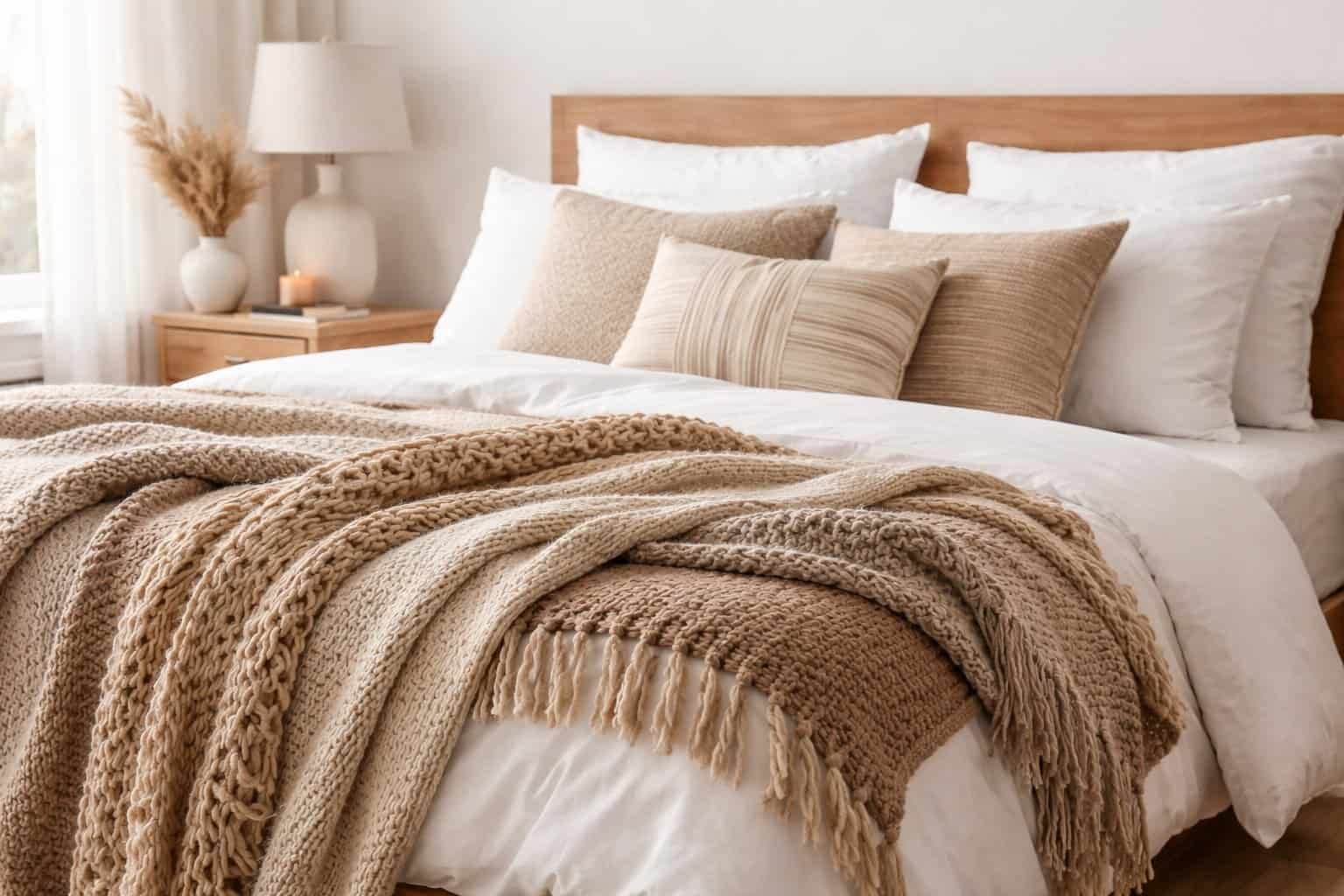

A beautifully made bed often becomes the centerpiece of a bedroom. Learning how to style your bed with throws and blankets can instantly elevate the space from ordinary to thoughtfully designed. Simple layers of fabric add warmth, dimension, and personality without requiring expensive furniture or renovations.
Interior designers often rely on throws and blankets because they offer maximum visual impact with minimal effort. A well-placed throw can soften structured bedding, introduce texture, and create a welcoming atmosphere.
Proper styling goes beyond randomly placing a blanket on the mattress. Strategic layering, fabric selection, and thoughtful placement help create a polished result that still feels comfortable and livable.
This guide explains exactly how to style your bed with throws and blankets in a way that looks intentional, balanced, and cozy.
In This Article
Why Styling Your Bed with Throws and Blankets Matters
Throws and blankets serve both decorative and practical purposes. A thoughtfully styled bed feels inviting and complete, while an unstyled bed often looks unfinished.
Visual Transformation Through Layering
Even a simple white duvet can look luxurious with the addition of a textured throw.
Throws and blankets help:
- Add depth to flat bedding
- Break up large color areas
- Create visual interest
- Define the bed as a focal point
A bed without layers often appears plain, while a layered bed feels intentional.
Fact: Interior designers frequently use three to five visible layers to create a professionally styled bed.
Typical layers include:
- Fitted sheet
- Flat sheet
- Duvet or comforter
- Blanket
- Throw
Visual Warmth vs Physical Warmth
Throws provide more than temperature control.
Visual warmth makes a room feel comfortable even before you touch the bed.
Examples:
| Blanket Type | Physical Warmth | Visual Warmth |
| Lightweight cotton | Low | Medium |
| Knit throw | Medium | High |
| Faux fur throw | High | Very High |
| Linen blanket | Low | Medium |
Chunky textures usually create stronger visual warmth than smooth fabrics.
The Role of Texture in Bed Styling
Texture brings life to a bed.
Flat surfaces reflect light evenly, which can make a bed look dull. Textured fabrics create shadows and highlights that add dimension.
Popular textures include:
- Chunky knit
- Quilted cotton
- Waffle weave
- Brushed fleece
- Linen
Design principle:
“Rooms feel richer when multiple textures interact.”
Combining textures makes bedding appear layered and sophisticated rather than basic.
A smooth duvet paired with a chunky knit throw creates instant contrast.
Choosing the Right Throws and Blankets for Bed Styling
Selecting appropriate materials and sizes makes styling easier and more effective.
Throws that are too small or blankets that are too thick can disrupt the entire look.
Lightweight vs Heavy Blankets
Weight affects both appearance and comfort.
Light blankets create a relaxed style.
Heavy blankets create a luxurious style.
Lightweight options:
- Cotton
- Linen
- Bamboo
- Muslin
Best for:
- Warm climates
- Summer styling
- Minimalist bedrooms
Heavy options:
- Wool
- Chunky knit
- Fleece
- Faux fur
Best for:
- Cold seasons
- Cozy interiors
- Dramatic styling
Seasonal Materials
Changing fabrics seasonally keeps the bedroom feeling fresh.
| Season | Recommended Materials | Why They Work |
| Spring | Cotton and linen | Breathable and fresh |
| Summer | Lightweight cotton | Prevents overheating |
| Fall | Waffle weave and knit | Adds texture |
| Winter | Wool and fleece | Maximum warmth |
Seasonal rotation also extends fabric lifespan.
Matching Blanket Size to Bed Size
Proportion matters when learning how to style your bed with throws and blankets.
Small throws look awkward on large beds.
Oversized blankets create a luxurious effect.
Typical throw sizes:
| Bed Size | Ideal Throw Width |
| Twin | 40–50 inches |
| Full | 50–60 inches |
| Queen | 60–70 inches |
| King | 70–80 inches |
A slightly oversized throw usually looks better than one that is too small.
Quality Indicators to Look For
High-quality throws maintain shape and texture longer.
Look for:
- Tight stitching
- Even edges
- Dense fabric
- Natural fibers
Signs of poor quality:
- Loose threads
- Uneven weaving
- Thin fabric
- Rough texture
Well-made throws often last 5–10 years with proper care.
Understanding Layering Basics When Styling a Bed with Throws and Blankets
Layering forms the foundation of how to style your bed with throws and blankets effectively.
Without proper layering, throws appear random instead of intentional.
The Base Layer
The base layer includes the essentials.
Typical base layer:
- Fitted sheet
- Flat sheet
- Mattress topper (optional)
Neutral colors work best for base layers.
Examples:
- White
- Cream
- Light gray
- Soft beige
Neutral foundations make styling easier.
The Middle Comfort Layer
This layer provides warmth and structure.
Usually includes:
- Duvet
- Comforter
- Quilt
Middle layers define the bed’s main color.
Tips:
- Keep the middle layer smooth
- Avoid wrinkles
- Ensure even distribution
The Decorative Top Layer
The decorative layer includes throws and blankets.
Purpose:
- Add personality
- Introduce texture
- Provide contrast
Decorative layers should be easy to remove.
Ideal decorative layers:
- Knit throws
- Lightweight blankets
- Patterned fabrics
Avoiding Bulky or Messy Layering
Too many layers create clutter.
Signs of over-layering:
- Bed looks heavy
- Layers slide off
- Throws bunch up
- Edges look uneven
Simple rule:
3–5 layers create balance.
Example of Balanced Layering
| Layer | Item | Purpose |
| Base | White sheets | Clean foundation |
| Middle | Gray duvet | Main color |
| Top | Knit throw | Texture |
| Accent | Small blanket | Detail |
Balanced layering makes styling easier and more consistent.
How to Style Your Bed with Throws and Blankets Using Classic Folding Techniques
Structured folds create a clean and intentional look. Classic folding techniques work especially well in modern, minimalist, and hotel-inspired bedrooms.
Neat folds communicate order and calmness. Professional stylists often rely on folding because it produces consistent results.
Half-Fold Method
The half-fold technique is one of the simplest ways to learn how to style your bed with throws and blankets.
Steps:
- Lay the throw flat
- Fold it evenly in half lengthwise
- Smooth out wrinkles
- Place it across the lower third of the bed
Best for:
- Medium-weight blankets
- Queen and king beds
- Clean symmetrical designs
Advantages:
- Looks tidy
- Easy to maintain
- Works daily
Third-Fold Method
The third-fold technique creates a more refined appearance.
Steps:
- Spread the throw flat
- Fold one side toward the center
- Fold the other side over it
- Smooth edges carefully
Results in a narrower band across the bed.
Best used with:
- Lightweight throws
- Patterned fabrics
- Decorative blankets
Designers often use this method to keep attention on the duvet while still adding detail.
Hotel-Style Fold
Luxury hotels use precise folding techniques to create visual order.
Key characteristics:
- Straight edges
- Tight alignment
- Centered placement
Typical placement:
- Exactly 10–14 inches from the foot of the bed
- Even margins on both sides
Benefits:
- Professional appearance
- Easy maintenance
- Symmetrical design
Symmetrical Placement Tips
Symmetry creates a sense of calm.
Helpful guidelines:
- Align edges with mattress corners
- Keep folds straight
- Center the throw precisely
- Smooth surfaces completely
Quick symmetry checklist:
- Equal overhang on both sides
- Straight fold lines
- Flat surface
- Center alignment
Small adjustments often make a big difference.
Casual and Relaxed Ways to Style Your Bed with Throws and Blankets
Relaxed styling feels inviting and natural. Casual placement works well in cozy bedrooms and lived-in spaces.
Rigid styling sometimes looks staged. Relaxed styling feels comfortable and authentic.
Effortless Draped Look
Soft draping creates movement and warmth.
Basic method:
- Hold the throw at two corners
- Let it fall naturally
- Adjust lightly
- Avoid perfect symmetry
The goal is controlled imperfection.
Ideal fabrics:
- Linen
- Cotton
- Lightweight knit
These fabrics drape naturally without stiffness.
Soft Rumpled Styling
Rumpled styling produces a cozy appearance.
Technique:
- Spread the throw loosely
- Create gentle folds
- Leave natural creases
- Avoid sharp edges
Perfect for:
- Casual bedrooms
- Rustic styles
- Cozy interiors
Designer tip:
Natural folds look better than forced wrinkles.
Corner Toss Technique
A corner toss is quick and effective.
Steps:
- Fold throw loosely
- Place near one corner
- Let edges fall naturally
Works best on:
- Twin beds
- Guest beds
- Minimalist designs
Advantages:
- Fast styling
- Easy adjustment
- Relaxed appearance
Natural Flow Placement
Flowing placement follows the shape of the bed.
Instead of straight lines, the throw curves slightly across the surface.
Good results come from:
- Soft fabrics
- Medium weight blankets
- Flexible materials
Avoid stiff fabrics for this method.
When Casual Styling Works Best
Casual styling works well in:
- Everyday bedrooms
- Family homes
- Guest rooms
Less suitable for:
- Formal interiors
- Ultra-modern rooms
- Minimalist spaces
Balance matters.
Too casual can look messy rather than intentional.
Where to Place Throws and Blankets on the Bed
Placement strongly affects how the bed looks. Even beautiful throws look awkward when positioned incorrectly.
Understanding placement helps master how to style your bed with throws and blankets effectively.
Foot-of-the-Bed Styling
The most popular placement is across the foot of the bed.
Reasons it works:
- Creates balance
- Adds texture
- Frames the bed
Typical width coverage:
- 70–90% of mattress width
Advantages:
- Easy to style
- Works with most beds
- Looks organized
Ideal for:
- Classic bedrooms
- Modern interiors
- Small spaces
Side Draping
Side draping creates visual softness.
Placement:
- One side of the bed
- Hanging slightly over the edge
- Extending about halfway down
Benefits:
- Relaxed look
- Easy access
- Natural appearance
Works best when:
- Bed is visible from the side
- Space allows fabric to hang freely
Full-Bed Layering
Full-bed placement covers a large portion of the mattress.
Technique:
- Spread throw evenly
- Cover lower half of bed
- Smooth gently
Advantages:
- Extra warmth
- Strong visual impact
- Balanced design
Best used with:
- Lightweight blankets
- Neutral colors
- Simple textures
Heavy throws may look overwhelming when spread fully.
Diagonal Styling
Diagonal placement adds visual interest.
Position:
- One corner near the head
- Opposite corner near the foot
Creates:
- Movement
- Depth
- Unique style
Best for:
- Modern bedrooms
- Creative interiors
- Accent throws
Placement Comparison Table
| Placement Style | Difficulty | Visual Impact | Practicality |
| Foot placement | Easy | High | High |
| Side draping | Easy | Medium | High |
| Full coverage | Medium | High | Medium |
| Diagonal | Medium | High | Medium |
Choosing the right placement depends on room style and daily habits.
How to Style Your Bed with Throws and Blankets by Texture
Texture plays a defining role in how to style your bed with throws and blankets successfully. Texture determines whether a bed feels flat or visually rich. Even neutral colors become interesting when different surfaces interact.
Well-balanced textures create a layered designer look without needing bold colors or patterns.
Mixing Chunky Knits with Smooth Fabrics
Successful texture combinations rely on contrast.
Common pairings include:
- Smooth cotton duvet + chunky knit throw
- Linen bedding + quilted blanket
- Crisp percale sheets + soft fleece throw
- Matte fabrics + slightly glossy fabrics
These combinations create visual depth.
Effective texture pairings:
| Base Fabric | Throw Texture | Result |
| Cotton | Chunky knit | Cozy and modern |
| Linen | Waffle weave | Relaxed and natural |
| Microfiber | Faux fur | Luxurious feel |
| Percale | Quilted cotton | Clean and structured |
Too many similar textures can make a bed appear dull.
Creating Contrast Without Chaos
Contrast adds interest without overwhelming the space.
Simple ways to create contrast:
- Rough vs smooth fabrics
- Thick vs thin materials
- Soft vs structured textures
- Matte vs slightly shiny finishes
Balanced contrast creates harmony.
Example formula:
- Smooth duvet
- Light blanket
- Textured throw
This combination often looks intentional and refined.
Avoiding Texture Overload
Overusing texture makes a bed feel busy.
Warning signs:
- Too many thick layers
- Competing textures
- Heavy appearance
- Visual clutter
A common mistake is stacking multiple chunky throws.
Better approach:
- One dominant texture
- One supporting texture
- One neutral surface
This keeps the design balanced.
Balanced Texture Formula
An easy formula for beginners:
60–30–10 Rule
- 60% smooth surfaces
- 30% medium texture
- 10% bold texture
Example:
- Smooth duvet (60%)
- Waffle blanket (30%)
- Chunky knit throw (10%)
This ratio helps create a professional look.
Case Study: Texture Upgrade
Before
- Plain duvet
- No throws
- Flat appearance
After
- Cotton duvet
- Waffle blanket
- Knit throw
Results:
- More dimension
- Softer appearance
- Designer feel
Small texture changes often make a dramatic difference.
Color Coordination for Throws and Blankets
Color choices influence the success of how to style your bed with throws and blankets just as much as texture.
Good color coordination makes the bed feel cohesive rather than random.
Neutral Color Palettes
Neutral colors provide flexibility.
Popular neutrals:
- White
- Cream
- Beige
- Gray
- Soft brown
Advantages:
- Easy matching
- Timeless look
- Calming atmosphere
Neutral throws work with almost any bedding.
Popular neutral combinations:
- White + beige + light gray
- Cream + taupe + soft brown
- Gray + charcoal + white
Neutral palettes rarely look outdated.
Monochrome Styling
Monochrome styling uses variations of one color.
Example:
- Light gray sheets
- Medium gray duvet
- Dark gray throw
Benefits:
- Clean appearance
- Elegant design
- Easy coordination
Monochrome works especially well in modern bedrooms.
Accent Color Strategy
Accent colors create focal points.
One throw can introduce a strong color without overwhelming the room.
Effective accent colors:
- Deep green
- Navy blue
- Rust
- Terracotta
- Mustard
Guideline:
Use one strong accent color at a time.
Too many accents create confusion.
Seasonal Color Rotation
Changing colors by season keeps bedrooms fresh.
Seasonal ideas:
Spring
- Soft green
- Pale blue
- Light cream
Summer
- White
- Sand tones
- Light gray
Fall
- Rust
- Olive
- Warm beige
Winter
- Deep blue
- Charcoal
- Dark brown
Seasonal updates can be inexpensive compared to replacing bedding.
Simple Color Matching Rule
An easy approach:
Match throws with at least one element in the room:
- Curtains
- Rug
- Pillows
- Wall art
This creates visual unity.
Styling Throws and Blankets for Different Bed Sizes
Bed size changes how throws should be styled. Proper proportion is essential when learning how to style your bed with throws and blankets.
Incorrect proportions make beds look unbalanced.
Twin Beds
Twin beds have limited space.
Best styling methods:
- Single folded throw
- Side drape
- Corner placement
Ideal throw size:
- 40–50 inches wide
Twin beds benefit from simple styling.
Too many layers overwhelm the space.
Full and Queen Beds
Full and queen beds allow more flexibility.
Good styling options:
- Foot-of-bed placement
- Folded blanket
- Layered throws
Ideal throw width:
- 50–70 inches
Queen beds often look best with medium-sized throws.
Balanced placement matters more than number of layers.
King Beds
King beds require larger throws.
Small throws disappear visually on large beds.
Recommended width:
- 70–80 inches
Best styling methods:
- Wide folded throws
- Multiple layers
- Large blankets
King beds can handle heavier styling.
Proportion Guidelines
Correct proportions create harmony.
| Bed Size | Throw Coverage | Visual Result |
| Twin | 50–60% width | Balanced |
| Full | 60–70% width | Natural |
| Queen | 70–80% width | Complete |
| King | 80–90% width | Luxurious |
Coverage refers to how much of the mattress width is visible beneath the throw.
Case Example: Proportion Fix
Problem
- Small throw on king bed
- Looked insignificant
Solution
- Replaced with oversized throw
Result
- Stronger focal point
- Better balance
- More polished look
Proportion adjustments often improve styling instantly.
Common Mistakes When Styling Throws and Blankets
Small errors can prevent a bed from looking polished. Avoiding these mistakes improves how to style your bed with throws and blankets immediately.
Many bedrooms look unfinished not because of poor bedding, but because of incorrect styling choices.
Using Blankets That Are Too Small
Undersized throws reduce visual impact.
Problems caused by small throws:
- Bed looks disproportionate
- Styling appears accidental
- Fabric looks lost on large mattresses
Rule of thumb:
A throw should cover at least two-thirds of the bed width.
Oversized throws usually look more luxurious.
Over-Layering the Bed
Too many blankets create visual clutter.
Common signs:
- Bed looks bulky
- Layers slide off easily
- Fabrics compete for attention
Balanced styling usually includes:
- One main blanket
- One decorative throw
Extra layers should serve a purpose.
Ignoring Color Harmony
Random colors weaken the design.
Typical problems:
- Clashing tones
- Uncoordinated shades
- Too many bright colors
Better approach:
- Choose one dominant color
- Add one supporting color
- Include neutral tones
Consistency improves visual harmony.
Perfectly Stiff Styling
Beds styled too perfectly can look artificial.
Warning signs:
- Sharp folds everywhere
- No natural draping
- Overly rigid placement
Realistic styling looks inviting.
Design insight:
Comfortable spaces should look lived in, not staged.
Skipping Fabric Maintenance
Wrinkled throws reduce the overall effect.
Maintenance tips:
- Shake throws regularly
- Wash according to instructions
- Smooth fabric before styling
- Store folded neatly
Clean fabrics look more luxurious.
Quick Styling Formulas for Throws and Blankets
Simple formulas help simplify how to style your bed with throws and blankets without overthinking.
Professional stylists often rely on repeatable methods.
Minimalist Formula
Ideal for clean and modern bedrooms.
Steps:
- Neutral bedding
- One folded throw
- Simple placement
Best colors:
- White
- Beige
- Gray
Result:
- Calm atmosphere
- Clean design
- Easy maintenance
Cozy Layered Formula
Creates warmth and comfort.
Steps:
- Neutral duvet
- Medium-weight blanket
- Textured throw
Best textures:
- Knit
- Waffle weave
- Quilted cotton
Result:
- Inviting appearance
- Soft visual texture
- Comfortable layering
Decorative Formula
Focused on visual impact.
Steps:
- Solid duvet
- Patterned throw
- Accent color blanket
Works well when:
- Bedding is neutral
- Room needs color
- Bed is focal point
Result:
- Strong visual interest
- Designer appearance
- Balanced contrast
Everyday Practical Formula
Designed for daily use.
Steps:
- Comfortable blanket
- Folded throw
- Easy removal
Benefits:
- Quick bed-making
- Functional use
- Simple organization
Comparison of Styling Formulas
| Formula | Effort Level | Visual Style | Best For |
| Minimalist | Low | Clean | Small bedrooms |
| Cozy | Medium | Warm | Family homes |
| Decorative | Medium | Bold | Statement rooms |
| Practical | Low | Functional | Daily use |
Choosing a formula simplifies decision-making.
Seasonal Ideas to Style Your Bed with Throws and Blankets
Seasonal updates refresh the bedroom without major changes. Adjusting fabrics and colors improves how to style your bed with throws and blankets throughout the year.
Seasonal styling also improves comfort.
Summer Light Layers
Summer requires breathable fabrics.
Recommended materials:
- Cotton
- Linen
- Bamboo
Best colors:
- White
- Light gray
- Soft blue
Benefits:
- Cooler sleep
- Fresh appearance
- Bright atmosphere
Light layering works best.
Fall Cozy Textures
Fall introduces warmth and texture.
Recommended fabrics:
- Knit
- Waffle weave
- Brushed cotton
Popular colors:
- Rust
- Olive
- Warm beige
Texture becomes more important during cooler months.
Winter Heavy Layering
Winter styling focuses on insulation.
Recommended fabrics:
- Wool
- Fleece
- Thick knit
Good color choices:
- Deep blue
- Charcoal
- Dark brown
Heavy throws create strong visual warmth.
Spring Fresh Styling
Spring calls for lighter textures.
Recommended fabrics:
- Cotton
- Light quilt
- Linen
Popular colors:
- Soft green
- Cream
- Pale yellow
Spring styling emphasizes freshness.
Seasonal Fabric Guide
| Season | Weight | Texture Level | Recommended Throws |
| Spring | Light | Medium | Cotton throws |
| Summer | Very light | Low | Linen blankets |
| Fall | Medium | High | Knit throws |
| Winter | Heavy | High | Wool blankets |
Rotating throws extends their lifespan.
FAQs About How to Style Your Bed with Throws and Blankets
How many throws should be on a bed?
Most beds look balanced with one or two throws. Larger beds can handle two layers, while smaller beds usually look best with one.
Should throws match pillows or bedding?
Throws should coordinate rather than match exactly. Similar tones or complementary colors create better results.
What size throw is best for bed styling?
A throw between 50 and 70 inches wide works well for most beds, while king beds often require 70–80 inches.
Can you style a bed with only one blanket?
Yes. A single well-placed blanket often looks cleaner than multiple layers.
How do you make throws look neat but natural?
Smooth the fabric while keeping gentle folds so the throw looks intentional but relaxed.
Is layering blankets practical for everyday use?
Layering works best when decorative throws are easy to remove and replace.
Make Your Bed the Highlight of Your Bedroom
Mastering how to style your bed with throws and blankets turns an ordinary bedroom into a comfortable and visually appealing retreat. Small details such as texture, placement, and color coordination create noticeable improvements without major expense.
Even simple adjustments can transform the look of your space. Try experimenting with one new folding method or texture combination this week and observe the difference.
Explore additional textile care advice from the The American Cleaning Institute to keep throws and blankets looking their best.
Start with one throw, refine your layering, and build a bed that feels as good as it looks.

I’m the creator behind EasyDecora, a home–decor lover who enjoys discovering simple, beautiful ways to make every room feel cozy and intentional. I share practical tips, creative ideas, and inspiration for anyone who wants to build a home they truly love.