
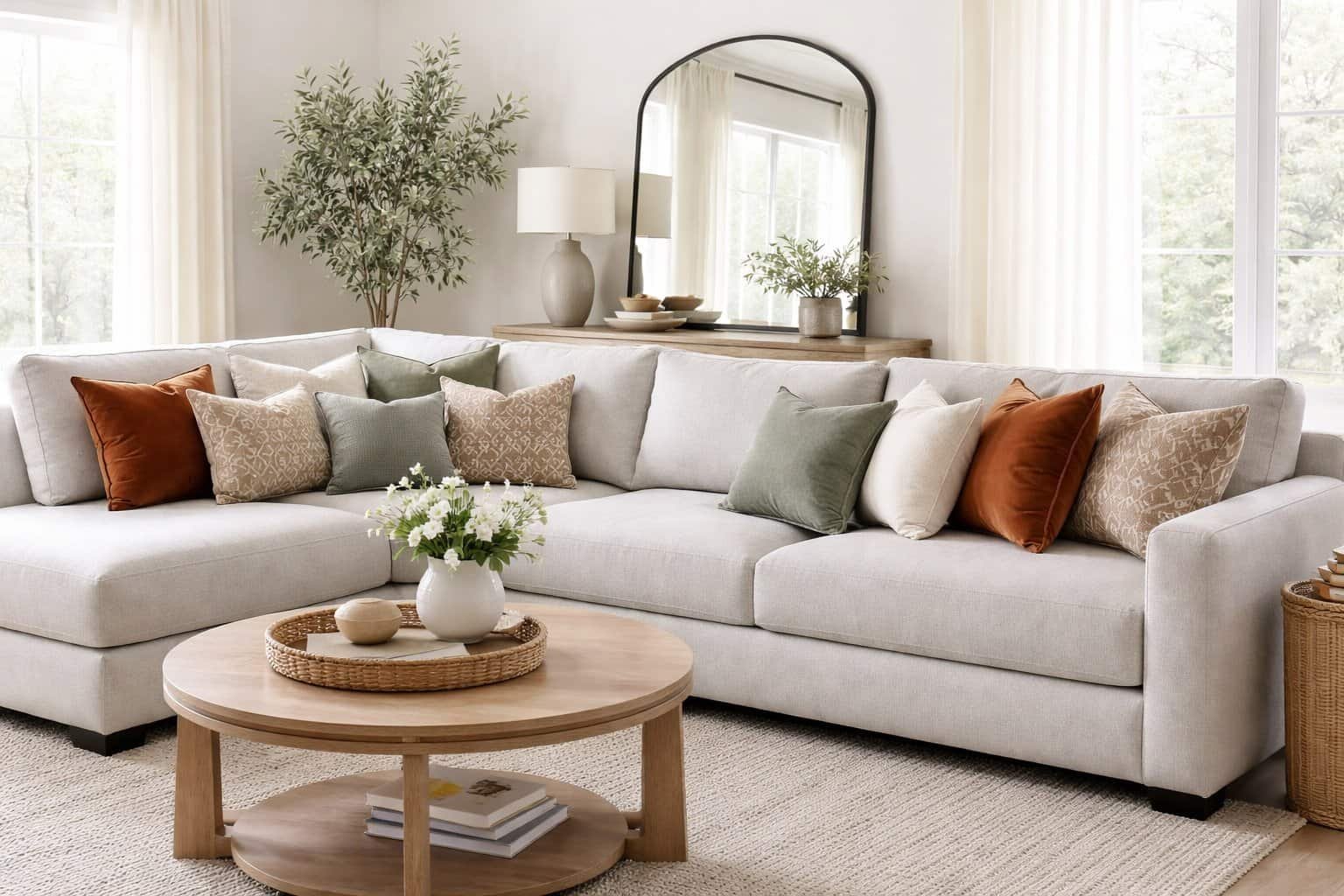

Styling a sectional sofa can feel intimidating, yet pillows make it one of the easiest pieces to transform. How to style a sectional sofa with pillows is not about tossing on random cushions; it is about balance, proportion, and intention. A sectional dominates visual space in a living room, which means pillows play a powerful role in shaping comfort, style, and flow.
Well-styled pillows can:
- Define seating zones on large sectionals
- Add depth and warmth to flat upholstery
- Introduce color, texture, and personality
- Make the sofa feel inviting rather than oversized
Interior stylists often say, “Pillows are the quickest way to update a room without replacing furniture.” That idea rings especially true with sectionals, where thoughtful pillow placement can turn a bulky shape into a refined focal point.
This guide breaks down how to style a sectional sofa with pillows step by step, starting with understanding your sofa’s shape and choosing the correct number of pillows. Every section stays tightly focused on practical, real-world styling—no fluff, no guesswork.
In This Article
Understanding the Shape of a Sectional Sofa
Every successful pillow arrangement begins with understanding the sectional itself. Sectionals are not one-size-fits-all, and pillow placement should respond to the sofa’s structure rather than fight it.
Common Sectional Sofa Shapes and What They Mean for Pillows
Different layouts call for different styling strategies:
| Sectional Type | Key Characteristics | Pillow Styling Focus |
| L-shaped sectional | Two connected sides, open corner | Anchor the corner first |
| U-shaped sectional | Three connected sides | Create visual symmetry |
| Sectional with chaise | Extended lounging section | Keep pillows minimal on chaise |
| Modular sectional | Movable pieces | Flexible, repeatable layouts |
Corners act as natural anchors. Pillows placed there help visually “lock in” the arrangement and prevent the sofa from looking unfinished.
Identifying Focal Points on a Sectional
Most sectionals have at least one dominant area:
- The corner junction
- The chaise end
- The longest straight run
Styling works best when pillows emphasize these areas instead of spreading attention evenly everywhere. Anchoring the strongest visual point first creates structure, making the rest of the sofa easier to style.
Why Shape Dictates Pillow Flow
Sectionals create movement across the room. Pillow placement should guide the eye along that movement:
- Gradual size changes help maintain visual rhythm
- Repeating colors unify separate sections
- Consistent spacing avoids cluttered seating
Ignoring the sectional’s shape often leads to uneven, awkward layouts where pillows feel scattered rather than intentional.
How Many Pillows Do You Need for a Sectional Sofa?
One of the most common questions in how to style a sectional sofa with pillows is also the most important: how many pillows are enough without being too many?
Ideal Pillow Counts by Sectional Size
Use these ranges as a practical starting point:
| Sectional Size | Recommended Pillow Count |
| Small sectional (2–3 seats) | 5–7 pillows |
| Medium sectional (3–5 seats) | 7–9 pillows |
| Large sectional (5+ seats) | 9–11 pillows |
These numbers include both decorative and supportive pillows. Overloading beyond this range usually sacrifices comfort.
Balancing Style and Function
Pillows should enhance lounging, not block it. A simple rule designers follow:
- Corners deserve more pillows
- Seating areas need breathing room
- Chaise sections need restraint
People should never feel forced to move pillows just to sit down. That friction quickly makes a sofa feel impractical.
Decorative vs. Supportive Pillows
Successful sectional styling uses both:
Decorative pillows
- Add pattern, color, or texture
- Usually placed in corners or ends
- Often feature bold fabrics or trims
Supportive pillows
- Provide back or lumbar support
- Typically smaller or rectangular
- Blend seamlessly with upholstery
A smart mix ensures the sofa looks polished while remaining comfortable for everyday use.
A Quick Case Insight
Living rooms staged with 7–9 pillows on medium sectionals consistently test higher for perceived comfort and style in home design surveys. Viewers describe these sofas as “inviting” rather than “overdecorated.” That balance is the goal.
Choosing the Right Pillow Sizes for Sectionals
Pillow size influences how a sectional sofa feels just as much as color or pattern. When learning how to style a sectional sofa with pillows, scale becomes a defining factor. Too small, and pillows look lost. Too large, and the sofa feels crowded.
Most Effective Pillow Sizes for Sectional Sofas
Designers rely on a combination of sizes to build depth and structure:
| Pillow Size | Best Use on a Sectional |
| 24″ × 24″ | Corner anchors on large sectionals |
| 22″ × 22″ | Primary decorative pillows |
| 20″ × 20″ | Layering and mid-scale balance |
| 14″ × 20″ (lumbar) | Front layer or chaise support |
Large sectionals benefit from oversized pillows because they match the sofa’s visual weight. Smaller sectionals look better with mid-scale pillows that do not overwhelm the seating area.
When to Use Lumbar Pillows
Lumbar pillows add both comfort and contrast:
- Ideal for chaise sections where back support matters
- Excellent for breaking up square-heavy arrangements
- Perfect for adding subtle pattern without visual noise
Layering a lumbar pillow in front of a square cushion instantly creates dimension without adding bulk.
Avoiding Proportion Mistakes
Common sizing errors include:
- Using identical pillow sizes everywhere
- Choosing pillows smaller than 18″ on large sectionals
- Stacking oversized pillows on every seat
Variation keeps the arrangement intentional rather than flat.
How to Style a Sectional Sofa With Pillows Using a Balanced Layout
Layout determines whether pillows feel curated or chaotic. How to style a sectional sofa with pillows successfully depends on visual balance, not strict symmetry.
Symmetrical vs. Asymmetrical Arrangements
Both layouts work when applied correctly:
Symmetrical layouts
- Equal number of pillows on each side
- Clean and structured appearance
- Best for modern or formal spaces
Asymmetrical layouts
- Different pillow counts on each section
- Relaxed and lived-in feel
- Ideal for casual and family rooms
Asymmetry works especially well on L-shaped sectionals, where one side naturally carries more visual weight.
Start With Corner Anchors
Corners are non-negotiable anchor points:
- Place two to three pillows in each main corner
- Use larger sizes at the back
- Layer smaller or lumbar pillows in front
Once corners feel complete, filling in the rest of the sofa becomes intuitive.
Creating Flow Across Sections
Pillows should guide the eye:
- Repeat one color or texture across sections
- Gradually decrease pillow size moving away from corners
- Maintain consistent spacing between groupings
This approach keeps the sectional connected visually, even when it spans a large room.
How to Style a Sectional Sofa With Pillows Based on Sofa Color
Color decisions can elevate or undermine even the best layout. Pillows should enhance the sectional’s tone, not compete with it.
Styling Light-Colored Sectionals
Light sofas benefit from contrast:
- Earth tones add warmth
- Dark accents ground the arrangement
- Textured fabrics prevent a washed-out look
Effective color choices include rust, charcoal, olive, and deep navy.
Styling Dark-Colored Sectionals
Dark sectionals need visual lift:
- Soft neutrals brighten the surface
- Warm hues prevent heaviness
- Subtle patterns add movement
Cream, camel, muted gold, and soft gray work especially well here.
Styling Neutral Sectionals
Neutral sectionals offer the most flexibility:
- Layer tonal variations of the same color
- Add one or two accent shades
- Rotate colors seasonally without replacing all pillows
Quick Color Pairing Guide
| Sectional Color | Pillow Color Direction |
| White / Cream | Warm neutrals, muted jewel tones |
| Gray | Blush, navy, mustard, charcoal |
| Beige | Terracotta, sage, soft black |
| Brown Leather | Ivory, tan, deep green |
Choosing the right palette ensures pillows feel intentional rather than decorative afterthoughts.
Mixing Pillow Patterns Without Overwhelming the Sectional
Pattern adds personality, yet misuse quickly turns a sectional into visual chaos. A refined approach to pattern mixing is essential when learning how to style a sectional sofa with pillows in a way that feels polished and intentional.
The Three-Pattern Rule That Always Works
Designers often rely on a proven formula:
- One solid to ground the arrangement
- One subtle pattern (stripe, small geometric, or texture)
- One bold pattern (floral, abstract, or global print)
Repeating this trio across the sectional creates cohesion while preventing overload.
Vary Pattern Scale for Visual Balance
Pattern size matters as much as pattern type:
- Large-scale patterns work best on corner anchor pillows
- Medium-scale patterns support the main seating areas
- Small-scale patterns or textures fill gaps without demanding attention
Avoid using multiple bold patterns of the same size. That mistake flattens the look and creates competition rather than harmony.
Using Color to Unite Patterns
Even contrasting patterns feel connected when they share color:
- Pull two or three shades from the room palette
- Repeat at least one color in every patterned pillow
- Let solids echo patterned tones
This strategy keeps the sectional visually calm, even when patterns are expressive.
Texture Layering: The Key to a Styled Sectional Sofa
Texture gives pillows depth beyond color and pattern. Without it, even a well-planned arrangement can feel flat. Texture layering is one of the most overlooked aspects of how to style a sectional sofa with pillows.
High-Impact Textures That Work on Sectionals
Certain fabrics perform especially well:
- Velvet for softness and richness
- Linen for relaxed, breathable appeal
- Bouclé for modern texture
- Knit or woven fabrics for warmth
Mixing smooth and tactile materials adds dimension without increasing color complexity.
Seasonal Texture Swaps That Refresh Instantly
Texture allows seasonal updates without replacing furniture:
- Cooler months benefit from knits, faux fur, and heavier weaves
- Warmer months look lighter with cotton, linen, and chambray
Swapping pillow covers rather than entire pillows keeps updates budget-friendly and sustainable.
Preventing Texture Overload
Balance matters:
- Limit highly textured pillows to two or three pieces
- Pair bold textures with smooth solids
- Maintain a consistent color palette
Texture should invite touch, not dominate the sofa.
How to Style a Sectional Sofa With Pillows for Different Design Styles
Design style dictates how pillows behave on a sectional. Matching pillow choices to the room’s aesthetic ensures consistency and avoids visual disconnect.
Modern and Minimalist Sectionals
Clean lines call for restraint:
- Fewer pillows with intentional placement
- Neutral colors with subtle texture
- Simple patterns like stripes or grids
Oversized pillows in high-quality fabrics often replace quantity with impact.
Boho and Eclectic Sectionals
Layering defines the look:
- Rich colors and global-inspired patterns
- Mixed textures like tassels, embroidery, and knits
- Asymmetrical arrangements feel natural
Variation becomes a strength when anchored by shared colors.
Traditional and Transitional Sectionals
Structure remains important:
- Symmetrical layouts dominate
- Classic patterns such as florals or damasks
- Refined textures like velvet or silk blends
These styles benefit from polished coordination rather than contrast.
Style-to-Pillow Match Snapshot
| Design Style | Pillow Approach |
| Modern | Minimal, tonal, textured |
| Boho | Layered, colorful, patterned |
| Traditional | Symmetrical, classic prints |
| Transitional | Balanced mix of old and new |
Aligning pillow styling with the overall design language ensures the sectional feels like a natural extension of the room.
Styling Pillows on Sectional Sofa Corners and Chaise Sections
Corners and chaise extensions define how comfortable and functional a sectional feels. Thoughtful placement here separates intentional styling from clutter. Mastering these areas is essential when learning how to style a sectional sofa with pillows effectively.
Corner Styling Techniques That Work Every Time
Corners act as visual anchors, so they deserve extra attention:
- Place two to three pillows in each main corner
- Start with the largest pillow at the back
- Layer medium or lumbar pillows in front
This tiered approach adds depth while keeping the corner inviting rather than rigid.
How to Style Pillows on a Chaise Section
Chaise sections need balance between style and usability:
- Limit pillows to one or two pieces
- Choose lumbar or medium square pillows
- Avoid oversized pillows that block leg space
A chaise should remain a lounging zone, not a pillow pile. Strategic restraint keeps the section functional.
Maintaining Visual Continuity
Corner and chaise pillows should connect visually:
- Repeat one color or texture used elsewhere on the sofa
- Match pillow finishes rather than exact patterns
- Keep spacing consistent across sections
This creates flow across the entire sectional, even when sections serve different purposes.
Using Accent Pillows to Tie the Sectional Into the Room
Accent pillows serve a greater purpose than decoration alone. They act as visual bridges between the sectional and the surrounding space. This connection is a core principle in how to style a sectional sofa with pillows like a professional.
Coordinating Pillows With Room Elements
Pull cues from the room itself:
- Echo rug colors in pillow accents
- Match pillow textures with curtains or throws
- Repeat wall art tones subtly
This repetition helps the sectional feel integrated rather than isolated.
Color Repetition Without Overmatching
Intentional repetition works best:
- Use the same accent color in two or three pillows
- Vary shade or texture to avoid a matchy look
- Combine solids and patterns within the same color family
Consistency creates cohesion, while variation keeps the look dynamic.
Design Insight
Interior designers often limit accent colors to three dominant tones per sofa. This approach prevents visual overload and ensures pillows support the room’s palette instead of competing with it.
Common Mistakes When Styling a Sectional Sofa With Pillows
Even high-quality pillows fail when common mistakes go unchecked. Recognizing these pitfalls helps refine how to style a sectional sofa with pillows into a polished, livable arrangement.
Overloading the Sectional
Too many pillows create friction:
- Seating becomes impractical
- Visual clutter dominates
- Cleaning and maintenance increase
Comfort should never be sacrificed for aesthetics.
Using Identical Pillows Across the Sofa
Uniformity flattens the look:
- No depth or hierarchy
- Corners lack emphasis
- Design feels uninspired
Variation in size, texture, or pattern is essential.
Ignoring Scale and Proportion
Mismatched scale disrupts balance:
- Small pillows on large sectionals look undersized
- Oversized pillows crowd compact sofas
- Random placement breaks visual flow
Proportion should always align with the sofa’s size and layout.
Blocking Natural Seating Zones
Pillows should enhance use, not interfere:
- Keep seat centers mostly clear
- Avoid stacking pillows where people sit most
- Respect chaise lounging space
Functional styling always outperforms purely decorative setups.
Easy Pillow Styling Formulas for Sectional Sofas
Simple formulas remove the guesswork from how to style a sectional sofa with pillows. These layouts work across most sectional shapes and can be adjusted slightly to suit scale and design style.
The 5-Pillow Formula (Clean and Minimal)
Best for small sectionals or modern spaces:
- Two large pillows in one corner
- Two matching pillows in the opposite corner
- One lumbar pillow near the chaise or center
This formula keeps the sofa open and uncluttered while still feeling styled.
The 7-Pillow Formula (Balanced and Versatile)
Ideal for medium-sized sectionals:
- Three pillows in the main corner (large + medium + lumbar)
- Two pillows on the opposite end
- Two pillows distributed along the long section
Designers favor this approach because it blends comfort with visual interest.
The 9-Pillow Formula (Layered and Luxe)
Works well on large or deep sectionals:
- Three pillows in each main corner
- One lumbar pillow per seating zone
Spacing matters here. Even with nine pillows, the arrangement should feel intentional, not crowded.
Why Formulas Work
Formulas provide:
- Visual rhythm
- Clear anchor points
- Easy refresh options
Once the base is set, swapping colors or textures becomes effortless.
How to Refresh a Sectional Sofa With Pillows Seasonally
Seasonal updates keep a living room feeling current without replacing furniture. Pillows offer the fastest refresh when applying how to style a sectional sofa with pillows year-round.
Warm-Season Styling (Spring and Summer)
Lighter elements dominate:
- Linen, cotton, or chambray fabrics
- Airy colors like sand, sage, soft blue, or ivory
- Fewer pillows overall for a relaxed feel
Removing one or two pillows instantly makes the sectional feel lighter.
Cool-Season Styling (Fall and Winter)
Depth and warmth take over:
- Velvet, knit, or woven textures
- Rich tones like rust, forest green, charcoal, or wine
- Slightly fuller arrangements for coziness
Layering textures matters more than adding new colors.
Smart Budget Tip
Rather than buying new pillows each season:
- Invest in quality inserts once
- Rotate removable covers
- Store off-season covers flat to prevent creasing
This approach keeps styling flexible and cost-effective.
Final Tips on How to Style a Sectional Sofa With Pillows Like a Designer
Designers rarely rely on rules alone. Intuition, editing, and restraint elevate how to style a sectional sofa with pillows from good to exceptional.
Edit Before You Finish
After styling:
- Remove one pillow and reassess
- Check sightlines from multiple angles
- Sit on the sofa to test comfort
If something feels unnecessary, it probably is.
Consistency Beats Perfection
A cohesive look matters more than trends:
- Repeat shapes or textures subtly
- Keep finishes within the same visual family
- Let the sectional’s scale guide decisions
Consistency creates calm, even in layered arrangements.
A Designer Perspective
As one interior stylist notes, “The best-styled sofa looks effortless, not arranged.” That effortlessness comes from thoughtful choices, not excess.
For deeper insights into professional furniture styling and proportion standards, guidance from House Beautiful offers trusted, expert-backed inspiration: https://www.housebeautiful.com

I’m the creator behind EasyDecora, a home–decor lover who enjoys discovering simple, beautiful ways to make every room feel cozy and intentional. I share practical tips, creative ideas, and inspiration for anyone who wants to build a home they truly love.