
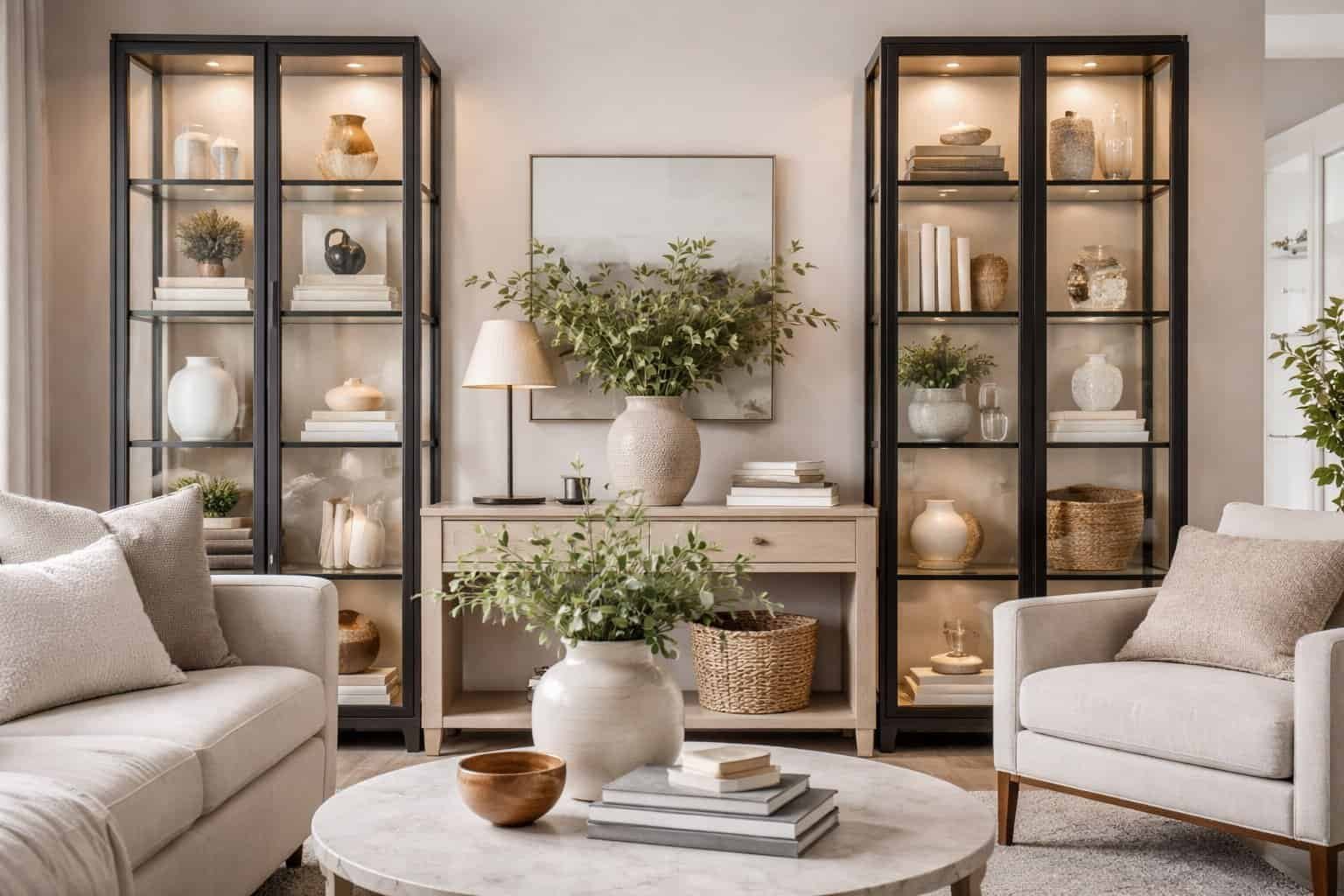

How to decorate glass cabinets in living room spaces is a question that goes far beyond choosing a few decorative objects. Glass cabinets act as visual anchors, blending storage with display while shaping how a living room feels and functions. Well-styled cabinets can make a room feel curated, open, and intentional, while poorly arranged ones quickly become cluttered distractions.
Glass-front cabinets hold a unique position in interior design because they expose what is usually hidden. Every item placed inside contributes to the overall aesthetic, meaning thoughtful decisions matter more here than with closed storage. According to interior styling principles used by professional designers, visually edited displays are perceived as calmer and more luxurious than overcrowded ones.
“A glass cabinet tells a story about the room and the people living in it. Edit ruthlessly and display with purpose.” — Interior Styling Principle
This guide focuses exclusively on how to decorate glass cabinets in living room settings, offering practical strategies, real-world insights, and styling logic that works across modern, classic, and transitional interiors.
In This Article
The Role of Glass Cabinets in Living Room Decor
Glass cabinets serve more than one purpose, and understanding their role helps determine how they should be decorated. Some act as statement displays, while others quietly support the overall layout.
Display vs. Storage: Defining the Purpose
Every successful cabinet arrangement starts with a clear function. Decorative intent changes depending on whether the cabinet exists primarily for display or for practical storage.
Display-focused glass cabinets
- Highlight curated décor, collectibles, or art objects
- Use negative space intentionally
- Feature lighting to enhance visual impact
Storage-forward glass cabinets
- Hold books, serving pieces, or everyday items
- Rely on consistent colors and containers
- Require stronger organization to avoid visual clutter
A cabinet used for mixed purposes should visually lean toward display, keeping functional items neat and visually cohesive.
How Glass Cabinets Affect Light and Space
Glass cabinets influence how a living room feels in measurable ways. Transparent surfaces reflect and distribute light, which helps rooms feel brighter and larger.
Key spatial effects of glass cabinets
- Increase perceived room depth by up to 15–20% in small living rooms
- Reflect natural and artificial light across surfaces
- Reduce visual heaviness compared to solid cabinetry
This makes glass cabinets especially effective in apartments, compact homes, and living rooms with limited windows.
Matching Cabinet Function With Living Room Style
Living room aesthetics guide how bold or subtle cabinet décor should be.
| Living Room Style | Cabinet Styling Approach | Visual Result |
| Modern | Minimal objects, clean lines | Airy and refined |
| Traditional | Symmetry, classic materials | Timeless elegance |
| Transitional | Balanced mix of old and new | Warm and versatile |
| Eclectic | Varied textures and shapes | Artistic and personal |
Choosing décor that aligns with the room’s overall style prevents the cabinet from feeling disconnected or overly staged.
How to Decorate Glass Cabinets in Living Room Based on Cabinet Style
Cabinet construction and materials determine what type of décor works best. Styling without considering the cabinet itself often leads to visual imbalance.
Frameless vs. Framed Glass Cabinets
Frameless glass cabinets
- Work best with minimal, sculptural objects
- Highlight negative space and clean silhouettes
- Suit modern and contemporary interiors
Framed glass cabinets
- Support layered décor and traditional pieces
- Add structure that allows for fuller displays
- Fit classic and transitional living rooms
Framing naturally draws the eye, meaning framed cabinets can handle slightly denser arrangements without feeling cluttered.
Material Matters: Wood, Metal, and Mixed Designs
Cabinet materials set the tone for what belongs inside.
Wood-framed cabinets
- Pair well with ceramics, books, and natural textures
- Add warmth and visual grounding
Metal-framed cabinets
- Complement glassware, stone, and monochrome objects
- Create an industrial or modern edge
Mixed-material cabinets
- Allow more flexibility
- Benefit from repeating at least one cabinet material within the décor
Repeating materials inside the cabinet creates cohesion and visual rhythm.
Aligning Cabinet Style With Living Room Aesthetics
Successful styling always reflects the room’s broader design language. Decorative items should echo shapes, finishes, or colors already present in the living room.
Practical alignment tips
- Match metal tones with nearby lighting or furniture
- Repeat wood tones from flooring or tables
- Mirror accent colors used in cushions or artwork
Consistency at this level helps glass cabinets feel intentionally designed rather than randomly filled.
Choosing a Cohesive Color Palette for Glass Cabinet Displays
A strong color palette is the backbone of successful cabinet styling. Without a plan, even beautiful objects can feel chaotic behind glass. How to decorate glass cabinets in living room settings effectively starts with limiting colors and repeating them thoughtfully.
Selecting the Right Color Scheme
Professional stylists often work with two to three main colors plus one subtle accent. This keeps the display visually calm while still interesting.
Popular color palette approaches
- Neutral palette: white, beige, soft gray, warm wood
- Monochrome palette: variations of one color, such as cream to taupe
- Contrast palette: neutral base with black, brass, or deep blue accents
Neutral palettes remain the safest choice for long-term styling, while contrast palettes add drama in modern living rooms.
Coordinating Cabinet Décor With the Living Room
Cabinet contents should visually connect with surrounding elements. Pulling colors from nearby furniture, rugs, or artwork creates a seamless look.
Easy coordination techniques
- Match book spines with sofa or curtain tones
- Echo metal finishes found in lighting or tables
- Repeat accent colors already present in pillows or throws
Repeating colors at least three times within the cabinet creates visual rhythm and balance.
Using Color to Reduce Visual Clutter
Color discipline reduces the appearance of overcrowding, even when shelves hold multiple items.
| Too Many Colors | Curated Palette |
| Feels busy and distracting | Feels intentional and calm |
| Draws attention to clutter | Highlights shapes and textures |
| Dates quickly | Timeless and flexible |
Less color often results in more impact, especially when working with transparent glass fronts.
Selecting Decorative Items for Glass Cabinets in Living Room
Objects placed behind glass deserve careful selection. Each piece should earn its spot, either through beauty, function, or personal meaning.
Core Decorative Categories That Work Best
Successful displays typically include a mix of the following:
- Books: art books, design volumes, or neutral spines
- Ceramics: vases, bowls, sculptural pottery
- Glassware: decanters, stemware, decorative bottles
- Natural elements: stone objects, wood accents, dried botanicals
Combining these categories prevents displays from feeling flat or overly themed.
Balancing Decorative and Functional Items
Glass cabinets often serve double duty. Functional items can still look stylish when chosen carefully.
Examples of functional yet attractive décor
- Linen-covered storage boxes
- Matching sets of bowls or plates
- Uniform glass jars or containers
Consistency in shape and color allows everyday objects to read as intentional design choices.
Using Personal Items Without Overcrowding
Personal artifacts add warmth and authenticity, though restraint remains essential.
Guidelines for personal displays
- Choose one meaningful item per shelf
- Group similar objects rather than scattering them
- Avoid displaying every collectible at once
“A well-edited cabinet feels personal without feeling busy.”
Rotating personal items seasonally keeps the display fresh and prevents visual fatigue.
How to Decorate Glass Cabinets in Living Room Using Layering Techniques
Layering introduces depth, making cabinets feel dynamic instead of flat. Thoughtful arrangement transforms shelves into visual compositions.
Front-to-Back and Vertical Layering
Depth is achieved by placing items at different distances from the glass.
Effective layering strategies
- Position taller items toward the back
- Place smaller accents slightly forward
- Vary heights within each shelf
Vertical variation keeps the eye moving and prevents monotony.
Creating Visual Flow Across Shelves
Each shelf should relate to the ones above and below it. Repetition and contrast help guide the eye naturally.
Ways to create flow
- Repeat similar shapes at different heights
- Alternate dense and open shelves
- Maintain consistent spacing between objects
A helpful rule: leave 30–40% empty space on each shelf to allow the décor to breathe.
Avoiding Overcrowding While Maximizing Impact
Overfilled cabinets lose their elegance quickly. Editing plays a bigger role than adding.
| Overcrowded Shelf | Balanced Shelf |
| No focal point | Clear visual focus |
| Hard to clean | Easy maintenance |
| Feels cluttered | Feels curated |
Stepping back and viewing the cabinet from across the room often reveals what needs to be removed rather than added.
Styling Glass Cabinets with Lighting for Maximum Effect
Lighting transforms glass cabinets from simple storage into focal points. Thoughtful illumination enhances textures, highlights key objects, and adds depth, making how to decorate glass cabinets in living room feel intentional rather than accidental.
Built-In and Add-On Lighting Options
Modern glass cabinets often include lighting, though older units benefit from simple upgrades.
Common cabinet lighting choices
- LED strip lights: even illumination along shelf edges
- Puck lights: focused lighting for statement pieces
- Recessed lights: clean, seamless appearance
LED lighting remains the most efficient option, consuming up to 75% less energy than traditional bulbs while producing minimal heat.
Choosing the Right Light Temperature
Light color plays a major role in how cabinet décor appears.
| Light Temperature | Best Use | Visual Effect |
| Warm white (2700–3000K) | Traditional, cozy interiors | Soft and inviting |
| Neutral white (3500–4000K) | Transitional spaces | Balanced and natural |
| Cool white (5000K) | Modern, minimal displays | Crisp and sharp |
Warm and neutral tones generally suit living rooms better, as they enhance wood, ceramics, and soft colors without creating glare.
Highlighting Focal Items Inside the Cabinet
Lighting should guide attention rather than flood every shelf equally.
Targeted lighting tips
- Highlight one hero piece per shelf
- Angle lights to avoid reflections on glass
- Leave some areas slightly dim for contrast
Proper lighting adds depth and prevents cabinets from looking flat or overexposed.
Using Symmetry and Asymmetry in Glass Cabinet Arrangements
Balanced composition influences how polished a cabinet display feels. Choosing between symmetry and asymmetry depends on the living room’s overall design direction.
When Symmetry Works Best
Symmetry creates order and calm, making it ideal for traditional and formal living rooms.
Symmetrical styling techniques
- Match objects in pairs
- Center a statement piece
- Keep shelf spacing consistent
Symmetrical arrangements feel stable and timeless, especially in built-in glass cabinets.
Creating Interest with Asymmetrical Displays
Asymmetry brings movement and personality, often favored in modern interiors.
Asymmetrical styling ideas
- Mix different heights and shapes
- Group items in odd numbers
- Offset focal objects slightly off-center
Asymmetry works best when guided by a limited color palette to maintain cohesion.
Maintaining Visual Balance Across Shelves
Even asymmetrical displays require balance. Weight distribution matters visually.
Balancing techniques
- Offset heavy items with lighter ones
- Alternate dense shelves with open ones
- Repeat similar textures across levels
Balanced composition ensures the cabinet feels curated rather than chaotic.
How to Decorate Glass Cabinets in Living Room with Seasonal Updates
Seasonal styling refreshes cabinets without requiring a full redesign. Small updates keep the living room feeling current year-round.
Rotating Décor Without Starting Over
A core set of neutral pieces should remain constant, while seasonal accents rotate in and out.
Seasonal swap ideas
- Replace ceramics with natural textures in fall
- Introduce light glass and soft colors in spring
- Add metallic accents during winter
This approach minimizes effort while maximizing impact.
Seasonal Color and Texture Adjustments
Color and texture shifts signal seasonal change more effectively than themed décor.
| Season | Color Focus | Texture Focus |
| Spring | Soft neutrals, pastels | Glass, ceramics |
| Summer | Whites, sand tones | Linen, light wood |
| Fall | Earth tones | Stone, warm wood |
| Winter | Deep neutrals, metallics | Brass, layered glass |
Subtle changes maintain elegance and avoid novelty décor.
Keeping Cabinets Fresh Without Overstyling
Restraint keeps seasonal updates sophisticated.
Best practices
- Limit seasonal items to one or two per shelf
- Store off-season décor out of sight
- Edit regularly to maintain clarity
Seasonal updates should feel effortless, reinforcing how to decorate glass cabinets in living room with long-term style in mind.
Mixing Textures and Materials Inside Glass Cabinets
Texture prevents glass cabinets from feeling cold or sterile. A thoughtful mix of materials adds warmth, depth, and visual interest, reinforcing how to decorate glass cabinets in living room with sophistication.
Combining Glass, Wood, Metal, and Fabric
Successful displays rely on contrast. Glass shelves already bring shine, so layering in matte and tactile materials creates balance.
Effective material combinations
- Smooth glass with rough ceramics
- Warm wood paired with cool metal
- Polished stone softened by fabric accents
Repeating at least two textures across multiple shelves helps the cabinet feel cohesive rather than scattered.
Balancing Matte and Glossy Finishes
Too many glossy objects compete with the reflective cabinet doors. Matte finishes calm the display and enhance visual clarity.
| Finish Type | Visual Impact | Best Use |
| Glossy | Reflects light | Accent pieces |
| Matte | Absorbs light | Foundation objects |
| Textured | Adds depth | Focal contrasts |
A strong rule of thumb: let matte pieces make up about 60–70% of the display.
Adding Warmth to Glass-Heavy Displays
Warmth matters, especially in modern living rooms dominated by glass and metal.
Ways to introduce warmth
- Natural wood objects
- Linen-wrapped boxes
- Neutral-toned books and pottery
These elements soften the sharpness of glass and make the living room feel inviting rather than showroom-like.
Decorating Glass Cabinets in Small Living Rooms
Small living rooms benefit significantly from glass cabinets when styled correctly. The goal is visual openness without sacrificing function.
Minimalist Styling for Compact Spaces
Minimalism works best in smaller rooms, where every item is visible.
Small-space styling guidelines
- Limit décor to 3–5 items per shelf
- Choose slim, vertically oriented objects
- Keep color palettes light and neutral
Light-toned displays reflect more light, helping the room feel larger.
Using Negative Space Strategically
Empty space is a design tool, not a mistake.
Benefits of negative space
- Enhances visual breathing room
- Draws attention to key pieces
- Reduces visual noise
Leaving one shelf partially empty can elevate the entire cabinet’s appearance.
Enhancing Openness and Light
Glass cabinets already help open up a room, though styling choices amplify this effect.
Practical tips
- Use clear or lightly tinted glass décor
- Avoid dark, bulky objects
- Align cabinet lighting with room lighting
When done right, glass cabinets can make small living rooms feel 10–15% more spacious visually.
Common Mistakes to Avoid When Decorating Glass Cabinets
Avoiding common pitfalls often improves cabinet styling more than adding new décor.
Overfilling Shelves
Overcrowding remains the most frequent mistake.
Why overfilling fails
- Eliminates focal points
- Makes cleaning harder
- Creates visual stress
Editing is essential. Removing one item per shelf often improves the overall look instantly.
Ignoring Scale and Proportion
Objects should relate to both the shelf size and each other.
Scale mistakes to avoid
- Oversized objects dominating small shelves
- Tiny items getting lost in large cabinets
- Mixing extreme sizes without balance
Maintaining proportional harmony ensures the cabinet feels intentional.
Mismatched Styles and Colors
Too many styles competing in one cabinet confuse the eye.
Better approach
- Choose one dominant style
- Introduce one complementary style
- Keep color palette consistent
Consistency strengthens visual storytelling and reinforces how to decorate glass cabinets in living room with clarity and confidence.
Maintenance Tips for Keeping Glass Cabinets Looking Stylish
Even the best-styled cabinet loses impact if it looks dusty or disorganized. Maintenance plays a key role in preserving how to decorate glass cabinets in living room with long-term polish and clarity.
Smart Cleaning and Dust Control Strategies
Glass surfaces reveal fingerprints and dust faster than solid cabinetry. Regular upkeep keeps displays crisp.
Effective cleaning practices
- Wipe glass weekly using microfiber cloths
- Clean shelves before restyling to avoid residue
- Use streak-free glass cleaner for clarity
Design professionals recommend a 7–10 day light cleaning cycle to maintain a showroom-quality appearance.
Organizing for Long-Term Visual Appeal
Organization prevents slow clutter buildup, which often goes unnoticed over time.
Simple organization habits
- Group items by category or color
- Re-align objects during regular cleaning
- Remove items that no longer fit the palette
Consistency in placement ensures the cabinet always looks intentional rather than accidental.
Preventing Smudges and Wear
Preventive measures reduce maintenance effort.
Helpful prevention tips
- Avoid touching glass after cleaning
- Install soft-close hinges to reduce vibrations
- Use shelf liners for heavy or sharp objects
Small habits protect both the cabinet and its contents, preserving the display’s elegance.
Final Styling Tips for How to Decorate Glass Cabinets in Living Room
Final refinements elevate a well-styled cabinet into a standout living room feature. Editing and personalization bring everything together.
Editing and Refining the Final Look
Stepping back helps identify what works and what distracts.
Refinement checklist
- Remove one item from each shelf
- Adjust spacing for visual balance
- Confirm consistent color repetition
A good rule: if an item doesn’t add beauty or meaning, it doesn’t belong.
Personalizing Without Overwhelming
Personal touches matter, though restraint remains key.
Balanced personalization ideas
- Display one meaningful object per shelf
- Mix personal items with neutral décor
- Rotate keepsakes seasonally
This approach adds authenticity while maintaining visual calm.
Achieving a Polished, Lived-In Finish
A finished cabinet feels curated yet comfortable.
Signs of a polished display
- Clear focal points
- Balanced negative space
- Harmonized colors and textures
For additional professional guidance on display principles, refer to resources from trusted interior design organizations such as Architectural Digest, which offers expert insights on styling and home décor trends: https://www.architecturaldigest.com
When thoughtfully styled and maintained, glass cabinets become more than storage—they become a visual narrative that defines how to decorate glass cabinets in living room with confidence, purpose, and enduring style.

I’m the creator behind EasyDecora, a home–decor lover who enjoys discovering simple, beautiful ways to make every room feel cozy and intentional. I share practical tips, creative ideas, and inspiration for anyone who wants to build a home they truly love.