
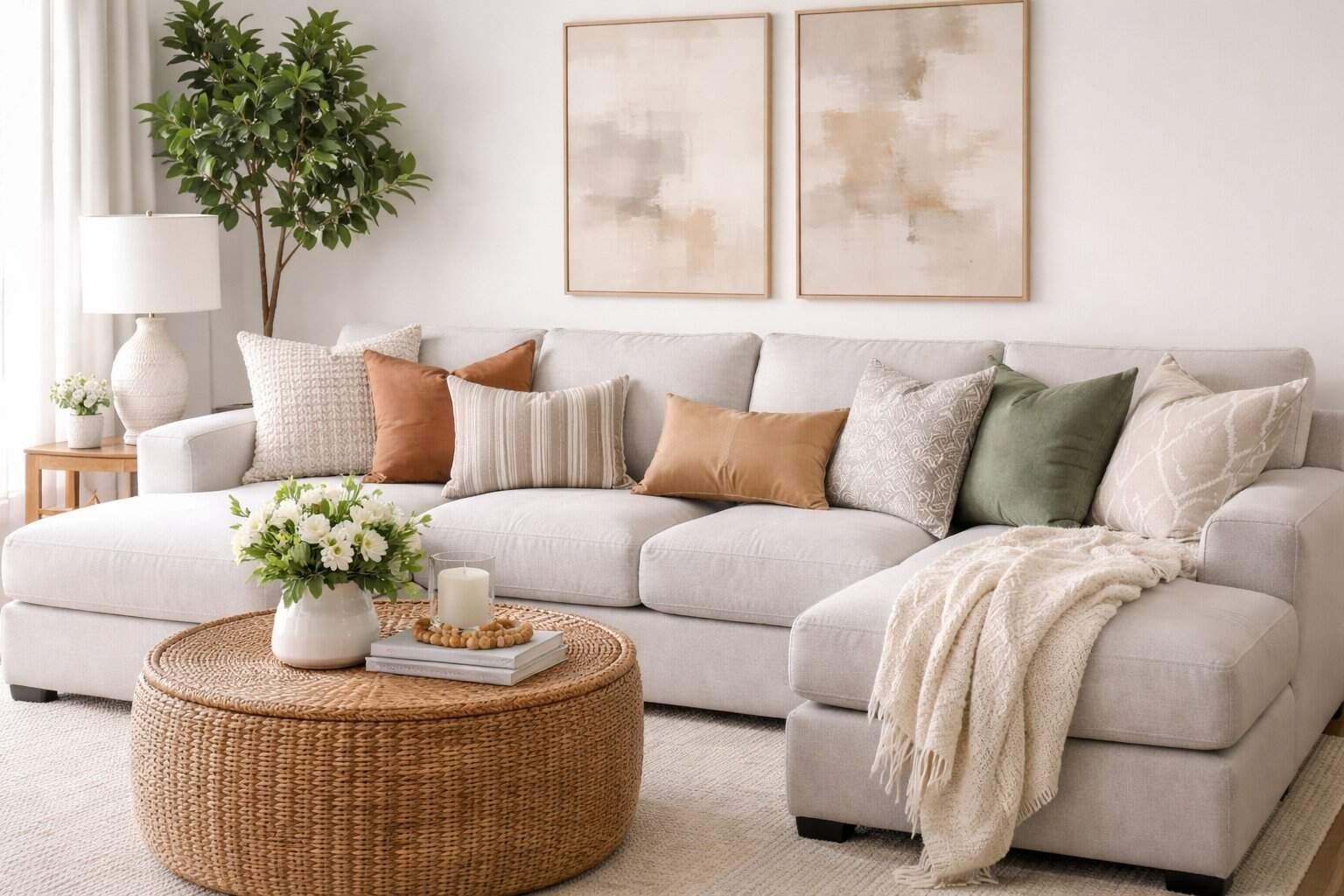

Learning how to decorate a sectional with pillows is one of the easiest ways to elevate a living room without replacing furniture. Pillows add comfort, define the style of your space, and help a large sectional feel intentional rather than overwhelming. When chosen and arranged correctly, pillows can soften sharp lines, highlight color schemes, and make a sectional sofa look professionally styled while remaining livable.
This guide breaks down how to decorate a sectional with pillows step by step, focusing on proportion, layout, and smart design choices. Whether the goal is cozy, modern, minimal, or layered luxury, pillow styling plays a central role in achieving a polished result.
In This Article
Understanding Your Sectional Before Adding Pillows
Before selecting fabrics, colors, or patterns, understanding the structure of your sectional is essential. Sectionals vary widely in shape and scale, and pillow styling should always respond to the sofa—not fight against it.
Common Sectional Shapes and How They Affect Pillow Placement
Different sectional layouts call for different pillow strategies:
- L-shaped sectionals
Ideal for balanced pillow groupings at both ends and a fuller corner arrangement. - U-shaped sectionals
Require restraint to avoid overcrowding; pillows should highlight corners and outer arms. - Chaise sectionals
Benefit from fewer pillows on the chaise to maintain comfort and legroom. - Modular sectionals
Offer flexibility, allowing pillows to be rearranged as seating changes.
Fact: Interior designers typically recommend styling sectionals by emphasizing corners first, then working outward toward arms and open ends.
Key Measurements to Consider
Proportion matters more than decoration. Before buying pillows, evaluate these details:
| Sectional Feature | Why It Matters for Pillows |
| Seat depth | Deeper seats handle larger pillows (22–24 inches) |
| Back height | Low backs look best with fewer, structured pillows |
| Arm width | Wide arms allow layered pillow arrangements |
| Overall length | Longer sectionals need visual repetition to feel cohesive |
Ignoring scale often leads to common styling mistakes like undersized pillows or excessive clutter.
Matching Pillow Style to Sectional Design
The sectional’s design language should guide pillow choices:
- Modern sectionals pair well with clean lines, limited patterns, and structured pillows.
- Traditional or transitional sectionals allow for fuller, layered arrangements.
- Casual or family-friendly sectionals benefit from durable fabrics and softer fills.
“A well-styled sectional doesn’t need more pillows—it needs the right pillows.”
How to Decorate a Sectional With Pillows Based on Sofa Size
Size determines everything when learning how to decorate a sectional with pillows. Too many pillows overwhelm seating, while too few can make the sofa feel unfinished.
Small Sectionals: Keep It Light and Functional
Compact sectionals thrive on simplicity.
Recommended approach:
- Total pillows: 3–5
- Focus on corners and one arm
- Use medium-sized pillows (18–20 inches)
Best practices:
- Skip bulky inserts
- Avoid loud patterns
- Choose colors that blend with upholstery
Case insight: In apartments under 900 sq ft, designers often limit pillows to preserve seating comfort without sacrificing style.
Medium Sectionals: Balance Comfort and Style
Medium sectionals offer more flexibility.
Ideal setup:
- Total pillows: 5–7
- Two pillows per end plus a corner anchor
- Mix one accent pillow with neutrals
Why it works:
This size allows visual rhythm without dominating the sofa.
Large Sectionals: Layer Without Clutter
Oversized sectionals demand structure.
Styling guidelines:
- Total pillows: 7–11
- Anchor corners with larger pillows (22–24 inches)
- Repeat colors or textures across sections
| Sectional Size | Ideal Pillow Count | Primary Pillow Size |
| Small | 3–5 | 18–20 inches |
| Medium | 5–7 | 20–22 inches |
| Large | 7–11 | 22–24 inches |
Important rule: Seating usability always outranks aesthetics. If pillows constantly end up on the floor, reduce the count.
Choosing the Right Number of Pillows for a Sectional
Knowing how many pillows a sectional actually needs is a key step in mastering how to decorate a sectional with pillows. The goal is to enhance comfort and style without sacrificing usable seating. A thoughtful pillow count creates a welcoming look that feels intentional rather than cluttered.
General Pillow Count Guidelines
While every sectional is different, professional stylists often follow these practical rules:
- Small sectionals: 3–5 pillows
- Medium sectionals: 5–7 pillows
- Large or U-shaped sectionals: 7–11 pillows
These numbers allow pillows to frame the sectional rather than dominate it.
When to Add More or Remove Pillows
Several factors influence whether your sectional needs more or fewer pillows:
- Primary use: Family lounging requires fewer pillows than a formal living room.
- Seat depth: Deeper seats can support larger and additional pillows comfortably.
- Visual weight: Dark or bulky sectionals often look better with fewer, larger pillows.
Quick test: Sit down naturally. If more than one pillow needs to be moved, the arrangement is too full.
Balancing Style With Everyday Comfort
A well-styled sectional should still invite people to sit. Designers often recommend:
- Using odd numbers for visual interest
- Keeping at least one clear seat on each section
- Avoiding identical pillows across the entire sofa
“Pillows should enhance the sectional, not compete with it.”
How to Decorate a Sectional With Pillows Using the Right Sizes
Pillow size plays a crucial role in proportion and comfort. Even beautiful fabrics and colors can fall flat if the sizing is off. Understanding scale helps the sectional look cohesive and professionally styled.
Common Pillow Sizes and Their Best Uses
Different sizes serve different visual purposes:
| Pillow Size | Best Placement on a Sectional |
| 18” x 18” | Small sectionals or layering in front |
| 20” x 20” | Versatile size for most sectionals |
| 22” x 22” | Corner anchors and large sectionals |
| 24” x 24” | Deep-seat or oversized sectionals |
| 12” x 20” (lumbar) | Front layer for comfort and support |
Creating Visual Hierarchy With Size
Strong styling relies on contrast:
- Larger pillows should sit at the back or corners
- Medium pillows work well along arms
- Lumbar pillows belong in front, adding comfort and polish
This layered approach keeps the sectional from looking flat or overly rigid.
Common Size Mistakes to Avoid
Several issues appear frequently in poorly styled sectionals:
- Undersized pillows that disappear into deep seating
- Too many pillows of the same size
- Oversized pillows crowding small sectionals
Design insight: Interior designers often size pillows larger than expected because inserts compress over time.
Selecting Pillow Shapes for Sectional Sofas
Shape variation adds depth and interest when learning how to decorate a sectional with pillows. Relying on squares alone can make the sectional feel predictable, while mixing shapes introduces movement and comfort.
Square Pillows: The Foundation
Square pillows form the base of most sectional arrangements.
- Provide back support
- Anchor corners visually
- Work well in pairs or trios
Lumbar Pillows: Style Meets Function
Lumbar pillows bring both comfort and refinement:
- Support lower backs
- Break up bulky square arrangements
- Ideal for chaise sections and middle seats
Accent Shapes for Visual Interest
Occasional shape variety elevates the design:
- Round pillows: soften sharp sectional lines
- Bolster pillows: work well on armless ends
- Rectangular pillows: add structure to casual sectionals
Balanced shape formula:
- 60–70% square pillows
- 20–30% lumbar pillows
- 10% accent shapes
This mix ensures the sectional feels curated without appearing overdesigned.
How to Decorate a Sectional With Pillows Using Color Strategy
Color is one of the most powerful tools when learning how to decorate a sectional with pillows. The right color approach can brighten a room, anchor a design theme, or add subtle contrast without overwhelming the sectional itself.
Building a Color Palette That Works
A strong pillow palette usually includes:
- One dominant base color pulled from the sectional or rug
- One or two secondary colors that add interest
- One accent color used sparingly for contrast
Design fact: Most interior designers follow the 60–30–10 rule, where 60% is the dominant color, 30% secondary, and 10% accent.
Styling Neutral Sectionals With Pillows
Neutral sectionals—gray, beige, cream, or white—offer maximum flexibility.
- Warm neutrals pair well with earthy tones like rust, olive, or camel
- Cool neutrals work best with blues, charcoal, or soft black accents
- Monochromatic layering using different shades creates a calm, upscale look
Tip: Neutral sectionals benefit from texture-forward pillows so the design doesn’t feel flat.
Adding Contrast Without Overpowering the Sofa
Bold colors should feel intentional rather than random.
- Use darker tones toward the corners
- Keep brighter colors toward the front or ends
- Repeat accent colors at least twice across the sectional for cohesion
“Color repetition is what makes a pillow arrangement feel designed instead of accidental.”
Mixing Pillow Patterns the Right Way
Patterns bring personality and movement, but overuse can quickly feel chaotic. Understanding balance is essential when exploring how to decorate a sectional with pillows using prints.
Pattern Types That Work Well Together
Successful combinations usually include:
- One large-scale pattern (floral, abstract, or bold geometric)
- One medium-scale pattern (stripes, checks)
- One subtle pattern or solid to ground the look
| Pattern Scale | Purpose on a Sectional |
| Large | Statement and focal point |
| Medium | Visual rhythm and flow |
| Small | Softens and connects elements |
How Many Patterns Should You Use?
Most sectionals look best with two to three patterns total. More than that often competes for attention and distracts from the sofa itself.
Smart rule: Patterns should share at least one common color to maintain harmony.
Pattern Placement Tips
Placement matters as much as the pattern itself:
- Bold patterns belong on outer sections or corners
- Subtle patterns work best in the center
- Solid pillows help “rest the eye” between prints
Case insight: Homes with open-concept living rooms benefit from restrained patterns to avoid visual noise.
Choosing Pillow Textures for Depth and Comfort
Texture is what turns a well-colored sectional into a cozy, layered focal point. Even without bold colors or patterns, texture alone can define how to decorate a sectional with pillows successfully.
Mixing Soft and Structured Fabrics
Balanced texture creates depth and invites touch:
- Soft textures: velvet, chenille, faux fur
- Structured textures: linen, canvas, leather
- Woven textures: boucle, wool, jute blends
Combining at least three different textures keeps the arrangement visually rich.
Seasonal Texture Swaps
Pillows offer an easy way to refresh a sectional throughout the year:
- Cooler months: velvet, wool, chunky knits
- Warmer months: linen, cotton, light weaves
This approach updates the space without replacing furniture.
Durability and Lifestyle Considerations
Texture choices should align with daily use:
- Homes with pets or kids benefit from tight weaves and washable covers
- Decorative spaces allow for plush or delicate materials
Pro tip: High-quality inserts (down or down-alternative) maintain shape longer and improve overall comfort.
Arranging Pillows on Each Section of the Sectional
Arrangement is where all previous choices come together. Knowing how to decorate a sectional with pillows means understanding where each pillow belongs so the sofa feels balanced, comfortable, and visually intentional.
Styling the Corners First
Corners anchor the entire sectional and should always be styled first.
- Use two large square pillows (22–24 inches) in each corner
- Angle pillows slightly rather than stacking flat
- Match or closely relate corner pillows for cohesion
Corners act as visual bookends, preventing the sectional from feeling scattered.
Decorating the Chaise Section
Chaise lounges need special care to remain functional.
- Limit to one or two pillows
- Choose a lumbar or medium square pillow
- Avoid bulky pillows that interfere with leg space
Design insight: A single lumbar pillow on a chaise often looks more refined than multiple stacked pillows.
Balancing Arms and Open Ends
On sectionals with exposed ends:
- Add one medium pillow against the arm
- Keep the opposite end lighter to avoid symmetry overload
- Use repetition of color or texture instead of identical placement
Key principle: Every pillow should serve a purpose—either comfort or visual balance.
Symmetrical vs. Asymmetrical Pillow Arrangements
Choosing between symmetry and asymmetry is a defining step in how to decorate a sectional with pillows. Each approach creates a different mood and works best in specific settings.
When Symmetry Works Best
Symmetry creates order and calm.
- Ideal for formal living rooms
- Works well with traditional or transitional interiors
- Easier to maintain visually
Typical symmetrical setup:
- Matching pillow pairs on both ends
- Similar sizes and colors throughout
When Asymmetry Feels More Natural
Asymmetry offers a relaxed, lived-in feel.
- Perfect for modern, casual, or family spaces
- Allows creative mixing of shapes and sizes
- Feels less staged and more inviting
Asymmetrical success tips:
- Repeat at least one color or texture
- Balance visual weight rather than exact placement
“Symmetry is polished. Asymmetry is personal.”
Styling Pillows for Different Interior Design Styles
Interior style should always guide pillow decisions. Pillows that clash with the room’s design language disrupt cohesion, no matter how beautiful they are.
Modern and Minimalist Sectionals
Clean lines require restraint.
- Fewer pillows, larger sizes
- Solid colors or subtle textures
- Neutral palettes with one muted accent
Farmhouse, Boho, and Cozy Spaces
Layering is welcome here.
- Mixed textures like linen, knits, and woven fabrics
- Earthy tones and warm neutrals
- Handcrafted or patterned accents
Traditional and Transitional Living Rooms
Classic balance works best.
- Symmetrical arrangements
- Coordinated patterns
- Structured pillows with refined trims
Style rule: The more detailed the sectional, the simpler the pillows should be—and vice versa.
Common Mistakes to Avoid When Decorating a Sectional With Pillows
Even beautiful pillows can fall short if misused. Avoiding these mistakes is essential when mastering how to decorate a sectional with pillows.
Overcrowding the Sofa
Too many pillows:
- Reduce seating space
- Feel impractical for daily use
- Create visual clutter
Ignoring Scale and Proportion
Common sizing errors include:
- Small pillows on deep sectionals
- Oversized pillows on compact sofas
- All pillows in the same size
Overusing Bold Colors or Patterns
Accent pillows should enhance, not dominate.
- Limit bold prints
- Balance patterns with solids
- Repeat accents instead of scattering them randomly
Final Tips for Maintaining a Styled Sectional With Pillows
Styling doesn’t end once the pillows are placed. Maintenance keeps the sectional looking fresh and intentional over time.
Simple Upkeep Habits
- Fluff pillows weekly to maintain shape
- Rotate pillows to prevent uneven wear
- Spot-clean covers regularly
Easy Updates Without Replacing Everything
Small changes go a long way:
- Swap pillow covers seasonally
- Introduce one new accent pillow
- Replace inserts instead of covers for better loft
This approach keeps the sectional current without unnecessary expense.
Conclusion: Mastering How to Decorate a Sectional With Pillows
Understanding how to decorate a sectional with pillows comes down to thoughtful choices—right size, balanced color, intentional texture, and practical arrangement. Pillows should enhance the sectional’s form, support comfort, and reinforce the room’s overall style without overpowering it.
By focusing on proportion, placement, and cohesion, any sectional—large or small—can become a refined focal point that still invites relaxation. For additional professional guidance on color harmony and interior balance, resources from established design authorities like Architectural Digest offer valuable insights into timeless styling principles:
https://www.architecturaldigest.com
With the right strategy, pillows stop being accessories and start becoming a design tool that transforms the entire living space.

I’m the creator behind EasyDecora, a home–decor lover who enjoys discovering simple, beautiful ways to make every room feel cozy and intentional. I share practical tips, creative ideas, and inspiration for anyone who wants to build a home they truly love.