
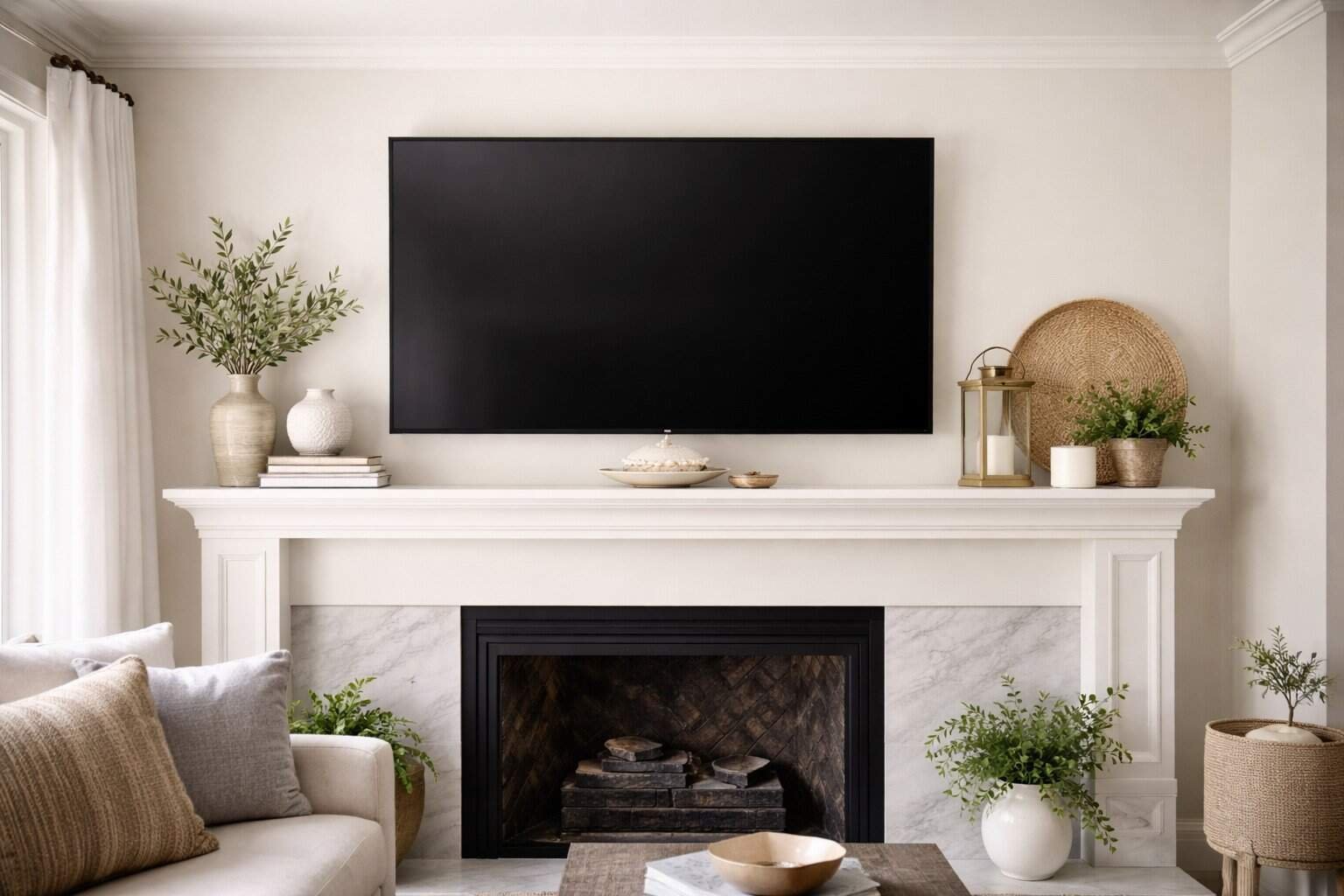

How to decorate a mantel with TV has become one of the most searched interior design questions as living rooms increasingly combine comfort, entertainment, and aesthetics in one central space. A television naturally draws attention, while a mantel is traditionally meant to showcase décor, personality, and architectural character. Bringing these two together requires intention rather than guesswork.
A well-decorated mantel with a TV does more than hold objects—it creates harmony between function and beauty. When done right, the TV blends into the overall design instead of dominating it. When done poorly, the entire wall can feel cluttered, awkward, or visually heavy.
Interior designers agree on one core idea:
“A TV above the mantel should feel like part of the design story, not an interruption.”
This guide breaks down exactly how to approach that balance, starting with the principles that make decorating a mantel with TV feel effortless and refined.
In This Article
Key Design Principles for How to Decorate a Mantel With TV
Successful mantel styling starts with a few foundational rules. These principles apply regardless of room size, décor style, or mantel material and act as guardrails to prevent common mistakes.
Visual Balance Is Non-Negotiable
A TV is a large, dark rectangle that naturally carries visual weight. Everything around it must support that weight without competing for attention.
Key balance principles include:
- Equal visual distribution on both sides of the TV
- Avoiding heavy décor directly beneath the screen
- Keeping the mantel shelf visually lighter than the TV itself
A simple rule designers use:
- If the TV feels heavy → décor should feel light and airy
- If the TV blends in → décor can be more expressive
Scale and Proportion Matter More Than Style
Oversized vases or tiny frames can throw off the entire wall. The mantel décor must feel proportional to both the TV and the mantel length.
Ideal proportion guidelines
| Element | Recommended Scale |
| Mantel décor height | No more than ⅓ of TV height |
| Objects per grouping | 2–3 items |
| Side décor height | Slightly lower than TV bottom |
This approach prevents the TV from feeling boxed in or visually crowded.
Create One Unified Focal Point
Rather than treating the TV and mantel as separate elements, they should read as one intentional focal zone. The wall, mantel, and screen should work together visually.
Ways to achieve unity:
- Matching the TV frame color to mantel materials
- Using a consistent color palette
- Aligning décor edges with the TV’s outer frame
When these details align, the eye sees a single cohesive composition rather than disconnected parts.
Choosing the Right Mantel Style to Complement a TV
Not every mantel style works equally well with a television. The mantel’s shape, depth, and finish directly influence how naturally the TV integrates into the space.
Traditional Mantels With TV
Classic mantels often feature ornate trim, corbels, or detailed molding. These can work beautifully with a TV when styled carefully.
Best practices:
- Choose minimal décor to avoid visual overload
- Keep objects symmetrical
- Use neutral or muted tones to let architectural details shine
Traditional mantels benefit from restraint. Too much styling competes with both the TV and the mantel design itself.
Modern and Minimal Mantels With TV
Clean-lined mantels pair exceptionally well with TVs, especially in contemporary spaces.
Characteristics that work well:
- Straight edges
- Thin profiles
- Matte or natural finishes
Floating mantels are especially effective because they:
- Reduce visual bulk
- Create breathing room beneath the TV
- Emphasize horizontal lines that balance the screen
Material Choices That Enhance a Mantel With TV
Material selection subtly influences how dominant the TV feels.
Best mantel materials for TV integration
- Light wood tones to soften black screens
- Concrete or stone for modern contrast
- Painted mantels in wall-matching colors to help the TV blend in
Avoid overly glossy finishes, which can reflect light and draw attention away from the overall design.
Case Insight: Why Floating Mantels Are Designer Favorites
Design studios consistently favor floating mantels when installing TVs above fireplaces. The reason is simple—visual simplicity. A slimmer mantel allows the TV to feel intentional rather than forced, especially in smaller living rooms where wall space is limited.
Ideal TV Placement When Decorating a Mantel With TV
Correct placement determines whether a TV-enhanced mantel looks intentional or awkward. When learning how to decorate a mantel with TV, placement should always be addressed before styling begins, since décor choices depend heavily on where the screen sits.
Optimal TV Height Above the Mantel
Contrary to common belief, placing a TV too high is one of the most frequent mistakes. Comfort and visual balance should guide height decisions.
Recommended measurements
- Distance between mantel shelf and TV bottom: 4–8 inches
- Center of TV from floor (average living room): 42–48 inches
- Viewing angle tilt: no more than 15 degrees
These figures are widely used by interior designers to maintain ergonomic comfort while preserving visual harmony.
Spacing That Protects Both Style and Function
Adequate breathing room around the TV prevents the wall from feeling compressed.
Key spacing tips:
- Leave visible wall space on both sides of the TV
- Avoid extending décor above the screen
- Keep top margins clean to reduce visual clutter
This spacing helps the TV feel integrated rather than squeezed into the design.
Aligning the TV With Architectural Features
TV placement should respond to the room’s architecture rather than fight it.
Effective alignment includes:
- Centering the TV with the mantel length
- Aligning TV edges with built-in shelving
- Matching TV placement to ceiling beams or trim lines
Alignment gives the impression that the TV was part of the original design plan.
How to Decorate a Mantel With TV Without Overcrowding
Overcrowding is the fastest way to undermine even the most beautiful mantel. The presence of a TV already commands attention, which means décor must be carefully edited.
Embracing the “Less, But Better” Philosophy
Professional stylists often remove more items than they add. Each object should serve a purpose—either visual or emotional.
Signs your mantel is overcrowded
- Objects block part of the TV frame
- Too many small decorative items
- Visual noise that pulls focus away from the screen
A refined mantel typically includes three to five well-chosen pieces, depending on mantel length.
Strategic Use of Negative Space
Negative space is not emptiness—it’s intentional breathing room. Leaving space around objects enhances their presence.
Effective ways to use negative space:
- Space objects unevenly for a natural look
- Leave the center of the mantel visually open
- Avoid filling every inch of shelf length
This approach allows the TV to coexist peacefully with décor.
Choosing Decor That Doesn’t Compete With the TV
The TV should remain the dominant element, especially when turned on.
Best décor choices include:
- Matte finishes over glossy surfaces
- Soft textures such as ceramics or wood
- Subtle color variations instead of bold contrasts
Décor should frame the TV, not challenge it.
Layering Décor Elements Around a TV Mantel
Layering adds depth and sophistication when executed thoughtfully. The goal is to soften the TV’s rigid shape while maintaining a clean aesthetic.
Using Vertical Layers to Balance the Screen
Vertical elements help counteract the TV’s horizontal dominance.
Effective vertical layering options:
- Tall vases placed toward mantel edges
- Slim sculptural objects
- Leaning framed art positioned beside the TV, not above it
Height variation keeps the eye moving without overwhelming the composition.
Horizontal Layering for a Seamless Look
Horizontal layers visually connect the mantel and TV.
Techniques that work well:
- Long decorative trays beneath the TV
- Low-profile objects that extend the mantel line
- Repeating horizontal shapes in décor selection
These elements help anchor the TV within the overall design.
Softening the TV’s Presence With Texture
Texture diffuses the starkness of a black screen.
Best textures for mantel layering:
- Natural stone
- Unglazed ceramics
- Subtle woven elements
Texture adds warmth and makes the TV feel like a natural part of the living space rather than a visual interruption.
Styling the Mantel Shelf Beneath a TV
Styling the shelf beneath the screen is where how to decorate a mantel with TV becomes an exercise in precision. This zone sits closest to the television and plays a critical role in whether the overall design feels intentional or cluttered.
Selecting the Right Height for Mantel Décor
Objects placed on the mantel should never visually collide with the TV. Height control keeps the design breathable and elegant.
Ideal height guidelines
- Mantel décor height: 8–14 inches for standard 55–65 inch TVs
- Taller items should be placed toward the ends
- Center areas should remain visually low
Lower profiles help the eye move smoothly from décor to screen without interruption.
Grouping Objects for Visual Harmony
Random placement often looks accidental. Grouping objects creates structure.
Effective grouping techniques:
- Use odd numbers (groups of 3 work best)
- Mix shapes: one tall, one medium, one low
- Maintain consistent spacing between objects
These groupings bring rhythm to the mantel while keeping attention centered.
Mixing Materials Without Visual Conflict
Variety adds interest, but cohesion prevents chaos.
Balanced material combinations include:
- Ceramic + wood + metal
- Stone + glass + textile accents
- Matte finishes mixed with subtle sheen
Keeping the color palette restrained allows textures to do the visual work.
How to Decorate a Mantel With TV Using Symmetry and Asymmetry
Both symmetrical and asymmetrical approaches can succeed. The choice depends on the mood you want the room to convey.
Symmetrical Mantel Styling With a TV
Symmetry delivers calm and formality, making it ideal for traditional or transitional interiors.
Key characteristics:
- Matching décor pieces on both sides of the TV
- Equal height and visual weight
- Centered focal alignment
Symmetrical arrangements feel polished and timeless, especially in formal living rooms.
Asymmetrical Mantel Styling With a TV
Asymmetry creates a relaxed, contemporary feel and works well in modern spaces.
Effective asymmetrical strategies:
- Balance a tall object on one side with multiple smaller items on the other
- Use varying heights while maintaining equal visual weight
- Allow negative space to play a role
Asymmetry should feel intentional, not accidental.
Choosing the Right Approach for Your Space
Quick decision guide
| Room Style | Best Approach |
| Traditional | Symmetry |
| Modern | Asymmetry |
| Minimalist | Controlled asymmetry |
| Transitional | Soft symmetry |
Selecting the right approach ensures the mantel complements the room’s overall design language.
Color Coordination Tips for Decorating a Mantel With TV
Color plays a powerful role in minimizing the TV’s visual dominance while enhancing the mantel’s appeal.
Matching Mantel Décor to the TV Frame
Black screens can feel heavy if left unbalanced.
Smart color strategies:
- Use black accents in décor to echo the TV frame
- Introduce charcoal or deep gray for softer contrast
- Avoid stark white directly beneath the screen
This repetition helps the TV blend into the composition.
Neutral Palettes That Work Best With TVs
Neutral tones reduce visual tension and maintain elegance.
Top neutral choices:
- Warm beige
- Soft taupe
- Greige
- Muted stone shades
Neutrals allow the TV to recede visually when not in use.
Adding Controlled Contrast for Interest
Contrast should be subtle, not dramatic.
Effective contrast ideas:
- One darker accent piece among lighter décor
- Natural wood against a painted mantel
- Soft metallics like brushed brass or aged bronze
These accents add dimension without pulling focus away from the TV.
Incorporating Greenery and Natural Elements
Natural elements play a powerful role in softening the hard lines of a TV screen. When applied thoughtfully, greenery brings life, movement, and warmth to a mantel without stealing focus.
Best Plant Types for a Mantel With TV
Plants placed near electronics should be low-maintenance and visually calm.
Designer-approved choices
- Snake plants (upright, sculptural)
- Olive branches (real or faux)
- Eucalyptus stems
- Dried pampas or grasses
These options provide organic contrast while maintaining a clean silhouette.
Faux vs. Real Greenery Near a TV
Real plants offer authenticity, but faux greenery often performs better on mantels due to heat and light conditions.
Quick comparison
| Type | Pros | Cons |
| Real plants | Natural texture, air quality | Heat sensitivity, maintenance |
| Faux plants | Zero upkeep, consistent look | Quality matters |
High-quality faux greenery is widely used by interior designers for mantel styling, especially above fireplaces.
Using Organic Materials to Balance the Screen
Beyond plants, organic materials subtly counteract the TV’s rigidity.
Effective materials include:
- Stone vessels
- Driftwood accents
- Clay pottery
- Linen or woven textures
These elements add warmth without visual noise.
Seasonal Updates for a Mantel With TV
Seasonal styling keeps the space fresh without requiring a complete redesign. The TV remains fixed, but the mantel décor can evolve throughout the year.
Rotating Décor Without Moving the TV
Seasonal updates should feel effortless.
Simple rotation ideas:
- Swap greenery types
- Change accent colors through small objects
- Replace artwork leaning beside the TV
Keeping the base arrangement intact preserves balance.
Maintaining Simplicity Through the Seasons
Overdecorating during holidays is tempting but risky when a TV is involved.
Guidelines for seasonal décor:
- Limit additions to 1–2 pieces
- Avoid tall items near the center
- Stick to a cohesive color palette
This approach ensures seasonal charm without visual overload.
Lighting Ideas to Enhance a Decorated Mantel With TV
Lighting elevates a mantel with TV from functional to atmospheric. Proper illumination enhances décor while reducing screen dominance.
Accent Lighting That Complements the Screen
Accent lighting adds depth and highlights textures.
Effective options:
- Wall sconces flanking the TV
- Picture lights aimed at décor
- Low-lumen LED strips beneath floating mantels
Warm lighting tones create a relaxed ambiance.
Reducing Glare and Enhancing Comfort
Poor lighting can cause reflections and eye strain.
Best practices:
- Avoid direct lights above the TV
- Use diffused lighting sources
- Position lights slightly outward from the screen
A balanced lighting plan improves both aesthetics and viewing comfort.
Common Mistakes to Avoid When Decorating a Mantel With TV
Even well-intentioned designs can fail due to a few common missteps.
Overdecorating Beneath the Screen
Too many objects create visual clutter and distract from both décor and TV.
Avoid:
- Excessive small items
- Tall décor centered beneath the screen
- Mixing too many styles
Editing is essential.
Ignoring Scale and Spacing
Incorrect proportions disrupt harmony.
Common scale issues:
- Décor larger than the TV frame
- Objects touching the screen edge
- Uneven spacing across the mantel
Consistent spacing restores visual order.
Letting the TV Dominate the Entire Wall
A TV should integrate, not overpower.
Solutions include:
- Matching wall and TV colors
- Framing the TV with décor
- Using textured backdrops
These techniques help the TV visually recede.
Final Tips for Mastering How to Decorate a Mantel With TV
Mastering how to decorate a mantel with TV comes down to intention, restraint, and thoughtful design choices. The goal is not to hide the TV, but to make it feel like it belongs.
Key takeaways
- Balance always beats excess
- Scale and spacing guide every decision
- Texture softens technology
- Lighting completes the look
A well-styled mantel creates a calm, cohesive focal point that feels both functional and beautiful. As design standards evolve, many professionals now recommend planning TV placement and mantel design together rather than treating them as separate decisions, a principle echoed by experts at Architectural Digest (https://www.architecturaldigest.com).
When décor, TV, and architecture work in harmony, the mantel becomes more than a shelf—it becomes the heart of the room.

I’m the creator behind EasyDecora, a home–decor lover who enjoys discovering simple, beautiful ways to make every room feel cozy and intentional. I share practical tips, creative ideas, and inspiration for anyone who wants to build a home they truly love.