
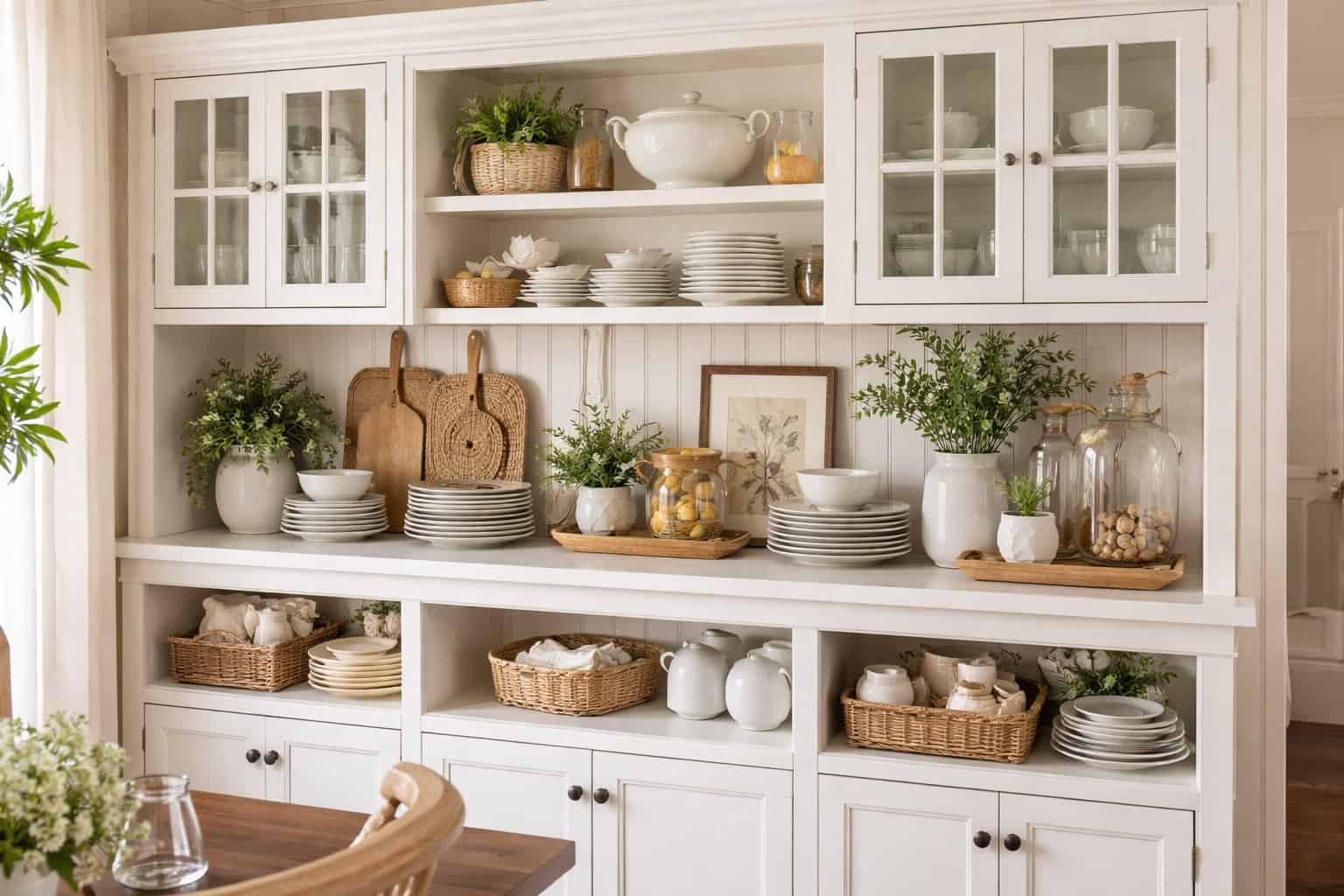

Decorating a dining room hutch is one of those design moves that quietly transforms the entire room. How to decorate a hutch in dining room settings is not just about filling shelves—it is about storytelling, balance, and making the space feel intentional. A well-styled hutch brings warmth to meals, showcases personality, and keeps essential items within easy reach without looking cluttered.
A dining room hutch often sits directly in the line of sight, making it a natural focal point. Thoughtful decoration elevates the room’s aesthetic while supporting daily dining needs. This guide focuses on practical, design-forward strategies that blend beauty and function, following proven interior styling principles and real-world use cases.
In This Article
Understanding the Purpose of a Dining Room Hutch
Before placing a single plate or decorative object, clarity matters. A hutch works best when its purpose is defined early in the decorating process.
Display vs. Storage: Defining the Role
Some hutches act as visual showcases, while others function as hardworking storage units. Many homes strike a balance between the two.
Common hutch purposes include:
- Displaying heirloom china or statement serveware
- Storing everyday dishes for easy access
- Holding linens, candles, or entertaining essentials
- Acting as a visual anchor for the dining room
A display-focused hutch leans toward open spacing and curated items. A storage-first hutch benefits from baskets, covered containers, and symmetry.
Matching the Hutch to Dining Room Use
Formal dining rooms allow for delicate styling, layered plates, and decorative accents. Casual dining spaces benefit from durable items that can be used daily without constant rearranging.
Quick comparison table:
| Dining Room Type | Hutch Styling Focus | Recommended Items |
| Formal | Visual elegance | China sets, crystal, décor |
| Casual | Practical beauty | Everyday dishes, baskets |
| Multi-purpose | Balanced approach | Mix of décor and utility |
Avoiding Common Hutch Decorating Mistakes
Poor planning often leads to clutter or underwhelming results.
Mistakes to avoid:
- Overcrowding shelves with too many small items
- Using décor unrelated to dining or entertaining
- Ignoring negative space, which creates visual rest
- Mixing too many colors or materials without cohesion
“A hutch should feel edited, not filled.” — Interior styling principle used by professional designers
How to Decorate a Hutch in Dining Room Based on Your Style
Personal style drives successful decorating. A hutch that aligns with the dining room’s overall aesthetic feels cohesive and timeless.
Traditional, Farmhouse, Modern, and Transitional Styles
Each design style calls for specific materials, shapes, and arrangements.
Style guide overview:
- Traditional: Fine china, symmetrical arrangements, muted tones
- Farmhouse: White ceramics, wood accents, woven baskets
- Modern: Clean lines, minimal décor, neutral palettes
- Transitional: Blended elements, soft contrast, curated variety
A modern dining room hutch often uses fewer items with strong visual impact. A farmhouse hutch feels fuller but relaxed, using texture over shine.
Coordinating the Hutch with Dining Furniture
Harmony between the hutch, table, and chairs strengthens visual flow. Wood tones do not need to match perfectly, though undertones should align.
Design coordination tips:
- Match metal finishes between hutch hardware and lighting
- Echo table shapes with plate arrangements or décor forms
- Use similar textures to connect furniture visually
Using Color, Finish, and Texture Intentionally
Color anchors the entire display. Neutral backdrops allow dishes and décor to stand out, while darker interiors create drama and depth.
Effective combinations include:
- White dishes against dark wood interiors
- Matte ceramics mixed with glass for contrast
- Natural fibers paired with polished surfaces
Italicized accents like linen napkins or handmade pottery introduce warmth without overpowering the space.
Choosing the Right Color Palette for a Dining Room Hutch
Color sets the emotional tone of a dining room hutch and determines how well displayed items stand out. Selecting the right palette creates harmony between the hutch, the dining furniture, and the surrounding walls.
Neutral vs. Bold Color Schemes
Neutral palettes remain a top choice because they provide flexibility and longevity. White, cream, beige, and soft gray allow dishes and décor to shine without visual competition. Bold palettes work well when used intentionally and sparingly.
Popular color approaches include:
- Soft neutrals for timeless, elegant dining rooms
- Navy, charcoal, or forest green interiors for dramatic contrast
- Two-tone hutches with darker bases and lighter shelving
A bold interior color inside the hutch adds depth without overwhelming the room, especially when the exterior remains neutral.
Using Contrast to Make Items Stand Out
Contrast improves visibility and creates visual interest. Light dishes against dark shelving feel intentional and polished. Dark ceramics on pale shelves add weight and balance.
Effective contrast pairings:
- White plates on walnut or black shelves
- Clear glassware against painted back panels
- Warm wood tones paired with cool ceramic finishes
Contrast also helps prevent displays from blending together, making each piece feel purposeful.
How Lighting Influences Color Choices
Lighting changes how colors appear. Natural light enhances warm tones, while artificial lighting can intensify or mute certain hues.
Lighting-aware color tips:
- Warm LEDs enhance wood and neutral palettes
- Cool lighting works best with modern, monochrome schemes
- Interior hutch lighting highlights texture and depth
“Color without light is invisible.” — design principle often referenced in interior styling
How to Decorate a Hutch in Dining Room Using Dinnerware
Dinnerware remains the foundation of most dining room hutch displays. Thoughtful arrangement turns functional items into design features.
Displaying Plates, Bowls, and Serving Pieces
Plates create strong visual structure. Large plates anchor the display, while smaller bowls and serving dishes add dimension.
Best practices for dinnerware display:
- Place large plates at the back for structure
- Stack bowls in neat, intentional piles
- Highlight statement serving pieces at eye level
Mixing materials such as porcelain, stoneware, and glass keeps the display visually engaging.
Stacking vs. Standing Plates
Both approaches serve different visual purposes. Standing plates add height and elegance, while stacked plates feel casual and accessible.
When to use each style:
| Arrangement Style | Best Use Case | Visual Effect |
| Standing plates | Formal dining | Vertical emphasis |
| Stacked plates | Everyday use | Relaxed, practical |
| Mixed approach | Transitional | Balanced look |
Plate stands help keep upright dishes secure while adding polish to the display.
Mixing Everyday and Decorative Pieces
A hutch feels more authentic when it blends practical and decorative elements. Everyday dishes make the hutch usable, while decorative pieces elevate the look.
Balanced display formula:
- Everyday plates and bowls on lower shelves
- Decorative serveware or heirloom pieces above
- Seasonal items rotated throughout the year
This strategy supports both function and aesthetics without constant restyling.
Layering and Arranging Items Inside the Hutch
Layering separates amateur styling from professional-looking results. Proper arrangement creates depth, flow, and visual rhythm.
Creating Depth with Back-to-Front Layering
Depth adds dimension and prevents flat displays. Items placed at varying distances from the shelf edge create a gallery-like effect.
Layering techniques include:
- Plates at the back, bowls in front
- Small décor placed slightly off-center
- Frames or boards leaned behind dish stacks
Depth encourages the eye to move naturally across the display.
Using Odd Numbers and Varied Heights
Odd-number groupings feel more organic and less staged. Height variation keeps the display dynamic.
Design rules that work:
- Groups of three or five items
- Tall pieces paired with medium and low accents
- Repeating shapes to create visual continuity
Varying heights also prevents shelves from feeling heavy or monotonous.
Avoiding Overcrowding While Keeping Shelves Full
Negative space plays a critical role. Shelves need breathing room to highlight individual pieces.
Signs of a well-balanced hutch:
- Visible shelf space between groupings
- Clear focal points on each shelf
- No more than two to three groupings per shelf
Editing is often the final step. Removing one item can dramatically improve the overall composition.
How to Decorate a Hutch in Dining Room with Decorative Accents
Decorative accents bring personality and warmth to a dining room hutch. While dinnerware creates structure, accent pieces add character and visual storytelling.
Adding Vases, Baskets, and Greenery
Natural elements soften the look of structured dish displays. Ceramic vases, woven baskets, and greenery introduce texture and organic contrast.
Accent ideas that work beautifully in hutches:
- Neutral or stoneware vases for subtle elegance
- Woven baskets to conceal small items
- Faux or fresh greenery for a lived-in feel
Greenery should remain understated. Small potted plants or eucalyptus stems work better than oversized arrangements.
Incorporating Seasonal Décor Without Clutter
Seasonal updates keep a hutch feeling fresh throughout the year. The key lies in restraint rather than full seasonal overhauls.
Simple seasonal swaps include:
- Spring: light ceramics, florals, pastel linens
- Summer: glassware, coastal textures
- Fall: warm-toned pottery, wooden accents
- Winter: metallic touches, white serving pieces
Rotating one or two accents per shelf maintains balance while reflecting the season.
Using Books, Frames, and Small Art Pieces
Books and framed art add depth and sophistication when used sparingly. These elements work best as subtle layers rather than focal points.
Styling tips for these accents:
- Use dining or culinary-themed books
- Lean frames behind plates or bowls
- Choose neutral frames to avoid visual noise
“Decorative accents should support the story, not become the story.” — interior design styling principle
Styling Open Shelves vs. Glass-Front Hutch Cabinets
The structure of the hutch determines how bold or minimal the décor should be. Open shelves and glass-front cabinets require different styling strategies.
Decorating Open Hutch Shelves Effectively
Open shelves demand cohesion because everything remains visible. Consistency in color and material keeps the display intentional.
Best practices for open shelves:
- Limit the color palette to three tones
- Repeat materials such as ceramic or wood
- Leave intentional gaps for visual breathing room
Open shelves benefit from symmetrical or softly balanced arrangements to avoid looking messy.
Tips for Glass-Front Hutches to Keep Them Neat
Glass-front cabinets allow for slightly fuller displays while still feeling refined. Visibility through glass encourages organized groupings.
Glass-door styling guidelines:
- Group similar items together
- Align stacks and rows neatly
- Avoid mixing too many textures per shelf
Glass doors also protect items from dust, making them ideal for displaying fine china or heirloom pieces.
When to Leave Some Sections Minimal
Not every shelf needs to be filled. Strategic minimalism highlights standout pieces and prevents visual overload.
Minimal styling works best when:
- Highlighting statement serveware
- Displaying collections with strong visual impact
- The dining room already contains bold décor
Minimal sections create contrast and elevate the overall presentation of the hutch.
Using Lighting to Enhance a Decorated Dining Room Hutch
Lighting often gets overlooked, yet it plays a powerful role in how a dining room hutch is perceived. The right lighting highlights textures, enhances color, and elevates the overall display from ordinary to refined.
Interior Cabinet Lights and LED Strips
Built-in lighting instantly upgrades a hutch. LED strip lights or puck lights mounted under shelves illuminate displayed items evenly.
Benefits of interior hutch lighting:
- Improves visibility of dishes and décor
- Adds depth and dimension to shelves
- Creates a warm, inviting dining atmosphere
Warm white LEDs (2700K–3000K) are ideal for dining rooms, offering a cozy glow that flatters ceramics and wood tones.
Highlighting Special or Statement Pieces
Lighting helps direct attention. Highlighting a standout serving bowl, antique platter, or glassware collection gives the hutch a focal point.
Effective spotlighting techniques:
- Place lights toward the back to create depth
- Angle lighting to reduce glare on glass doors
- Use dimmable options for flexibility during meals
Statement pieces gain importance when subtly illuminated rather than brightly exposed.
Creating Warmth and Ambiance
Beyond visibility, lighting sets the mood. A softly lit hutch contributes to an inviting dining experience, especially during evening meals or gatherings.
Ambient lighting tips:
- Match hutch lighting temperature with dining room fixtures
- Avoid harsh, cool-toned lights
- Use lighting to complement candles or pendant lights
“Good lighting doesn’t shout—it enhances.” — widely accepted interior lighting principle
Final Styling Tips for a Balanced Dining Room Hutch
Once the hutch is styled, refinement brings everything together. These finishing steps ensure the display remains functional, attractive, and easy to maintain over time.
Editing and Refining the Display
Editing is where the magic happens. Removing unnecessary items allows important pieces to shine.
Editing checklist:
- Each shelf has a clear focal point
- Colors feel cohesive across shelves
- Items serve a purpose—visual or functional
Stepping back and viewing the hutch from across the room helps identify clutter or imbalance.
Keeping the Hutch Practical and Maintainable
A dining room hutch should support daily life, not complicate it. Practical placement ensures frequently used items remain accessible.
Maintenance-friendly strategies:
- Everyday dishes on lower shelves
- Decorative or fragile items placed higher
- Easy-to-clean surfaces and materials
Function-first placement reduces the need for constant rearranging.
Refreshing the Hutch Throughout the Year
Small updates keep the hutch feeling current without a full redesign.
Simple refresh ideas:
- Swap linens or accent pieces seasonally
- Rotate serveware every few months
- Introduce one new texture or material at a time
This approach maintains consistency while preventing the display from feeling stale.
For additional professional guidance on dining room styling and display balance, resources like Architectural Digest offer expert-backed insights into timeless interior design principles:
https://www.architecturaldigest.com

I’m the creator behind EasyDecora, a home–decor lover who enjoys discovering simple, beautiful ways to make every room feel cozy and intentional. I share practical tips, creative ideas, and inspiration for anyone who wants to build a home they truly love.