
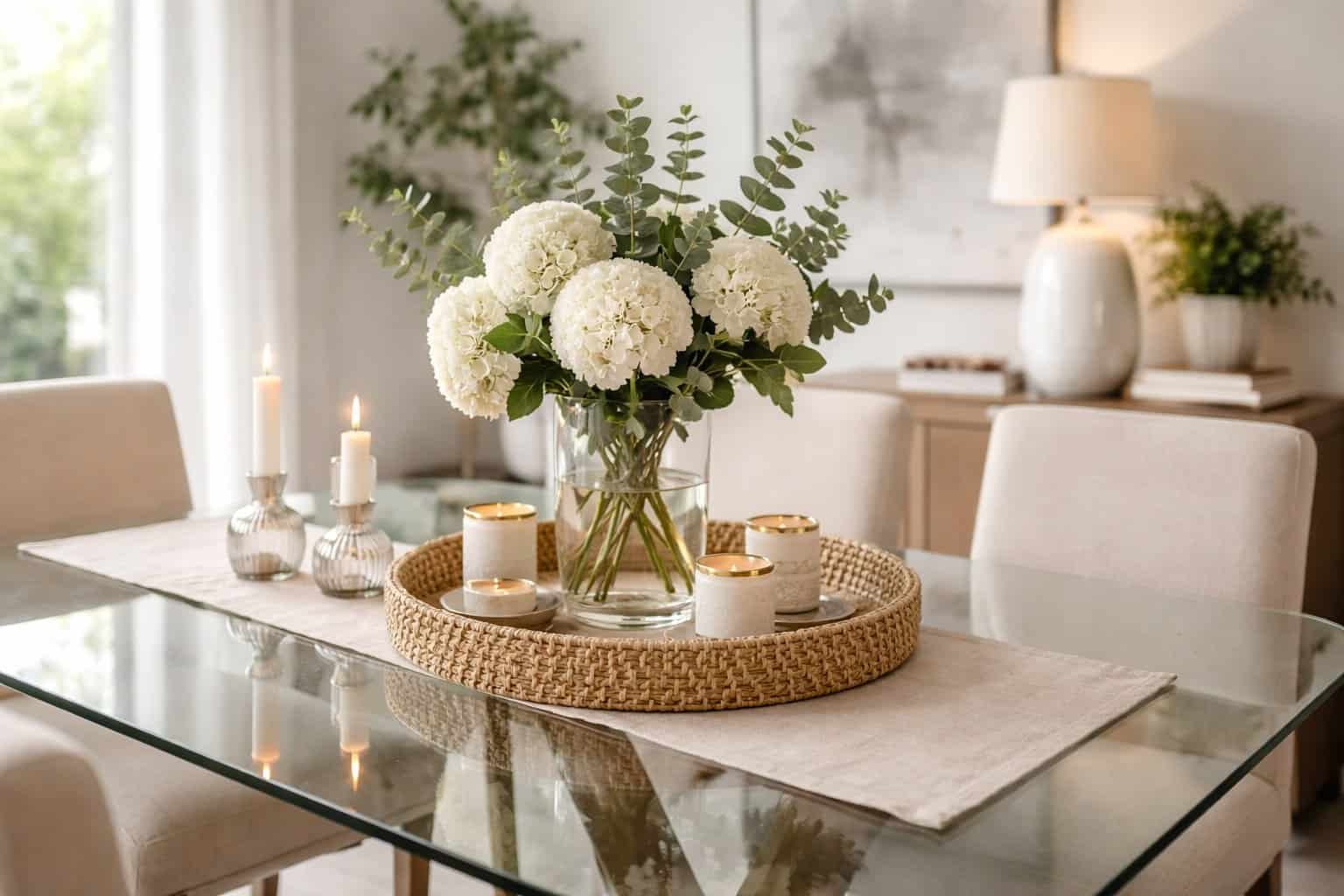

Learning how to decorate a glass dining table takes a different mindset than styling a wood or marble surface. Glass is transparent, reflective, and visually light, which means every decorative choice is instantly noticeable—from above and below. One misplaced item can make the entire table feel cluttered, while the right combination creates a polished, high-end look.
Glass dining tables have become increasingly popular in modern and transitional homes because they:
- Make dining rooms feel larger and brighter
- Reflect natural and artificial light beautifully
- Adapt easily to changing décor styles
Styling them well requires balance, intention, and restraint. This guide focuses on practical, proven ways to decorate a glass dining table while keeping it functional, elegant, and safe for daily use.
“Glass tables reward thoughtful styling. Every piece you place should earn its spot.”
In This Article
Understanding the Style and Shape of Your Glass Dining Table
Before adding décor, understanding the design and structure of your table matters. Shape, base material, and surrounding furniture all influence how decorations should be chosen.
Glass Dining Table Shapes and Their Decorating Needs
| Table Shape | Best Décor Approach | Why It Works |
| Round | Single central focal point | Maintains symmetry and flow |
| Rectangular | Linear or trio arrangement | Complements table length |
| Square | Compact, balanced centerpiece | Prevents overcrowding |
| Oval | Soft, elongated décor grouping | Enhances natural curves |
Shape determines placement and scale, helping avoid visual imbalance.
The Importance of the Table Base
Glass tables often feature:
- Wood bases (warm, casual, rustic)
- Metal bases (modern, industrial)
- Pedestal bases (elegant, space-saving)
Decor choices should echo the base material. Wooden bases pair beautifully with organic elements like greenery or ceramic bowls, while metal bases shine with minimalist décor, candles, or sculptural pieces.
Ignoring the base often leads to mismatched styling.
Matching Dining Room Style
Glass tables adapt well, yet décor should still align with the room’s theme:
- Modern spaces benefit from clean lines and neutral tones
- Farmhouse rooms feel warmer with natural textures
- Glam interiors welcome metallic accents and glass-on-glass layering
Consistency builds visual trust and elevates the entire dining area.
How to Decorate a Glass Dining Table Without Overcrowding
Overdecorating is the most common mistake people make when learning how to decorate a glass dining table. Transparency amplifies clutter faster than solid surfaces.
Minimalism Works Best on Glass
A helpful guideline:
- Choose one main focal item
- Add one or two supporting elements
- Leave open space intentionally
Empty space on glass is not wasted—it highlights what remains.
Recommended Décor Quantity
| Table Size | Ideal Number of Decorative Items |
| Small (4-seater) | 1–2 items |
| Medium (6-seater) | 2–3 items |
| Large (8+ seater) | 3–5 items max |
Smart Spacing Tips
- Center décor whenever possible
- Avoid spreading items to table edges
- Keep sightlines clear for conversation
Glass tables thrive on visual breathing room. Removing one unnecessary item often improves the entire look.
Functional Styling Matters
Daily dining tables must remain usable. Decorations should:
- Be easy to move
- Stay stable on glass
- Avoid sharp or heavy edges
Style should never sacrifice comfort.
Choosing the Right Centerpiece for a Glass Dining Table
A centerpiece anchors the entire look, making it one of the most important decisions when learning how to decorate a glass dining table. Because glass is visually light, the centerpiece should add interest without overpowering the surface.
Best Centerpiece Types for Glass Dining Tables
Some options work better than others on transparent surfaces:
- Low floral arrangements – Fresh or faux flowers in simple vases
- Decorative bowls – Glass, ceramic, or wood bowls with subtle texture
- Tray-based centerpieces – Keeps items grouped and visually clean
- Sculptural objects – Abstract pieces for modern interiors
Low-profile centerpieces are generally more practical, especially for everyday dining.
Ideal Centerpiece Height and Scale
A good rule of thumb:
- Height should stay below 30 cm (12 inches) for daily use
- Width should occupy no more than one-third of the table length
Oversized pieces may look impressive but often block sightlines and disrupt conversation.
| Centerpiece Height | Best Use Case |
| Low (10–20 cm) | Everyday dining |
| Medium (20–35 cm) | Casual hosting |
| Tall (35+ cm) | Special occasions only |
Materials That Look Best on Glass
Glass surfaces pair well with contrast. Effective centerpiece materials include:
- Ceramic for softness
- Wood for warmth
- Metal for structure
- Stone for grounding weight
Mixing one solid material with the transparent tabletop creates visual balance and prevents the table from feeling “empty.”
How to Decorate a Glass Dining Table with Table Runners and Mats
Fabric elements add warmth and definition, solving one of the biggest challenges of glass furniture—coldness. When done right, runners and mats enhance style without hiding the beauty of the glass.
When to Use a Table Runner on Glass
Table runners work especially well on:
- Rectangular and oval glass tables
- Long dining tables that need visual grounding
Recommended runner materials:
- Linen or cotton for casual spaces
- Woven or jute for rustic interiors
- Sheer or lightly textured fabric for modern rooms
Avoid heavy, opaque runners that completely block the glass unless the goal is a dramatic seasonal look.
Placemats vs. Full Runners
| Option | Best For | Benefit |
| Placemats | Daily meals | Protect glass, easy cleanup |
| Table runner | Styling focus | Adds structure and softness |
Placemats made from vinyl, cork, or woven fibers protect the surface while maintaining transparency around the edges.
Color and Pattern Tips
- Neutral tones keep the look refined
- Subtle patterns prevent visual flatness
- Dark colors add drama but should be used sparingly
A runner should frame décor, not compete with it.
Using Natural Elements to Decorate a Glass Dining Table
Natural materials bring warmth, texture, and life—three qualities glass lacks on its own. Incorporating organic elements is a proven strategy when mastering how to decorate a glass dining table.
Popular Natural Décor Choices
- Green plants or eucalyptus stems
- Wooden trays or bowls
- Stone coasters or marble accents
- Dried botanicals for long-lasting style
These elements soften the reflective surface and make the table feel more inviting.
Why Greenery Works Exceptionally Well
Plants add:
- Visual freshness
- Organic contrast
- Seasonal adaptability
Low-maintenance options like faux greenery or dried florals work well for busy households while still delivering visual impact.
“Glass feels alive when paired with something organic.”
Balancing Natural Textures
Combining too many textures can overwhelm the table. Aim for:
- One dominant natural element
- One supporting accent
For example, a wood tray paired with greenery creates a cohesive, grounded centerpiece without clutter.
Natural décor also photographs beautifully, making glass dining tables ideal for modern, social-media-friendly interiors.
How to Decorate a Glass Dining Table for Everyday Use
Everyday styling focuses on function first, beauty second. A well-decorated glass dining table should feel effortless to live with, not something that needs constant adjustment.
Practical Everyday Décor Ideas
Simple items that work well for daily use include:
- A low tray holding salt, pepper, or napkins
- A small plant or vase that can be moved easily
- A decorative bowl that doubles as storage
Multipurpose décor reduces clutter and supports real-life dining habits.
Keeping the Glass Surface Clean and Smudge-Free
Glass shows fingerprints and dust faster than other materials. To maintain a polished look:
- Limit décor to items with flat, stable bases
- Avoid textured bottoms that trap dust
- Clean with microfiber cloths every few days
Using fewer items means less cleaning and more visual clarity.
Everyday Styling Checklist
| Styling Rule | Why It Matters |
| Keep décor lightweight | Easier to move for meals |
| Avoid sharp edges | Prevents scratches |
| Stick to neutral tones | Reduces visual noise |
A glass dining table styled for everyday use should feel calm, functional, and welcoming.
Decorating a Glass Dining Table for Special Occasions
Special occasions allow more creativity and drama. This is where how to decorate a glass dining table becomes an expressive design exercise rather than a practical one.
Occasion-Based Styling Ideas
- Holidays: Candles, metallic accents, seasonal greenery
- Dinner parties: Coordinated centerpieces and elegant tableware
- Celebrations: Florals, themed colors, layered textures
Temporary décor keeps the table fresh while preserving everyday simplicity.
Using Height for Visual Impact
Tall décor pieces work best during events:
- Candlesticks
- Statement floral arrangements
- Decorative lanterns
Height adds elegance but should remain centered to avoid instability on glass.
“Special-occasion décor can be bold because it doesn’t have to last forever.”
Safe Decorating Tips for Events
- Use felt or rubber pads under décor
- Avoid overcrowding place settings
- Keep heavy items away from table edges
Glass tables handle special styling beautifully when safety stays top of mind.
Layering Décor to Add Depth to a Glass Dining Table
Layering is essential because glass alone can feel flat. Thoughtful layers create dimension, contrast, and focus without hiding the tabletop.
Effective Layering Technique
A classic three-layer approach works best:
- Base layer – Tray, runner, or placemats
- Middle layer – Functional or decorative item
- Top layer – Accent such as greenery or candles
This method keeps décor organized and visually intentional.
Choosing the Right Tray
Trays are especially useful on glass dining tables because they:
- Anchor loose items
- Prevent visual scattering
- Add structure to transparent surfaces
Wood, metal, and acrylic trays all work well depending on the room style.
Layering Do’s and Don’ts
| Do | Avoid |
| Mix textures | Mixing too many colors |
| Keep odd numbers | Symmetry overload |
| Leave negative space | Covering entire surface |
Layering should enhance the table, not overwhelm it. Each element should feel placed with purpose.
How to Decorate a Glass Dining Table with Lighting Elements
Lighting transforms a glass dining table more dramatically than almost any other décor choice. Because glass reflects light, even subtle lighting elements can create an elegant, high-impact effect.
Best Lighting Options for Glass Dining Tables
Lighting décor should enhance ambiance without overpowering the space:
- Candles in glass or metal holders
- Lanterns for casual or rustic settings
- LED candles for homes with children or pets
Glass tabletops amplify candlelight, making rooms feel warmer and more inviting.
Candle Placement and Safety Tips
Balanced placement is essential:
- Keep candles clustered on a tray
- Avoid placing flames directly on bare glass
- Use heat-resistant bases to prevent stress cracks
“Soft lighting and glass create instant atmosphere.”
Lighting Style by Dining Room Type
| Dining Room Style | Recommended Lighting Décor |
| Modern | Minimal candle holders |
| Farmhouse | Lanterns or wood-accented candles |
| Glam | Metallic or crystal holders |
Lighting should complement existing fixtures rather than compete with them.
Color Coordination Tips for Glass Dining Table Décor
Color plays a crucial role in learning how to decorate a glass dining table effectively. Without a solid surface to anchor the eye, colors must work together intentionally.
Choosing the Right Color Palette
Successful glass table styling often follows:
- Neutral bases (white, beige, gray)
- One or two accent colors
- Natural tones to ground the look
Too many bold colors can reflect awkwardly on glass and feel chaotic.
Seasonal Color Adjustments
Glass dining tables adapt beautifully to seasonal updates:
- Spring: soft greens, florals, pastels
- Summer: crisp whites, light blues
- Autumn: warm browns, muted oranges
- Winter: deep neutrals, metallic accents
Swapping just one element—like a runner or centerpiece—refreshes the entire table.
Avoiding Common Color Mistakes
- Matching décor exactly to chair color
- Using highly reflective finishes everywhere
- Mixing warm and cool tones without balance
Color harmony keeps the table visually calm and refined.
How to Decorate a Glass Dining Table Safely and Practically
Safety is often overlooked when discussing how to decorate a glass dining table, yet it is essential—especially in active households.
Protecting the Glass Surface
Simple precautions prevent long-term damage:
- Felt pads under décor
- Placemats during meals
- Rounded décor bases instead of sharp edges
These small choices extend the life of the table.
Child- and Pet-Friendly Decorating Tips
- Skip heavy or top-heavy items
- Avoid breakable décor near edges
- Choose stable, low-profile pieces
Safety-conscious styling doesn’t mean sacrificing beauty—it means choosing smarter décor.
Maintenance and Long-Term Care
| Care Tip | Benefit |
| Weekly cleaning | Prevents cloudy buildup |
| Avoid harsh cleaners | Protects glass finish |
| Rotate décor | Prevents pressure marks |
Practical decorating ensures the table remains both beautiful and functional for years.
Common Mistakes to Avoid When Decorating a Glass Dining Table
Even the most stylish glass dining tables can look awkward if certain decorating mistakes creep in. Understanding what not to do is just as important as knowing how to decorate a glass dining table correctly.
Overdecorating the Surface
Glass amplifies visual clutter. Too many items quickly make the table feel busy and chaotic.
- Avoid filling every inch of space
- Skip small, unrelated decorative pieces
- Choose quality over quantity
A single, well-chosen centerpiece often looks better than five random accents.
Using Heavy or Bulky Décor
Oversized décor can:
- Block visibility across the table
- Create an unbalanced look
- Increase the risk of scratches or cracks
Glass dining tables look best with visually light and proportionate pieces.
Ignoring What’s Visible Under the Table
Because the tabletop is transparent, everything beneath it matters.
- Messy table bases distract from décor
- Chairs that clash visually can disrupt balance
- Hanging cords or storage items ruin the clean look
A quick check below the table ensures the décor above truly shines.
“Glass doesn’t hide mistakes—it highlights them.”
Final Styling Tips for How to Decorate a Glass Dining Table
Mastering how to decorate a glass dining table comes down to intention, balance, and adaptability. Glass rewards thoughtful choices and punishes excess, making it one of the most honest surfaces in home décor.
Expert-Level Styling Tips
- Rotate décor seasonally to keep the look fresh
- Use trays to control visual boundaries
- Let negative space work in your favor
- Match décor scale to table size, not room size
Small updates—like changing greenery or adding candles—often make the biggest impact.
Quick Refresh Formula
A simple formula that always works:
- One grounding element (tray or runner)
- One focal piece (centerpiece or plant)
- One accent (candle or small object)
This approach keeps the table styled yet functional.
Why Glass Dining Tables Are Worth the Effort
Glass dining tables:
- Elevate light and openness
- Adapt to multiple décor styles
- Photograph beautifully
- Stay timeless when styled well
When decorated thoughtfully, they become a statement piece rather than a challenge.
For additional guidance on caring for glass furniture surfaces, you can explore expert recommendations from The Spruce, a trusted home and décor resource:
https://www.thespruce.com/how-to-clean-glass-tabletops-1900532

I’m the creator behind EasyDecora, a home–decor lover who enjoys discovering simple, beautiful ways to make every room feel cozy and intentional. I share practical tips, creative ideas, and inspiration for anyone who wants to build a home they truly love.