
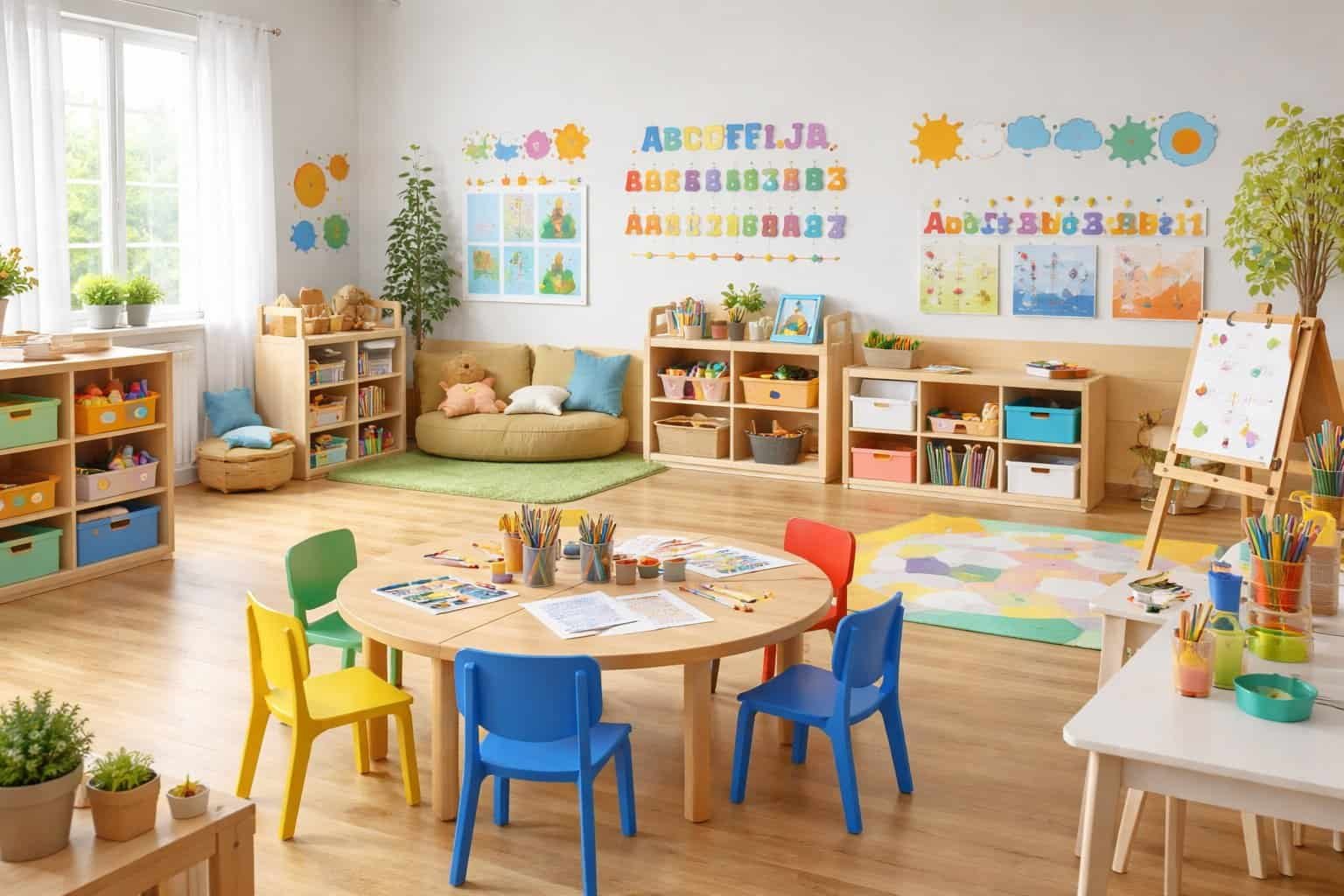

Creating a nurturing learning space starts with knowing how to decorate a daycare classroom in a way that supports child development, safety, and daily routines. A well-designed daycare environment does more than look cheerful. It encourages independence, builds confidence, and promotes curiosity.
Thoughtful classroom decor influences mood, attention span, and behavior. According to early childhood environment research shared by the National Association for the Education of Young Children, classroom design directly affects engagement and learning outcomes. A daycare classroom should feel warm, organized, and stimulating without becoming overwhelming.
This guide walks you step by step through the first essential stages of decorating a daycare classroom, focusing on purpose, layout, and color selection — the foundation of every successful early childhood space.
In This Article
The Purpose of Decorate a Daycare Classroom
Decoration without intention leads to clutter. Clear goals create harmony.
Every daycare classroom serves a specific age group, and each developmental stage requires different design decisions. Before selecting wall art or furniture, identify who will use the space and how they learn best.
Age Group Considerations
Infants, toddlers, and preschoolers have distinct needs:
| Age Group | Design Focus | Key Decor Consideration |
| Infants (0–12 months) | Safety, sensory exploration | Soft textures, low-contrast visuals |
| Toddlers (1–3 years) | Movement, independence | Accessible storage, simple visuals |
| Preschoolers (3–5 years) | Literacy, creativity | Learning charts, labeled zones |
Preschool classrooms benefit from interactive walls, while toddler rooms need open floor space for movement. Infant spaces prioritize calm tones and tactile materials.
Aligning Decor with Learning Goals
Effective daycare classroom decoration reinforces learning objectives:
- Literacy corners support early reading.
- Shape and number displays reinforce math readiness.
- Visual schedules promote routine and security.
- Name labels build word recognition skills.
A classroom designed around learning outcomes creates subtle daily reinforcement. Educational visuals should sit at children’s eye level, not adult height.
Balancing Beauty and Function
A daycare classroom must function efficiently throughout the day. Attractive design should never interfere with:
- Clear walking paths
- Teacher supervision lines
- Emergency access
- Cleanability
Beauty supports learning. Function protects it.
Safety as the Top Priority
Every decorative element must meet safety standards:
- Use non-toxic paint and adhesives.
- Secure shelves to walls.
- Avoid small detachable parts.
- Choose washable, flame-resistant fabrics.
Practical safety checklist when decorating:
- Rounded furniture corners
- Slip-resistant rugs
- Covered electrical outlets
- Sturdy wall anchors
Decorating a daycare classroom begins with intention. When purpose drives design, everything else falls into place.
Planning the Layout When You Decorate a Daycare Classroom
Successful daycare classroom design depends heavily on layout. Even beautiful decor cannot compensate for poor space planning.
Children thrive in environments with predictable structure. Dividing the classroom into zones helps create that structure.
Creating Clearly Defined Activity Zones
Each area should serve one primary function:
- Reading nook
- Art station
- Dramatic play area
- Block-building space
- Sensory exploration corner
Low shelving units act as subtle dividers while maintaining visibility. Area rugs visually separate spaces without blocking supervision.
A well-zoned classroom reduces behavioral issues because children understand expectations in each area.
Traffic Flow and Movement Safety
Daycare classrooms must accommodate constant motion. Poor traffic flow leads to accidents and frustration.
Effective layout principles include:
- Wide walking paths
- No dead-end corners
- Easy access to exits
- Clear sightlines for teachers
High-energy zones such as block play should sit away from quiet reading corners. Calm activities belong in low-traffic sections of the room.
Quiet Corners vs. Active Play Areas
Every child needs both stimulation and retreat. A thoughtfully designed daycare classroom includes:
Active Areas:
- Dramatic play
- Music and movement
- STEM exploration
Calm Areas:
- Reading corner
- Cozy cushions
- Soft lighting
- Calm-down space
Soft textures, warm lighting, and muted colors enhance quiet areas. Bright accents and open floor space energize active zones.
Teacher Visibility and Supervision
Teachers must see every corner of the room at all times. Avoid tall furniture in central areas. Transparent bins and low shelving maintain openness.
Research consistently shows that classroom visibility improves safety and reduces disciplinary interventions.
Practical supervision tips:
- Keep shelves under shoulder height.
- Place dramatic play near walls.
- Avoid heavy visual clutter on windows.
Decorating a daycare classroom successfully means designing with both children and educators in mind.
Choosing a Color Palette for a Calm and Stimulating Environment
Color plays a powerful psychological role in early childhood settings. Selecting the right palette is one of the most impactful decisions when learning how to decorate a daycare classroom.
Children respond emotionally to color long before they understand words.
Best Calming Base Colors
Neutral foundations prevent overstimulation. Ideal base tones include:
- Soft beige
- Warm white
- Light gray
- Pale sage green
- Gentle sky blue
Calm backgrounds allow educational materials and children’s artwork to stand out.
Accent Colors for Engagement
Accent shades introduce energy without overwhelming the senses. Recommended combinations:
| Base Color | Accent Color | Effect |
| Soft white | Mustard yellow | Cheerful and warm |
| Pale gray | Coral | Playful and inviting |
| Light sage | Navy | Balanced and grounded |
| Sky blue | Sunny orange | Energetic yet controlled |
Use bold colors strategically on bulletin boards, storage bins, or reading cushions rather than painting entire walls in bright tones.
Avoiding Overstimulation
Overly vibrant environments can increase anxiety and reduce concentration. Signs of overstimulating decor include:
- Too many primary colors
- Busy patterned walls
- Excessive hanging decorations
- Visual clutter in every corner
Limiting strong colors to 20–30% of the room creates balance.
Using Color Psychology in Early Childhood Spaces
Research shows:
- Blue promotes calmness.
- Green supports focus.
- Yellow encourages happiness in moderation.
- Red increases energy but should be used sparingly.
Color decisions influence mood throughout the day. Calm classrooms support smoother transitions and fewer disruptions.
Decorating a daycare classroom with intention means creating harmony between color, layout, and purpose.
Wall Decor Ideas When You Decorate a Daycare Classroom
Walls shape the personality of a space. Thoughtful wall decor turns blank surfaces into interactive learning tools while keeping the environment organized and calm.
Effective wall design follows one rule: educate without overwhelming.
Interactive Bulletin Boards
Bulletin boards should do more than display posters. They can become hands-on learning stations:
- Velcro letter matching boards
- Weather tracking charts
- Daily schedule visuals
- Emotion check-in boards
Rotating themes monthly keeps interest high without creating clutter. Leave breathing room between displays to prevent visual fatigue.
“Children learn best when their environment invites participation.”
Educational Wall Displays
Core academic concepts deserve permanent space:
- Alphabet charts with real-world images
- Number lines at eye level
- Shape and color reference posters
- Sight word walls for preschool groups
Placement matters. Displays must sit at children’s eye height to encourage independent interaction. Oversized teacher-focused posters reduce engagement.
Displaying Children’s Artwork
Showcasing student creations builds confidence and ownership.
Benefits of rotating artwork displays:
- Encourages creativity
- Builds classroom pride
- Supports emotional development
- Creates a welcoming atmosphere
Simple clipboards or twine with clothespins allow easy swaps. Label each piece with the child’s name to reinforce early literacy skills.
Sensory Wall Elements
Sensory walls enhance tactile exploration. Popular additions include:
- Textured panels
- Felt boards
- Magnetic walls
- Mirror strips for self-recognition
Secure installation remains critical. Every mounted item must withstand pulling and repeated use.
Quick Wall Decor Checklist
| Do | Avoid |
| Use neutral backgrounds | Cover every inch of wall |
| Keep displays organized | Overcrowded posters |
| Rotate seasonal themes | Permanent clutter |
| Mount securely | Loose hanging decorations |
Wall decor in a daycare classroom should inspire curiosity without chaos.
Furniture Selection and Arrangement
Furniture determines how children move, learn, and interact. Smart choices improve comfort, independence, and safety.
A beautifully decorated daycare classroom fails if furniture disrupts function.
Child-Sized Tables and Chairs
Proper sizing supports posture and concentration.
General sizing guide:
| Age | Table Height | Chair Height |
| 1–2 years | 14–16 inches | 7–9 inches |
| 3–4 years | 18–20 inches | 10–12 inches |
| 4–5 years | 20–22 inches | 12–14 inches |
Children’s feet should rest flat on the floor. Comfortable seating reduces restlessness.
Flexible and Modular Furniture
Lightweight, movable pieces allow reconfiguration for different activities:
- Stackable chairs
- Foldable tables
- Rolling storage carts
- Floor cushions
Flexible classrooms adapt to circle time, art projects, and group play seamlessly.
Storage That Doubles as Decor
Open shelving with labeled bins adds both function and visual organization.
Best storage practices:
- Clear labels with pictures and words
- Color-coded bins
- Low shelves for accessibility
- Hidden cabinets for teacher materials
Open storage fosters independence. Children learn to clean up when materials are easy to return.
Reading Nook Essentials
A cozy reading corner should include:
- Soft rug
- Floor pillows or bean bags
- Front-facing book displays
- Warm lighting
Place the reading nook away from high-energy zones. Soft textures and muted tones encourage quiet engagement.
Furniture arrangement influences behavior more than many educators realize. Thoughtful placement reduces noise and transitions smoothly between activities.
How to Decorate a Daycare Classroom with Learning Zones
Structured zones transform a classroom into a mini learning ecosystem. Each area should feel purposeful, organized, and inviting.
Zoning is one of the most effective strategies when deciding how to decorate a daycare classroom.
Literacy Corner Setup
A strong literacy area includes:
- Low book shelves
- Alphabet visuals
- Story props
- Listening station (if age appropriate)
Rotate books monthly to maintain interest. Display covers facing outward to attract young readers.
Art and Creativity Station
Creative spaces thrive on accessibility.
Essential elements:
- Washable table surface
- Easy-clean flooring
- Open paint storage
- Drying rack
- Smocks within reach
Limit wall decorations in this zone to prevent distraction during focused projects.
STEM Exploration Table
Hands-on discovery builds early problem-solving skills.
STEM zone ideas:
- Magnifying glasses
- Building blocks
- Sorting trays
- Measuring cups
- Natural materials like stones or leaves
Keep materials organized in labeled bins to encourage independent exploration.
Dramatic Play Area Design
Imaginative play supports language and social development.
Popular dramatic play setups:
- Mini kitchen
- Grocery store
- Doctor’s office
- Dress-up station
Rotate themes seasonally to refresh engagement without adding clutter.
Sensory Play Section
Sensory zones regulate emotions and improve fine motor skills.
Common sensory elements:
- Sand or water table
- Texture bins
- Playdough station
- Weighted lap pads
Safety guidelines:
- Non-toxic materials
- Close supervision
- Regular sanitation
Case Study:
One preschool redesigned its classroom by clearly defining learning zones with low shelves and rugs. Teachers reported a 30% reduction in transition time and noticeable improvements in independent play within three months.
Structured learning zones create clarity. Clarity reduces chaos.
Storage Solutions That Keep the Classroom Organized
Clutter distracts. Organized storage creates calm, and calm supports learning. Anyone learning how to decorate a daycare classroom quickly discovers that storage is not just functional — it is part of the decor.
Clean visual lines help children focus. Smart storage encourages responsibility.
Labeled Bins and Open Shelving
Clear labeling builds early literacy and independence.
Best labeling practices:
- Use both pictures and words
- Keep labels at child eye level
- Choose consistent font and size
- Laminate for durability
Open shelving allows children to see available materials without dumping bins unnecessarily.
| Storage Type | Best For | Benefit |
| Clear bins | Small manipulatives | Easy visibility |
| Fabric bins | Soft toys | Safer edges |
| Wooden cubbies | Backpacks | Structured organization |
| Rolling carts | Art supplies | Flexible movement |
Color-Coded Organization Systems
Color coding simplifies cleanup routines.
Examples:
- Blue bins for literacy
- Green bins for science
- Yellow bins for art
- Red bins for dramatic play
Children quickly associate color with category. Fewer verbal reminders become necessary over time.
Accessible Storage for Independence
Accessibility fosters confidence. Children should be able to:
- Retrieve materials independently
- Return items without assistance
- Recognize where items belong
Independence in small daily tasks strengthens executive functioning skills.
Hidden Storage for Teacher Supplies
Visual clutter increases stress. Keep teacher-only materials out of sight:
- Locked cabinets
- High wall-mounted shelves
- Labeled storage drawers
Balanced visibility matters. A daycare classroom should feel structured, not busy.
Decorating for Different Themes Without Cluttering
Themes add excitement, but too much thematic decor overwhelms young learners. Strategic planning ensures themes enhance the environment instead of dominating it.
Rotational decor works better than permanent heavy themes.
Nature-Inspired Themes
Nature themes create calm and connection.
Ideas include:
- Leaf garlands
- Wooden accents
- Earth-tone rugs
- Animal visuals
- Potted non-toxic plants
Nature-inspired classrooms often show improved focus and reduced noise levels.
Under-the-Sea Theme
Ocean themes remain popular in daycare settings.
Keep it subtle:
- One feature wall with sea creatures
- Blue accent cushions
- Sensory bin with shells
- Storybooks about marine life
Avoid covering ceilings and every wall with fish cutouts. Less truly feels more.
Community Helpers Theme
This theme encourages social awareness.
Decor ideas:
- Posters of firefighters, nurses, teachers
- Dramatic play corner as a mini clinic or post office
- Role-play costumes neatly stored
Children begin understanding social roles through visual exposure and play.
Minimalist Classroom Theme
Minimalism in early childhood spaces promotes regulation.
Core principles:
- Neutral walls
- Limited wall displays
- Organized shelves
- Open floor space
Research from child development experts at Harvard University Center on the Developing Child emphasizes that reduced environmental stressors can improve cognitive engagement.
How to Rotate Themes Efficiently
Efficient rotation prevents storage chaos.
Steps:
- Store decor in labeled seasonal bins
- Limit active decor to one primary theme
- Swap small accents monthly instead of overhauling everything
Themes should support curriculum, not distract from it.
Lighting Choices to Enhance the Space
Lighting dramatically affects mood, energy levels, and concentration. Smart lighting decisions are essential when planning how to decorate a daycare classroom.
Bright fluorescent overhead lighting often creates harsh glare and fatigue. Softer layered lighting feels more welcoming.
Maximizing Natural Light
Natural light boosts mood and supports healthy circadian rhythms.
Ways to increase natural brightness:
- Keep windows unobstructed
- Use sheer curtains
- Position reading corners near daylight sources
- Avoid heavy wall hangings around windows
Daylight exposure supports better sleep patterns and emotional regulation in young children.
Soft Artificial Lighting Options
Layered lighting creates warmth.
Consider:
- Table lamps in reading corners
- Warm LED bulbs (2700K–3000K)
- String lights secured safely
- Floor lamps in quiet zones
Warm-toned lighting creates a homelike feel, reducing institutional atmosphere.
Avoiding Harsh Fluorescent Glare
If fluorescent lights cannot be replaced, reduce intensity by:
- Using light diffusers
- Turning off half the overhead fixtures
- Supplementing with warm lamps
Balanced lighting lowers overstimulation and improves comfort.
Cozy Lighting for Reading Areas
A reading nook should feel inviting.
Include:
- Soft lamp lighting
- Cushioned seating
- Neutral wall backdrop
- Minimal nearby distractions
Case Study:
A daycare center redesigned its lighting by adding warm LED lamps and reducing overhead glare. Teachers observed calmer transitions and longer independent reading sessions within weeks.
Lighting transforms atmosphere more than any wall decoration.
Incorporating Sensory-Friendly Decor
Children experience the world through their senses. A thoughtfully designed sensory-friendly environment supports emotional regulation, focus, and comfort. Anyone exploring how to decorate a daycare classroom must consider sensory balance as a core design principle.
Overstimulation leads to meltdowns. Balanced sensory input promotes calm engagement.
Textures and Tactile Materials
Tactile variety builds fine motor skills and sensory processing abilities.
Incorporate:
- Soft rugs with low pile
- Felt boards
- Textured wall panels
- Smooth wooden toys
- Silicone sensory mats
Keep textures intentional. Too many competing materials overwhelm young learners.
Noise-Reducing Elements
Sound levels affect behavior more than most people realize. Excess noise increases stress hormones in children.
Reduce classroom noise by adding:
- Fabric curtains
- Upholstered seating
- Acoustic wall panels
- Cork boards
- Area rugs
Soft surfaces absorb sound and create a calmer atmosphere.
Flexible Seating Options
Rigid seating limits comfort. Flexible seating enhances body awareness and self-regulation.
Examples:
- Floor cushions
- Wobble stools
- Bean bags
- Low benches
Children who can choose their seating often remain engaged longer.
Calm-Down Corner Design
Every daycare classroom benefits from a designated calm space.
Essential features:
- Soft lighting
- Neutral colors
- Emotion charts
- Weighted lap pad
- Small basket of quiet toys
A calm-down corner is not a punishment zone. It is a self-regulation space.
Safety Considerations When You Decorate a Daycare Classroom
Decor should never compromise safety. Professional daycare environments prioritize protection above aesthetics.
Childcare licensing regulations vary by region, but universal safety standards apply.
Securing Wall Decor Properly
Heavy items must be anchored securely.
Use:
- Wall studs for mounting shelves
- Industrial wall anchors
- Shatterproof frames
- Cordless blinds
Avoid hanging decor from ceilings within reach of children.
Choosing Non-Toxic Materials
Select:
- Low-VOC paint
- BPA-free plastics
- Water-based adhesives
- Washable fabrics
Always verify product safety certifications before purchasing.
Clear Pathways and Emergency Access
Emergency exits must remain unobstructed. Fire extinguishers and first-aid kits should be visible yet out of children’s reach.
Maintain:
- Wide walking paths
- Slip-resistant rugs
- Rounded furniture edges
- Covered outlets
Safety-first decorating builds trust with parents and staff alike.
Budget-Friendly Ways to Decorate a Daycare Classroom
Creating an inspiring space does not require a massive budget. Smart planning reduces costs while maintaining quality.
Creativity matters more than price tags.
DIY Decor Ideas
Simple DIY projects include:
- Hand-painted alphabet boards
- Laminated printable posters
- Mason jar supply holders
- Fabric bulletin boards
Printable educational resources from reputable institutions like PBS Kids offer free materials suitable for early childhood classrooms.
Repurposing Everyday Materials
Transform common items into decor:
- Wooden crates as shelving
- Recycled containers for sorting games
- Old picture frames for display boards
Sustainable choices reduce waste and expenses.
Thrifted Classroom Finds
Quality secondhand items often include:
- Wooden bookshelves
- Play kitchens
- Storage baskets
- Rugs
Inspect carefully for safety and durability before use.
Printable Educational Decor
Digital downloads allow affordable, cohesive design.
Benefits:
- Customizable themes
- Easy replacement
- Minimal storage
Budget-friendly decorating requires intention, not excess.
Seasonal and Holiday Decorating Tips
Seasonal decor keeps the classroom fresh and exciting. Moderation prevents distraction.
Focus on subtle seasonal accents rather than full transformations.
Simple Seasonal Swaps
Easy updates include:
- Changing bulletin board borders
- Rotating themed books
- Swapping cushion covers
- Updating dramatic play props
Small changes create noticeable impact.
Inclusive Holiday Decor Ideas
Celebrate diversity by highlighting:
- Cultural traditions
- Community events
- Nature-based seasonal shifts
Inclusive decor fosters belonging.
Storing Rotating Decorations
Efficient storage system:
- Clear labeled bins
- Seasonal inventory checklist
- Compact foldable items
Planning ahead simplifies transitions.
Keeping Decor Educational Year-Round
Seasonal displays should reinforce learning objectives. Example:
- Fall theme → leaf sorting math activity
- Winter theme → weather science chart
- Spring theme → plant growth experiment
Decor serves instruction, not distraction.
FAQs About How to Decorate a Daycare Classroom
How do I decorate a daycare classroom on a small budget?
Focus on DIY projects, printable materials, secondhand furniture, and rotating small seasonal accents rather than replacing everything.
What colors are best for a daycare classroom?
Soft neutrals like warm white, sage green, and pale blue create calm foundations. Bright accents should remain limited and intentional.
How often should classroom decorations be updated?
Seasonal updates every 2–3 months maintain engagement without overwhelming children.
How do I prevent a daycare classroom from looking cluttered?
Limit wall coverage, use labeled storage bins, rotate displays, and maintain clear walking paths.
What is the most important factor when decorating a daycare classroom?
Safety and functionality must always come first, followed closely by emotional comfort and educational purpose.
Designing a daycare environment requires intention, creativity, and knowledge of child development. A well-decorated classroom nurtures curiosity, independence, and emotional security.
Ready to transform your daycare classroom into a safe, inspiring, and developmentally supportive space? Start by evaluating your current layout, simplify what feels overwhelming, and implement one strategic improvement this week. Small changes today create lasting impact for the children in your care.

I’m the creator behind EasyDecora, a home–decor lover who enjoys discovering simple, beautiful ways to make every room feel cozy and intentional. I share practical tips, creative ideas, and inspiration for anyone who wants to build a home they truly love.