
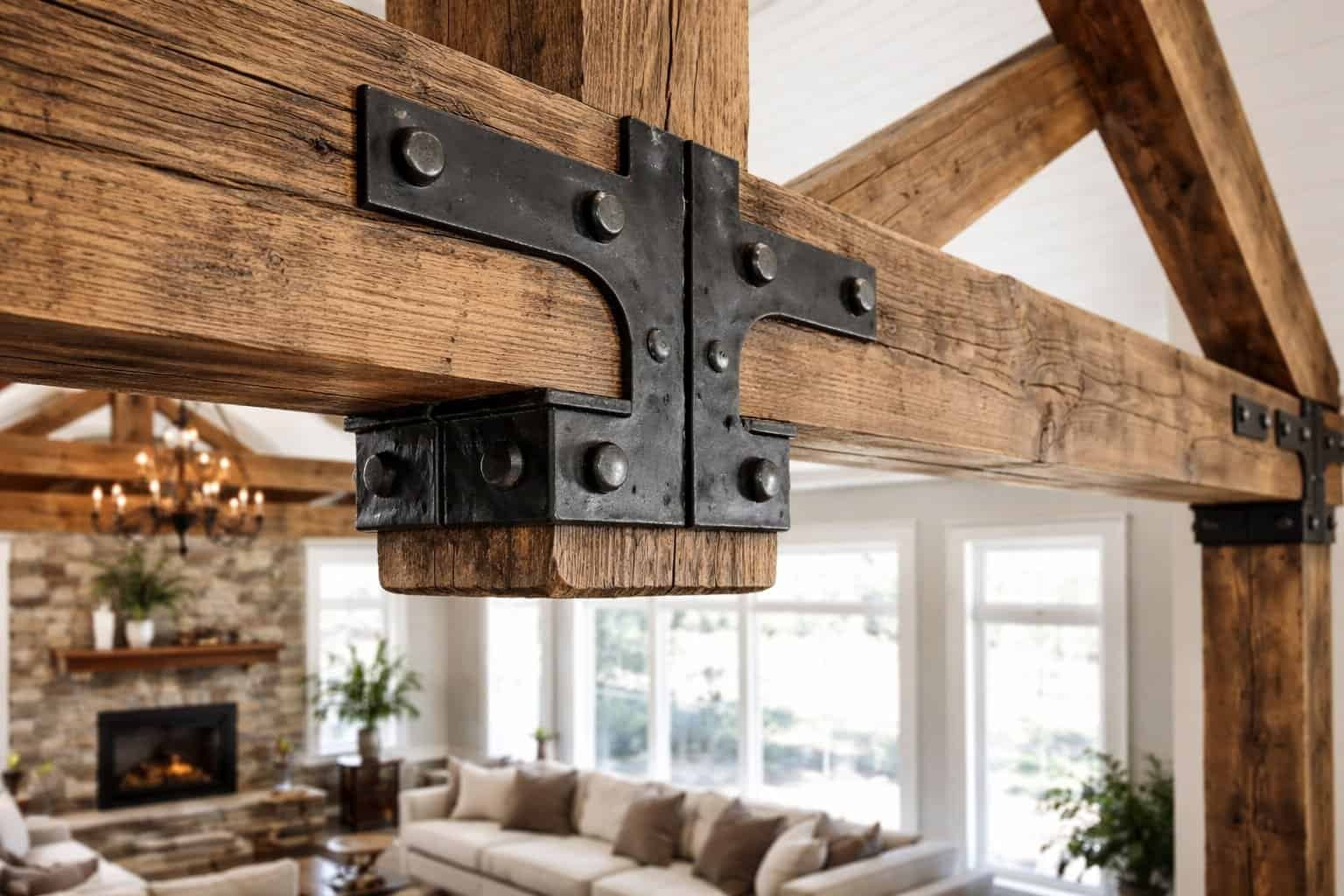

Decorative metal brackets for wood beams play an important role in modern architectural design. They combine structural aesthetics with visual character, transforming simple wooden beams into striking design features. Homes that showcase exposed beams often rely on decorative brackets to create depth, contrast, and architectural authenticity.
Interior designers increasingly use decorative metal brackets for wood beams to reinforce the look of farmhouse kitchens, rustic living rooms, and industrial loft spaces. Wood beams bring warmth and texture, while metal brackets add bold accents and craftsmanship.
Unlike plain support hardware, decorative brackets are intentionally designed to be visible. Their purpose extends beyond holding beams in place. They:
- Highlight architectural elements
- Enhance rustic or industrial themes
- Provide visual support for exposed beams
- Create contrast between natural wood and metal finishes
Many homeowners choose decorative brackets even when the beam itself is structural. Others install them purely as visual elements around faux beams or decorative ceiling beams.
In This Article
Why Decorative Metal Brackets for Wood Beams Are Trending in Interior Design
Interest in decorative metal brackets for wood beams has grown dramatically in recent years. Modern homeowners want interiors that feel authentic, textured, and visually unique. Exposed beams paired with metal accents deliver exactly that.
Architectural design trends strongly favor natural materials mixed with industrial elements, which explains why wood and metal combinations dominate many new homes and renovations.
Major design trends driving popularity
Several interior movements have contributed to the rise of decorative brackets.
Farmhouse design revival
Farmhouse interiors highlight:
- reclaimed wood beams
- black metal brackets
- vintage-inspired hardware
- neutral color palettes
Metal brackets reinforce the handcrafted appearance that farmhouse homes aim to achieve.
Industrial style interiors
Urban loft aesthetics rely heavily on metal features. Decorative brackets help achieve this look by emphasizing exposed construction elements.
Industrial design typically includes:
- dark steel brackets
- large structural beams
- raw textures like brick and concrete
- visible hardware and fasteners
Rustic mountain homes
Cabins and lodge-style homes frequently incorporate heavy timber beams. Decorative brackets create a handcrafted appearance reminiscent of historic timber framing.
Modern architectural contrast
Contemporary homes use brackets differently. Designers often pair minimalist steel brackets with smooth wood beams to create clean geometric lines.
Why homeowners choose decorative beam brackets
Homeowners consistently report several reasons for installing decorative metal brackets:
- Architectural authenticity
- Improved visual weight for beams
- Enhanced ceiling design
- Ability to match metal finishes with lighting fixtures
- Affordable way to upgrade plain beams
Statistics from remodeling industry surveys show that over 60% of homeowners renovating kitchens or great rooms now incorporate exposed beams. Decorative brackets frequently accompany these installations.
Before-and-after design impact
| Without Brackets | With Decorative Metal Brackets |
| Plain exposed beam | Visually anchored beam |
| Minimal architectural interest | Strong design focal point |
| Flat ceiling appearance | Layered ceiling texture |
| Modern but simple | Rustic, industrial, or artisan style |
Design professionals often emphasize that the bracket size must match the beam proportions. Oversized brackets on small beams can appear heavy, while tiny brackets on large beams look decorative but unrealistic.
Types of Decorative Metal Brackets for Wood Beams
Design variety plays a major role in the popularity of decorative metal brackets for wood beams. Manufacturers and custom metal fabricators offer many styles that suit different architectural themes.
Selecting the right type depends on:
- beam size
- interior design style
- metal finish preference
- whether the bracket is structural or decorative
Rustic Iron Brackets
Rustic iron brackets remain the most popular choice for traditional homes. Their rough texture and dark finish complement natural wood grains.
Typical characteristics include:
- thick forged iron plates
- matte black or antique finishes
- visible hammer marks
- simple geometric shapes
Rustic brackets pair well with:
- reclaimed wood beams
- farmhouse kitchens
- cabin ceilings
- fireplace mantels
Design tip: Rustic iron brackets often look best when installed with exposed bolts or decorative rivets.
Industrial Steel Brackets
Industrial-style brackets emphasize raw materials and structural strength. Steel designs are typically thicker and more angular.
Key features include:
- clean steel plates
- sharp right angles
- brushed or powder-coated finishes
- visible hardware
Industrial brackets are commonly installed in:
- loft apartments
- modern kitchens
- warehouse conversions
- contemporary homes with open ceilings
Steel brackets also resist bending better than softer metals, making them a durable option for larger beams.
Hand-Forged Decorative Brackets
Hand-forged brackets represent the highest level of craftsmanship. Blacksmiths shape these brackets manually, producing unique pieces that cannot be replicated by mass manufacturing.
Each bracket often features:
- hammered textures
- slight shape variations
- artistic curves or accents
- custom metal finishes
Luxury homes frequently use these brackets to create a bespoke architectural look.
Case study:
A Colorado mountain home renovation installed custom hand-forged brackets on 10 reclaimed oak beams in a vaulted living room. Interior designers reported that the brackets became the room’s focal point, increasing the home’s resale value by an estimated 8% according to local real estate data.
Minimalist Modern Metal Brackets
Modern interiors tend to favor subtle brackets rather than ornate designs. Minimalist brackets focus on clean geometry.
Common design elements include:
- thin steel profiles
- hidden mounting hardware
- matte black or brushed nickel finishes
- straight lines without decorative details
These brackets support contemporary architectural themes where simplicity and balance are essential.
Ornamental Scroll Brackets
Ornamental brackets add decorative elegance through curved metal shapes. Traditional homes and Mediterranean-style interiors often feature these designs.
Typical details include:
- scroll patterns
- floral metalwork
- curved iron accents
- decorative edges
Ornamental brackets are often installed beneath:
- ceiling beams in dining rooms
- wood mantels
- decorative archways
- outdoor pergolas
Comparison of bracket styles
| Bracket Style | Best Design Style | Visual Impact |
| Rustic Iron | Farmhouse, cabin | Bold and traditional |
| Industrial Steel | Loft, modern industrial | Strong structural appearance |
| Hand-Forged | Luxury rustic homes | Unique artisan character |
| Minimalist Metal | Modern interiors | Clean and subtle |
| Ornamental Scroll | Traditional homes | Decorative elegance |
Interior designers recommend selecting bracket styles that match other metal accents in the room, including lighting fixtures, cabinet hardware, or staircase railings.
Next sections will cover:
- Popular materials used in decorative metal brackets for wood beams
- Where to use decorative metal brackets throughout a home
- How to choose the right bracket size and design
- Installation tips, maintenance, custom options, and FAQs.
Popular Materials Used in Decorative Metal Brackets for Wood Beams
Choosing the right material is essential when selecting decorative metal brackets for wood beams. The metal determines not only the bracket’s strength but also its visual character, durability, and maintenance requirements.
Each material has unique advantages depending on where the beam is installed and the design style of the room.
Wrought Iron Brackets
Wrought iron is widely considered the classic material for decorative beam brackets. Its traditional look pairs naturally with rustic wood beams.
Key characteristics include:
- Exceptional durability
- Heavy and solid appearance
- Hand-forged design possibilities
- Classic matte black or antique finishes
Wrought iron brackets are frequently used in:
- farmhouse kitchens
- rustic lodges
- traditional homes with exposed beams
Fun fact: Wrought iron has been used in architectural hardware for over 2,000 years, making it one of the most historically proven materials.
Powder-Coated Steel Brackets
Steel brackets with powder coating are popular in modern homes. Powder coating creates a protective finish that resists corrosion, scratches, and fading.
Advantages of powder-coated steel include:
- High strength-to-weight ratio
- Smooth professional finish
- Wide color selection
- Excellent rust resistance
Many designers prefer matte black powder-coated steel because it contrasts beautifully against light wood beams.
Steel brackets are commonly used in:
- contemporary interiors
- industrial lofts
- modern farmhouse homes
Cast Iron Brackets
Cast iron brackets are manufactured using molds, which allows intricate decorative designs.
Benefits of cast iron brackets include:
- detailed patterns and scrollwork
- solid weight and strength
- traditional architectural appearance
However, cast iron can be more brittle than forged steel, so it is typically used as decorative rather than structural support.
These brackets often appear in:
- Victorian-style homes
- traditional fireplaces
- decorative ceiling beams
Aluminum Decorative Brackets
Aluminum brackets are lightweight yet corrosion-resistant. They work especially well in humid environments or outdoor settings.
Important advantages:
- naturally rust-resistant
- lightweight installation
- modern clean appearance
- ideal for exterior beams
Outdoor pergolas and patios frequently use aluminum brackets because they withstand weather conditions better than untreated steel.
Comparing Beam Bracket Materials
| Material | Strength | Weight | Best Use | Maintenance |
| Wrought Iron | Very high | Heavy | Rustic interiors | Occasional rust protection |
| Powder-Coated Steel | High | Medium | Modern interiors | Minimal |
| Cast Iron | Moderate | Heavy | Decorative applications | Moderate |
| Aluminum | Moderate | Light | Outdoor beams | Very low |
Interior design professionals often recommend matching bracket material with the scale and visual weight of the beam. Heavy reclaimed beams usually look best with thicker metal brackets.
Where to Use Decorative Metal Brackets for Wood Beams in a Home
Strategic placement can dramatically improve the impact of decorative metal brackets for wood beams. These brackets are not limited to ceilings; they can enhance multiple architectural areas throughout a home.
Thoughtful placement helps create balance, symmetry, and visual interest.
Living Room Ceiling Beams
Living rooms often feature large exposed beams across vaulted or flat ceilings. Decorative brackets emphasize these beams and make them feel structurally integrated.
Benefits include:
- stronger architectural presence
- enhanced ceiling dimension
- focal point above seating areas
Many homeowners install paired brackets at beam ends where the beam meets the wall.
Kitchen Beam Accents
Kitchens frequently incorporate decorative beams above islands or across ceilings. Brackets add industrial or farmhouse character.
Popular placements include:
- beam supports above kitchen islands
- ceiling beams over dining spaces
- transition beams between open-plan rooms
Pairing black metal brackets with industrial pendant lighting creates a cohesive design theme.
Fireplace Mantel Beams
Fireplace mantels made from reclaimed wood beams are extremely popular. Decorative brackets installed beneath the mantel reinforce the heavy-beam look.
Advantages of mantel brackets:
- support the visual weight of the beam
- create symmetrical framing around the fireplace
- enhance rustic or traditional style
Mantel brackets often measure 8–12 inches tall depending on the beam size.
Entryway Architectural Features
Entryways are perfect spaces to showcase exposed beams with decorative brackets. Visitors immediately notice these design details.
Designers often install:
- single beams across entry ceilings
- decorative brackets on beam ends
- lighting fixtures aligned with the beam
This approach creates a dramatic first impression.
Outdoor Pergolas and Patio Beams
Outdoor structures benefit from decorative metal brackets as well. Pergolas and covered patios use brackets to highlight beam connections.
Outdoor bracket advantages:
- reinforces structural appearance
- protects beam joints
- enhances architectural style
Weather-resistant materials like powder-coated steel or aluminum work best in outdoor environments.
Example Placement Guide
| Area | Recommended Bracket Size | Style Suggestion |
| Living room ceiling beams | 6–10 inches | Rustic or industrial |
| Kitchen beams | 4–8 inches | Modern farmhouse |
| Fireplace mantels | 8–12 inches | Decorative scroll |
| Entryways | 6–10 inches | Statement brackets |
| Outdoor pergolas | 6–12 inches | Weather-resistant steel |
Professional designers often repeat bracket designs throughout the home to create a consistent architectural language.
Choosing the Right Decorative Metal Brackets for Wood Beams
Selecting the ideal decorative metal brackets for wood beams requires careful planning. The right bracket enhances the beam, while the wrong size or style can feel out of place.
Several design factors must be considered before installation.
Match the Bracket Style to the Interior Design
Bracket style should complement the room’s overall theme.
Examples include:
- Rustic homes: wrought iron brackets with visible bolts
- Industrial interiors: thick steel brackets with clean angles
- Traditional homes: ornate scroll brackets
- Modern interiors: minimalist flat metal brackets
Matching bracket style with existing metal accents ensures visual harmony.
Consider Proper Bracket Size and Beam Proportion
Proportion is critical. Brackets that are too small may appear decorative rather than supportive, while oversized brackets dominate the beam.
A common design rule:
Bracket height should equal roughly one-third of the beam height.
Example:
| Beam Height | Ideal Bracket Height |
| 6 inches | 2 inches |
| 8 inches | 3 inches |
| 10 inches | 3–4 inches |
| 12 inches | 4–5 inches |
This ratio creates balanced visual support.
Choose the Right Finish and Color
Finish selection affects the bracket’s design impact.
Popular finishes include:
- matte black (most versatile)
- antique bronze
- brushed nickel
- oil-rubbed iron
Matte black remains the most widely used because it contrasts with both light and dark wood beams.
Structural vs Decorative Brackets
Some brackets actually support beam loads, while others simply create the illusion of structural support.
Understanding the difference is important.
| Bracket Type | Function |
| Structural bracket | Supports real weight |
| Decorative bracket | Cosmetic appearance only |
Many decorative beam installations use faux beams, meaning brackets serve purely aesthetic purposes.
Custom vs Prefabricated Brackets
Homeowners often choose between ready-made brackets or custom fabrication.
Prefabricated brackets
Advantages:
- affordable
- widely available
- fast installation
Custom brackets
Advantages:
- perfect sizing
- unique design
- tailored metal finishes
Custom brackets typically cost 30–60% more, but they provide unmatched design flexibility.
Design Expert Insight
Interior architects frequently recommend installing brackets even on faux beams because they add visual authenticity.
“Decorative brackets give beams a believable structural story. Without them, many beams look unfinished.”
Decorative Metal Brackets for Wood Beams: Design Ideas and Inspiration
Creative placement and thoughtful design can turn decorative metal brackets for wood beams into a striking architectural feature. Designers often treat brackets as both functional accents and decorative highlights that help define the personality of a space.
Well-designed beam brackets add rhythm to ceilings, reinforce the structure visually, and enhance the contrast between wood and metal.
Farmhouse Beam and Black Iron Bracket Combinations
Farmhouse interiors rely heavily on natural materials. Pairing reclaimed wood beams with black iron brackets creates a timeless look.
Popular farmhouse design elements include:
- distressed or reclaimed wood beams
- matte black iron brackets
- visible bolt heads
- white or neutral ceiling backgrounds
These combinations emphasize authenticity and craftsmanship.
Design tip: Installing brackets at every beam joint helps create a repeating pattern that strengthens the farmhouse aesthetic.
Industrial Loft Ceiling Beams with Exposed Metal
Industrial interiors celebrate exposed structure. Thick steel brackets emphasize the architectural bones of a room.
Typical features of industrial bracket design include:
- heavy steel plates
- dark metallic finishes
- large bolt details
- minimal ornamentation
Industrial lofts often use large brackets spaced evenly along long ceiling beams to reinforce the structural appearance.
Case study:
A New York loft renovation installed 10 powder-coated steel brackets along reclaimed pine beams spanning 18 feet. The designer reported that the brackets visually lowered the ceiling and made the open space feel more intimate.
Modern Minimalist Beam Accents
Minimalist homes favor subtle details over heavy ornamentation. Decorative metal brackets in these spaces are usually thin, geometric, and understated.
Minimalist bracket features include:
- slim metal profiles
- concealed fasteners
- smooth finishes
- neutral colors such as black, white, or brushed steel
These brackets complement sleek interiors while maintaining architectural interest.
Traditional Homes with Ornate Brackets
Traditional interiors often include decorative brackets with scrollwork or curved patterns. These brackets enhance classic architectural elements.
Common placements include:
- dining room ceiling beams
- grand entryways
- library or study ceilings
- fireplace mantels
Ornamental brackets typically use cast iron or hand-forged metal to achieve intricate detail.
Mixing Metal Finishes with Reclaimed Wood
Combining different finishes can create a more dynamic look. Designers sometimes mix brackets with other metal elements throughout the room.
Examples include:
- brackets matching staircase railings
- brackets coordinating with cabinet hardware
- brackets matching lighting fixtures
Consistency in metal tones helps unify the overall design.
Inspiration Summary
| Design Style | Wood Type | Bracket Style | Finish |
| Farmhouse | Reclaimed pine | Rustic iron | Matte black |
| Industrial | Rough sawn beams | Steel brackets | Gunmetal |
| Modern | Smooth oak beams | Minimalist metal | Brushed steel |
| Traditional | Walnut beams | Ornamental scroll | Antique bronze |
Interior designers often say that beam brackets should look like they belong to the architecture, not like an afterthought.
Installation Tips for Decorative Metal Brackets for Wood Beams
Proper installation ensures that decorative metal brackets for wood beams look authentic and remain securely mounted. Even decorative brackets should be installed with precision to maintain structural realism and aesthetic balance.
Careful preparation prevents alignment problems and ensures a professional finish.
Measure Beam Width and Bracket Placement
Accurate measurements determine whether brackets look properly aligned.
Important measurements include:
- beam width and height
- bracket height relative to beam depth
- spacing between brackets
- distance from wall or ceiling joints
Many installers recommend creating cardboard templates before drilling to visualize bracket placement.
Use the Correct Mounting Hardware
The strength of bracket installation depends on the fasteners used.
Common hardware options include:
- lag screws
- structural wood screws
- masonry anchors (when attaching to brick or stone)
- decorative bolt heads
Lag screws are widely recommended because they provide strong anchoring into wood beams.
Ensure Alignment and Symmetry
Symmetry plays a major role in how decorative brackets appear.
Key alignment tips:
- install brackets at identical heights
- keep equal spacing along beams
- align bolt heads horizontally
- check level before tightening screws
Using a laser level or chalk line helps maintain consistent placement.
DIY Installation vs Professional Installation
Many homeowners install decorative brackets themselves, especially when brackets are purely decorative.
However, professional installation may be necessary when:
- beams are structural
- ceilings are high or vaulted
- brackets are extremely heavy
- installation requires masonry anchors
Professional installers also ensure brackets meet building codes when structural loads are involved.
Safety Considerations
Installation safety is extremely important when working with ceiling beams.
Essential precautions include:
- using sturdy ladders or scaffolding
- wearing protective gloves and eye protection
- securing brackets before fully tightening screws
- confirming that beams can support hardware weight
Quick Installation Checklist
| Step | Action |
| Step 1 | Measure beam dimensions |
| Step 2 | Mark bracket placement |
| Step 3 | Pre-drill pilot holes |
| Step 4 | Install mounting screws |
| Step 5 | Check alignment and tighten |
Careful installation ensures brackets look integrated with the beam rather than simply attached to it.
Maintenance and Care for Decorative Metal Brackets
Maintaining decorative metal brackets for wood beams helps preserve both appearance and durability. Metal brackets typically require minimal upkeep, but occasional care prevents corrosion and keeps them looking new.
Regular maintenance is especially important in humid climates or outdoor installations.
Preventing Rust and Corrosion
Certain metals are more susceptible to rust. Proper finishes help protect brackets from moisture.
Preventive measures include:
- applying protective coatings
- avoiding prolonged exposure to moisture
- sealing exposed screw holes
- using rust-resistant finishes
Powder-coated brackets generally provide the best protection against corrosion.
Cleaning Different Metal Finishes
Routine cleaning keeps brackets visually appealing.
Recommended cleaning methods:
- dust with microfiber cloth
- wipe with mild soap solution
- dry thoroughly after cleaning
- avoid harsh abrasive cleaners
Polished metal finishes should be cleaned gently to prevent scratching.
Touch-Up Paint and Protective Coatings
Small scratches may expose bare metal. Touch-up paint prevents rust from forming.
Many manufacturers offer matching paint kits specifically designed for their brackets.
Maintenance tasks may include:
- repainting small scratches
- applying clear protective sealant
- tightening loose mounting hardware
Long-Term Durability Tips
Proper care significantly extends the lifespan of decorative brackets.
Experts recommend:
- inspecting brackets annually
- checking for loose screws
- reapplying protective coatings every few years
- protecting outdoor brackets from standing water
According to building durability research from the U.S. Forest Products Laboratory, well-maintained metal hardware can last 40–75 years when properly protected from corrosion.
Homeowners interested in structural design details can learn more from the U.S. Forest Service Wood Handbook, a respected engineering resource:
https://www.fs.usda.gov/research/treesearch/62200
Custom Decorative Metal Brackets for Wood Beams
Standard brackets work well in many homes, but custom decorative metal brackets for wood beams provide unmatched design flexibility. Custom fabrication allows homeowners and designers to tailor every detail of the bracket to match the architecture of the space.
Custom brackets are particularly useful when:
- beams are unusually large
- ceilings are vaulted or angled
- homeowners want a unique architectural detail
- existing brackets do not match the design style
Architectural designers frequently recommend custom brackets for high-end renovations or luxury homes where every detail matters.
Benefits of Custom Beam Brackets
Custom brackets offer several advantages over prefabricated hardware.
Key benefits include:
- Perfect sizing for oversized beams
- Unique decorative patterns or engravings
- Custom metal finishes
- Matching brackets with other architectural metalwork
Many homeowners also use custom brackets to coordinate with:
- staircase railings
- fireplace screens
- cabinet hardware
- lighting fixtures
This design continuity creates a more polished and cohesive interior.
Working with Metal Fabricators
Custom brackets are usually created by metal fabrication shops or blacksmiths. The process involves several stages.
Typical fabrication steps include:
- Design consultation and measurements
- Material selection (steel, wrought iron, aluminum)
- CAD or hand-drawn design approval
- Metal cutting, shaping, and welding
- Surface finishing or powder coating
Custom brackets can take 2–6 weeks to manufacture, depending on complexity and order volume.
Designers often provide detailed beam dimensions to ensure accurate fit.
Design Flexibility and Personalization
Customization allows homeowners to incorporate artistic elements into their beam brackets.
Popular personalization options include:
- decorative cut-out patterns
- engraved family initials
- geometric or architectural shapes
- textured hammered finishes
- antique patina finishes
For example, some mountain homes feature tree or wildlife silhouettes cut into the metal brackets, reinforcing the cabin aesthetic.
Cost Considerations
Custom brackets cost more than standard models, but many homeowners find the investment worthwhile.
Below is a general price comparison.
| Bracket Type | Average Price (Per Bracket) |
| Prefabricated steel bracket | $20 – $60 |
| Premium decorative bracket | $60 – $150 |
| Custom fabricated bracket | $150 – $400+ |
Costs vary based on:
- metal thickness
- fabrication complexity
- finish type
- bracket size
Large structural brackets or intricate designs can exceed $500 per bracket.
FAQs About Decorative Metal Brackets for Wood Beams
Are decorative metal brackets for wood beams structural or decorative?
Many brackets are purely decorative and do not support structural loads. However, some heavy-duty brackets are engineered to provide real beam support. Always confirm load capacity if structural support is required.
What size bracket should be used for wood beams?
A common rule is that bracket height should be about one-third of the beam height. For example, an 8-inch beam typically pairs well with a bracket around 3 inches tall.
Can decorative metal brackets be installed on faux beams?
Yes. Faux beams frequently use decorative brackets to make the installation appear more realistic. Because the beams are lightweight, brackets usually serve only aesthetic purposes.
Do decorative metal brackets rust over time?
High-quality brackets with powder coating, paint, or protective finishes resist rust for many years. Regular inspection and occasional touch-up paint help prevent corrosion.
Are decorative metal brackets suitable for outdoor beams?
Yes, but the material matters. Powder-coated steel or aluminum brackets perform best outdoors because they resist moisture and weather damage.
Transform Your Space with Decorative Metal Brackets for Wood Beams
Ceiling beams can completely transform the look of a home, but decorative metal brackets for wood beams add the architectural detail that truly brings those beams to life. Whether you prefer rustic iron brackets, sleek modern steel accents, or custom hand-forged designs, the right bracket style creates visual balance and character.
Homeowners planning renovations should consider:
- the size and material of the beam
- the interior design style of the space
- bracket placement and spacing
- finish coordination with other metal accents
Even small decorative brackets can dramatically elevate a room by reinforcing the connection between natural wood and bold metal craftsmanship.
Planning a beam project for your home?
Explore bracket styles, measure your beams carefully, and experiment with design combinations. The right decorative bracket choice can turn a simple ceiling beam into a stunning architectural centerpiece.

I’m the creator behind EasyDecora, a home–decor lover who enjoys discovering simple, beautiful ways to make every room feel cozy and intentional. I share practical tips, creative ideas, and inspiration for anyone who wants to build a home they truly love.