
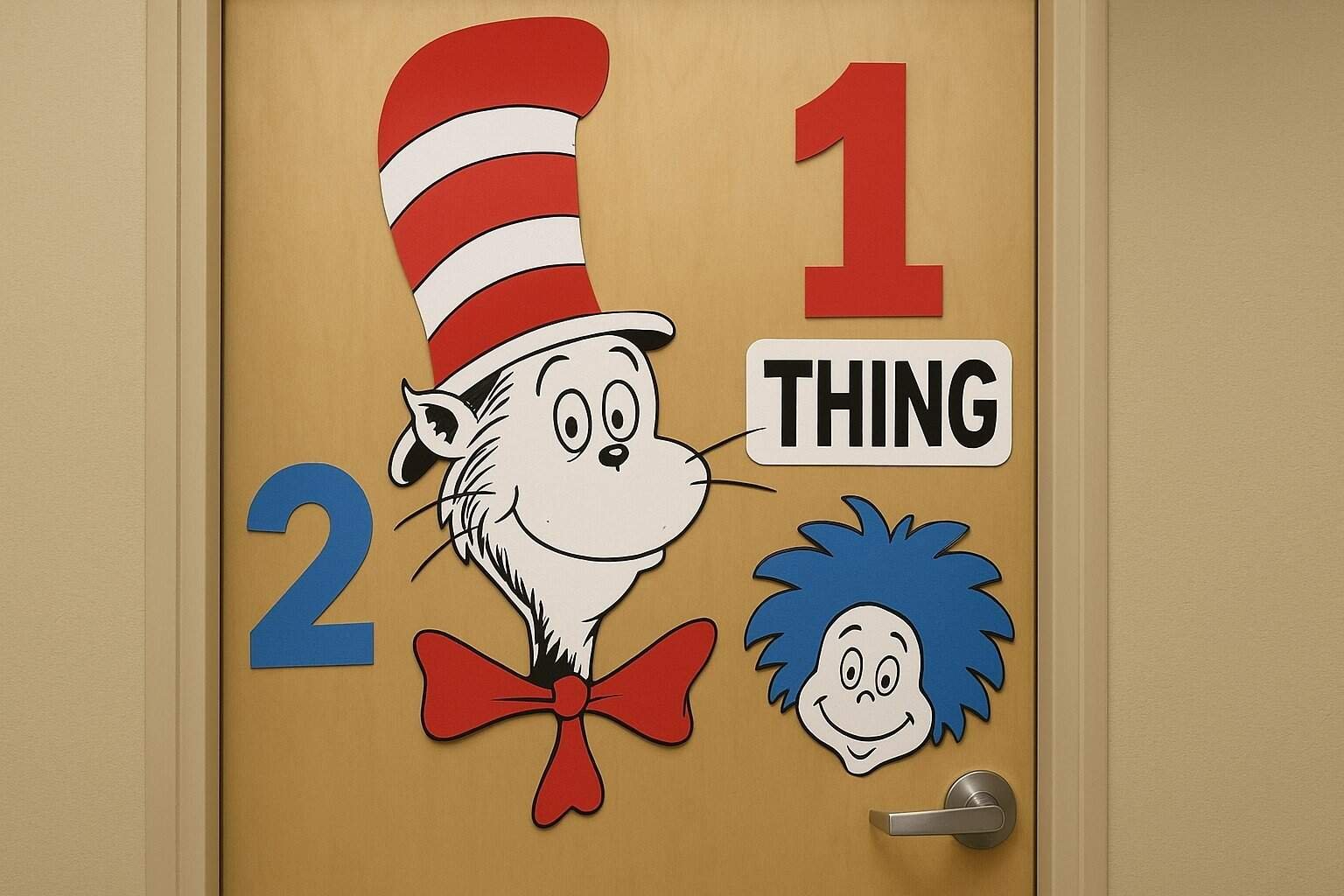

Cat in the Hat door decoration ideas have become a favorite choice for teachers, librarians, parents, and event planners who want a doorway that instantly sparks curiosity and joy. The whimsical illustrations, iconic red-and-white striped hat, and playful characters make this theme both timeless and visually captivating. A decorated door inspired by Dr. Seuss can transform an ordinary entrance into an imaginative portal that encourages reading, creativity, and fun.
These decorations are not only used for Read Across America Week or literacy events—they’re also popular for classroom themes, children’s bedrooms, daycare centers, library programs, and birthday parties. With vivid colors and instantly recognizable characters, the theme creates a welcoming atmosphere that feels energetic and memorable.
A well-designed Cat in the Hat door can:
- Encourage reading enthusiasm
- Create a cheerful first impression
- Set the tone for themed lessons or celebrations
- Appeal to both younger children and nostalgic adults
- Offer endless opportunities for personalization
Throughout this guide, you’ll find detailed ideas, examples, and helpful insights to bring the Cat in the Hat world to life right on your door.
In This Article
Cat in the Hat Theme
The charm of Cat in the Hat door decoration ideas comes from the bold, lively style associated with the beloved book. Understanding the key elements of the theme helps ensure your design is instantly recognizable, well-balanced, and true to the original artwork.
Core Visual Elements
Below is a quick reference table summarizing the most important visual components:
| Element | Description | How It Enhances a Door Display |
| Red & White Stripes | Often seen on the Cat’s hat | Adds height, bold contrast, and an iconic focal point |
| Bright Blue Hair | Thing 1 and Thing 2 feature this | Introduces movement and playful energy |
| Sketch-Style Lines | Dr. Seuss’s illustrative style | Creates authenticity and classic storybook feel |
| Oversized Props | Giant books, hats, bows | Makes the door more dramatic and interactive |
| Primary Color Palette | Red, blue, white, black | Eye-catching for both children and adults |
Why This Theme Works Perfectly for Door Décor
- Immediate Recognition: Even a single stripe or bow tie hints at the Cat in the Hat world.
- High Visual Impact: The bold color palette reads well from a distance.
- Adaptability: Works for seasonal themes, literacy events, or permanent décor.
- Engagement Opportunity: Teachers can incorporate student names, quotes, or learning prompts.
- Affordable to Recreate: Most materials—construction paper, felt, foam boards—are inexpensive.
Design Considerations
To create a cohesive and visually strong door, think about:
- Proportion: A tall hat stretching from the top to the bottom of the door creates vertical drama.
- Consistency: Choose a color tone (pastel, bright, textured) and stick with it.
- Balance: Keep busier elements at eye level and simpler components at the top and bottom.
- Storytelling: Use characters to express a theme—reading, teamwork, curiosity, classroom values, etc.
A quote from a veteran elementary teacher captures the theme perfectly:
“A Cat in the Hat door isn’t just decoration—it’s a doorway to imagination.”
Essential Supplies for Cat in the Hat Door Decoration Ideas
Creating Cat in the Hat door décor doesn’t require expensive tools. Most designs can be completed with simple, accessible crafting materials. The key is choosing items that will withstand daily use, resist fading, and allow for layering.
Recommended Basic Supplies
- Construction paper or cardstock in red, white, blue, and black
- Bulletin board paper for large background coverage
- Foam boards for sturdy 3D elements
- Adhesives: double-sided tape, hot glue, and removable mounting putty
- Permanent markers for sketch-style outlines
- Pre-cut letters or a letter cutting machine
- Scissors and craft knives
- Lamination sheets for durability
Optional Upgrades for Elevated Designs
- Felt sheets to add soft texture
- PVC foam strips for ultra-clean raised borders
- Artificial fur for Thing 1 and Thing 2 hair
- LED mini-lights to outline the hat or book
- Magnetic sheets to create removable learning prompts
- Removable vinyl decals for a polished, professional look
Cost Breakdown Example
| Material Set | Budget Range | Recommended For |
| Basic Paper Kit | $8–$15 | Quick classroom setup |
| Intermediate Foam & Felt Set | $20–$35 | More durable, semi-permanent displays |
| Premium Vinyl + 3D Props | $40–$75 | High-impact doors for events or photography |
Teachers often report that a well-crafted Cat in the Hat door lasts an entire school year, especially when laminated pieces are used. Investing in durable supplies saves significant time during theme changes.
Classic Cat in the Hat Character Door Design
A traditional Cat in the Hat character door display is the design most people picture when imagining this theme. It features the Cat’s charming face, expressive whiskers, and unmistakable striped hat. This approach works beautifully for teachers or parents who want a door that feels bold, friendly, and instantly recognizable.
Building the Central Character
A clean and proportionate Cat in the Hat silhouette sets the tone for the entire door. When designing the main character:
- Use a tall, vertically stretched hat to take full advantage of the door’s height.
- Position the Cat at eye level so students and visitors connect with the character right away.
- Outline major elements in black marker or vinyl to mimic Dr. Seuss’s hand-drawn style.
- Add depth with layered cardstock or foam to create dimension without overwhelming the space.
A helpful tip: Create the Cat’s face on a separate foam board instead of building it directly on the door. This makes it easier to adjust placement and reuse it for future events.
Enhancing Character Details
To make the classic Cat feel more lively:
- Shape the bow tie with curled edges for movement.
- Add a slight tilt to the hat for personality.
- Use glossy paper on the eyes to create a warm, friendly expression.
Many educators share that young students instantly smile when they see this door design, making it an ideal choice for early-grade classrooms.
Example Layout Concept
Below is a simple layout planning table you can follow:
| Element | Suggested Placement | Purpose |
| Striped Hat | Extending above the door frame | Creates height and instant recognition |
| Cat’s Face & Bow | Center of the door | Acts as the focal point |
| Book or Quote | Lower half | Adds meaning and literacy connection |
| Accent Stars or Stripes | Corners or borders | Completes the theme without clutter |
The charm of the classic Cat lies in its simplicity. You don’t need elaborate props—just thoughtful proportions and clean artwork.
“Hat-Only” Cat in the Hat Door Decoration Ideas
Some of the most striking door displays don’t show the Cat at all—they rely solely on the iconic hat. The red-and-white pattern is so recognizable that it instantly communicates the theme without extra elements. This minimalist approach is perfect for small doors, busy halls, or clean aesthetic preferences.
Why the Hat-Only Design Works
- High visual clarity: The hat’s silhouette stands out from a distance.
- Quick assembly: Ideal for teachers short on time.
- Endless personalization: The space beneath the hat can feature names, quotes, or classroom rules.
- Seasonal flexibility: You can modify the design for different holidays.
Creative Hat-Only Variations
You can easily tailor these Cat in the Hat door decoration ideas to match different environments:
- Oversized Hat Design: A massive hat taking up nearly the full door height. Great for entrances that need a statement.
- Floating Hat Above Text: Place the hat near the top, then use bold lettering beneath it—“Step Into a Seuss-Inspired Classroom!”
- Hat With Falling Stripes: Extend red and white stripes down the door to create movement.
- Layered Hat with 3D Edges: Use foam tape to slightly lift each stripe for a sculpted effect.
Case Study: Minimalist Kindergarten Door
A kindergarten teacher reported that her minimalist hat design became the most photographed door in the hallway during Read Across America Week. She kept it simple:
- One oversized hat
- A clean blue background
- Student names written on floating white circles
- The quote “Oh, the places you’ll go when you read!”
The result was visually calm yet incredibly charming—a perfect example of how the hat alone can carry the entire theme.
Thing 1 and Thing 2 Door Decorations
Thing 1 and Thing 2 bring energetic, playful chaos to any door they appear on. These characters add humor, movement, and vibrant color, making them excellent additions to Cat in the Hat door decoration ideas. Their bright blue hair alone is a focal point that draws instant attention.
Key Design Elements for Thing 1 & Thing 2
- Electric blue hair—use shredded tissue, faux fur, or curled paper strips for texture.
- Circular labels on their chests—keep the font bold and easy to read.
- Red suits—pair with white accent lines for definition.
- Playful poses—angled arms or legs help create energetic motion.
Dynamic Layout Ideas
Here are creative ways to incorporate Things 1 and 2:
- Leaping Out of a Book: Place an oversized book at the bottom of the door and position the Things popping out with flying pages.
- Holding Student Names: Add student names inside small circles, making the characters appear to be carrying them.
- Thing-Themed Learning Prompts: Use their hands to hold vocabulary cards, rhyming words, or weekly goals.
- Hair that Extends Beyond the Door Frame: Blue hair spilling over the top instantly adds whimsy.
Recommended Materials for a Strong Finish
| Component | Best Material | Reason |
| Hair | Faux fur or shredded foil paper | Adds texture and movement |
| Bodies | Red foam sheets | Holds shape better than paper |
| Labels | Laminated white cardstock | Durable for high-traffic areas |
| Outlines | Vinyl strips | Clean, bold lines |
Quote from a Literacy Coach
“Using Thing 1 and Thing 2 on doors boosts excitement instantly. Their energy mirrors how we want kids to feel about reading—curious, enthusiastic, and full of imagination.”
These characters work beautifully as the main focus or as lively accents supporting a Cat or hat-only design.
3D Cat in the Hat Door Decoration Ideas
Three-dimensional Cat in the Hat door decoration ideas add depth, texture, and a sense of motion that flat designs simply can’t match. These displays make the entrance feel alive—perfect for hallways, literacy celebrations, children’s events, and themed parties. The extra dimension also helps highlight key elements like the hat, bow tie, and expressive characters.
How to Create 3D Elements
3D pieces can be created using inexpensive materials such as foam sheets, craft wire, cardboard, or layered cardstock. When designing:
- Layer individual stripes on the hat using foam tape so each stripe visibly lifts off the surface.
- Shape the Cat’s bow tie with curled edges to give it a soft, sculpted appearance.
- Use tissue paper or faux fur to create fluffy, animated Thing 1 and Thing 2 hair.
- Build raised book pages that appear to turn as if caught mid-motion.
- Attach lightweight props such as mini brooms, fabric scarves, or cardboard fish.
3D Design Layout Tips
Consider placing dimensional elements at eye level for maximum visual impact. To keep the display balanced:
- Add major 3D accents in the center.
- Use shallower layers on the top and bottom sections.
- Keep high-traffic doors safe by using flexible or soft materials near door handles.
Benefits of 3D Door Designs
| Benefit | Why It Matters |
| High Engagement | Visitors are naturally drawn to layered textures and raised elements |
| Photogenic | Ideal for school events and social media showcases |
| Durability | Foam and layered boards resist tearing better than paper |
| Customizability | Easy to swap out characters or text throughout the school year |
A 3D Cat in the Hat display feels special and immersive—an entrance that feels like a doorway to a storybook world.
Classroom-Friendly Cat in the Hat Door Designs
Educators often need Cat in the Hat door decoration ideas that combine creativity with practicality. A classroom-friendly design should be durable, safe, educational, and easy to maintain throughout the year. These displays work best when they blend visual appeal with learning-based content.
What Makes a Classroom-Friendly Door Display
- Durability: Choose laminated pieces, foam boards, and adhesive dots that withstand frequent touching.
- Safety: Avoid sharp edges, heavy objects, or anything that hangs too low for young children.
- Easy Updates: Include interchangeable sections to update themes, lessons, or student work.
- Educational Value: Integrate reading prompts, vocabulary, or positive messages.
Ideas for Classroom-Ready Designs
Student Name Integration
Write each student’s name on mini hats, fishbowls, or Thing 1/Thing 2 circles. This builds a sense of belonging and theme participation.
Learning-Focused Themes
- “Read, Imagine, Explore” with the Cat holding oversized letter blocks
- A Cat in the Hat reading corner entrance with book-shaped pockets holding weekly reading suggestions
- A word wall or rhyme wall integrated into the design
Interactive Features
- Flip-up doors revealing vocabulary words
- Velcro-backed shapes for matching games
- Magnetic pieces featuring rhyming pairs inspired by Dr. Seuss’s writing style
Teacher-Endorsed Tip
Many educators recommend designing the door in sections—top, middle, and bottom—so individual pieces can be replaced without redoing the entire display.
Cat in the Hat-Themed Welcome Door
Welcome doors are perfect for setting the tone of a space—warm, playful, and inviting. A Cat in the Hat-themed welcome door uses friendly text, bright colors, and character elements that make students and visitors feel instantly at ease.
Crafting a Memorable Welcome Message
The welcome message should be short, bold, and easy to read from several feet away. Strong options include:
- “Welcome to Our Seuss-Tastic Space!”
- “The Fun Begins When You Step Inside!”
- “Welcome—Oh, the Learning You’ll Do!”
- “Step Into a World of Imagination!”
Pairing the message with an oversized striped hat or cheerful Cat creates an immediate connection to the theme.
Design Elements for a Strong Welcome Door
- Large central text made from die-cut letters or vinyl for crisp lines
- A bold background color such as sky blue or bright red
- Friendly character artwork—Cat, the Things, or the Fish
- Decorative borders resembling Seuss-style stripes or doodles
- Themed props such as mini books, stars, and whimsical arrows pointing toward the entrance
Table of Effective Welcome Concepts
| Theme Style | Description | Ideal For |
| Classic Cat Welcome | Hat, bow tie, simple greeting | K–2 classrooms, libraries |
| Literacy-Focused Welcome | Quotes, books, reading prompts | Reading corners, learning centers |
| Student-Showcase Welcome | Names displayed in themed shapes | First week of school, community building |
| Bold Minimalist Welcome | Just the hat + large “WELCOME” text | Smaller spaces or modern aesthetic |
Inspiration from Real Classroom Doors
One popular design features the Cat peeking from the side of the door as if inviting students inside. Teachers appreciate this layout because it feels playful without overwhelming the door space. Adding a short quote—“Come in and read with me!”—creates a cozy, literary atmosphere.
For educators who want quick yet charming décor, a hat-only welcome door with bold lettering is an excellent option. It installs quickly and still delivers the cheerful Seuss-style impact.
Seasonal Cat in the Hat Door Decoration Ideas
Seasonal Cat in the Hat door decoration ideas allow you to keep your doorway fresh year-round while still staying true to the beloved theme. Each season brings a chance to refresh the colors, characters, and messaging. These rotating designs not only keep students engaged but also help celebrate holidays, milestones, and special events.
Seasonal Variations to Inspire You
Spring Theme – “Bloom Into Reading”
- Add pastel flowers, butterflies, and green vines around the Cat.
- Replace Thing 1 and Thing 2’s traditional hair with paper blossoms for fun.
- Use a bright sky-blue background for a cheerful spring feel.
Summer Theme – “Dive Into Books”
- Create a beach-inspired design with sand, waves, and sunglasses on the Cat.
- Add beach balls with student names.
- Display reading lists or summer learning goals on mini surfboards.
Back-to-School Season – “A New Year of Fun!”
- Position the Cat holding a welcome sign or giant pencil.
- Use small book-shaped cutouts with student names.
- Add encouraging phrases such as “Ready to Learn, Ready to Grow!”
Halloween Theme – “Spooktacular Seuss”
- Add a witch hat version of the Cat’s striped hat.
- Include friendly pumpkins or floating ghost characters drawn in Seuss-style lines.
- Use black-and-orange accents while keeping the core red and white palette.
Winter & Holiday Theme – “A Cool Cat Celebration”
- Give the Cat a scarf and mittens.
- Add snowflakes, frosted borders, or holiday lights.
- Use glitter cardstock for icy details.
Seasonal Poster Planning Table
| Season | Main Elements | Best Color Palette | Suggested Props |
| Spring | Flowers, vines, butterflies | Pastels + bright greens | 3D paper flowers |
| Summer | Beach, waves, sunshine | Yellow, aqua, white | Sunglasses, surfboards |
| Back-to-School | Books, pencils, names | Primary colors | Name tags, apples |
| Halloween | Pumpkins, ghosts | Black, orange, red | Mini bats, cobweb borders |
| Winter | Snowflakes, mittens | Blue, white, silver | Glitter snow, scarves |
Seasonal designs help you keep your Cat in the Hat door decoration ideas dynamic and relevant no matter what month it is.
Interactive Cat in the Hat Door Decor
Interactive Cat in the Hat door decoration ideas are perfect for classrooms, libraries, and community centers where student engagement is a priority. These designs incorporate movable parts, flip-open sections, learning prompts, and hands-on pieces that make the entire display feel like an extension of the learning space.
Popular Interactive Elements
Flip-Up Learning Windows
Create small windows that open to reveal vocabulary words, rhyming pairs, or fun facts. This works particularly well during literacy week.
Velcro-Backed Movable Pieces
Students can take part in reading games by attaching:
- Rhyming word matches
- Sentence starters
- Alphabet letters
- Character tokens
Magnetic Learning Boards
Attach a thin magnetic sheet beneath the background paper. Students can move magnetic hats, fish, books, or stars to complete challenges.
Choice-Based Questions
Post Seuss-themed prompt cards:
- “Which book will you read today?”
- “Pick a rhyming word that matches the Cat’s clue!”
Benefits of Interactive Door Decorations
| Benefit | What It Adds |
| Student Participation | Encourages daily interaction and enthusiasm |
| Skill Reinforcement | Supports vocab, reading, and comprehension skills |
| Inclusion | Every student can contribute to the display |
| Versatility | You can refresh activities weekly without changing the whole door |
Quote from an Elementary Reading Specialist
“When kids interact with the door display, they no longer see décor—they see an opportunity to explore language and express themselves.”
Interactive features turn your Cat in the Hat door into a functional, hands-on learning tool rather than a simple decoration.
Literary-Inspired Cat in the Hat Door Decoration Ideas
A literary-inspired Cat in the Hat door focuses on promoting reading, storytelling, and imagination. It’s a perfect choice for libraries, reading corners, literacy centers, and classrooms dedicated to early childhood education. This style combines iconic visuals with direct references to Dr. Seuss’s writing.
How to Add Literary Elements
Book Quotes
Pair large typography with the Cat’s hat or a book graphic. Popular choices include:
- “The more you read, the more things you will know.”
- “You can find magic wherever you look.”
- “Think and wonder, wonder and think.”
Oversized Book Props
Create big open books with foam board. You can display:
- Weekly reading themes
- Student-recommended titles
- “Book of the Month” mini posters
Story Pages Background
Use photocopied book pages (or printed replicas) as a collage background. Layer lightly with soft blue or red borders for contrast.
Character Reading Scenes
Place Thing 1 and Thing 2 holding open books, or show the Cat sitting on a stack of storybooks.
Literary Door Design Table
| Element | Meaning | Why It Works |
| Quotes | Encourages literacy | Quickly elevates the educational message |
| Books | Represents learning | Strong visual anchor |
| Story Pages | Text-rich background | Reinforces reading culture |
| Characters Reading | Models positive habits | Relatable to students |
Incorporating Resource Links and Learning Tools
At the bottom of the door, you can attach laminated reading trackers, mini checklists, or QR codes that lead to reliable literacy resources, such as Reading Rockets, which offers practical reading strategies for parents and educators
(https://www.readingrockets.org).
This enriches your Cat in the Hat door decoration ideas with real educational value and supports student literacy both inside and outside the classroom.
Eco-Friendly Cat in the Hat Door Designs
Sustainable decorating has become more than a trend—it’s a practical way to reduce waste while still creating high-impact displays. Eco-friendly Cat in the Hat door decoration ideas allow you to bring the iconic Dr. Seuss style to life without relying on single-use materials or high-cost supplies.
Why Eco-Friendly Door Decor Matters
Choosing greener options helps:
- Lower classroom or event costs
- Reduce plastic waste
- Encourage students to think creatively and sustainably
- Extend the lifespan of your themed decorations
Sustainable Materials to Consider
You can achieve bold colors, dimension, and durability using:
- Recycled cardboard: sturdy backdrops for the Cat’s hat, bow tie, or character outlines
- Leftover fabric: ideal for Thing 1 and Thing 2’s hair, textured borders, or curtain-style accents
- Kraft paper rolls: naturally brown, easy to paint, and forgiving for large surfaces
- Newspaper layers: great for papier-mâché elements like 3D hats
- Plant-based adhesives: child-safe and eco-conscious
Eco-Friendly Design Examples
Upcycled Hat Centerpiece:
Create the red-and-white striped hat using fabric strips from old T-shirts layered over cardboard panels.
Paperless Character Cutouts:
Print reusable vinyl silhouettes of Cat in the Hat, Thing 1, and Thing 2. These can be stored for years.
Natural Texture Accents:
Use twine, jute rope, or wood slats for frames or borders—the warmth complements the Seussian color palette.
Mini Case Study: A Classroom’s Sustainable Door Transformation
A first-grade teacher in Texas challenged her students to build their annual Cat in the Hat door decoration using 90% recycled materials. With cereal boxes, old ribbon, and hand-painted reused paper, the class created a vibrant 3D design. The door lasted the entire school year, cost under $8, and inspired a recycling unit afterward. The project highlighted how sustainability can spark creativity rather than limit it.
Tips for Long-Lasting Door Decorations
Durability is essential—especially for school or library settings where doors are opened dozens of times a day. Long-lasting Cat in the Hat door decoration ideas help you maintain crisp colors and neat layouts while avoiding constant repairs.
Key Durability Strategies
- Laminate high-touch elements. Names, quotes, and character accessories stay crisp longer.
- Use foam board backing for stability. Prevents warping and bending of large cutouts.
- Invest in strong adhesives. Double-sided mounting tape or repositionable glue dots outlast standard craft glue.
- Seal painted pieces. A light coat of matte or gloss sealant keeps blues, reds, and whites vivid.
- Reinforce edges. Door edges experience the most friction—line them with thin EVA foam or fabric strips.
Storage Tips for Reuse
- Lay decorations flat whenever possible.
- Store foam boards in plastic sleeves to prevent dents.
- Separate laminated pieces in folders to avoid scratching.
- Label each set (Hat Pieces, Thing 1 Hair, Signage, Borders) for quick setup next year.
Suggested Longevity Table
| Item | Average Lifespan | Best Preservation Method |
| Laminated quotes | 2–4 years | Store in folders |
| Foam board cutouts | 3–5 years | Keep flat, avoid pressure |
| Fabric accents | 4+ years | Wash gently before storing |
| Adhesive-backed signage | 1–2 years | Use removable tape instead of glue |
Door décor that lasts several seasons saves money, reduces waste, and makes annual setups faster and more enjoyable.
Final Thoughts on Creating Cat in the Hat Door Decoration Ideas
Designing memorable Cat in the Hat door decoration ideas should feel fun, imaginative, and flexible. The best displays balance color, storytelling, and personal flair. Whether you prefer bold 3D builds, sustainable designs, or simple hat-focused layouts, the Cat in the Hat theme adapts beautifully to any classroom, library, playroom, or event.
It helps to combine function with creativity—think interactive elements that encourage reading, eco-friendly materials that support sustainability lessons, and welcoming phrases that set a positive tone for the space. Consistency in colors, clean lines, and playful accents ties everything together.
For deeper thematic inspiration, exploring reputable children’s literature resources such as Seussville, an official Dr. Seuss site, can provide additional ideas and character references (https://www.seussville.com).

I’m the creator behind EasyDecora, a home–decor lover who enjoys discovering simple, beautiful ways to make every room feel cozy and intentional. I share practical tips, creative ideas, and inspiration for anyone who wants to build a home they truly love.