
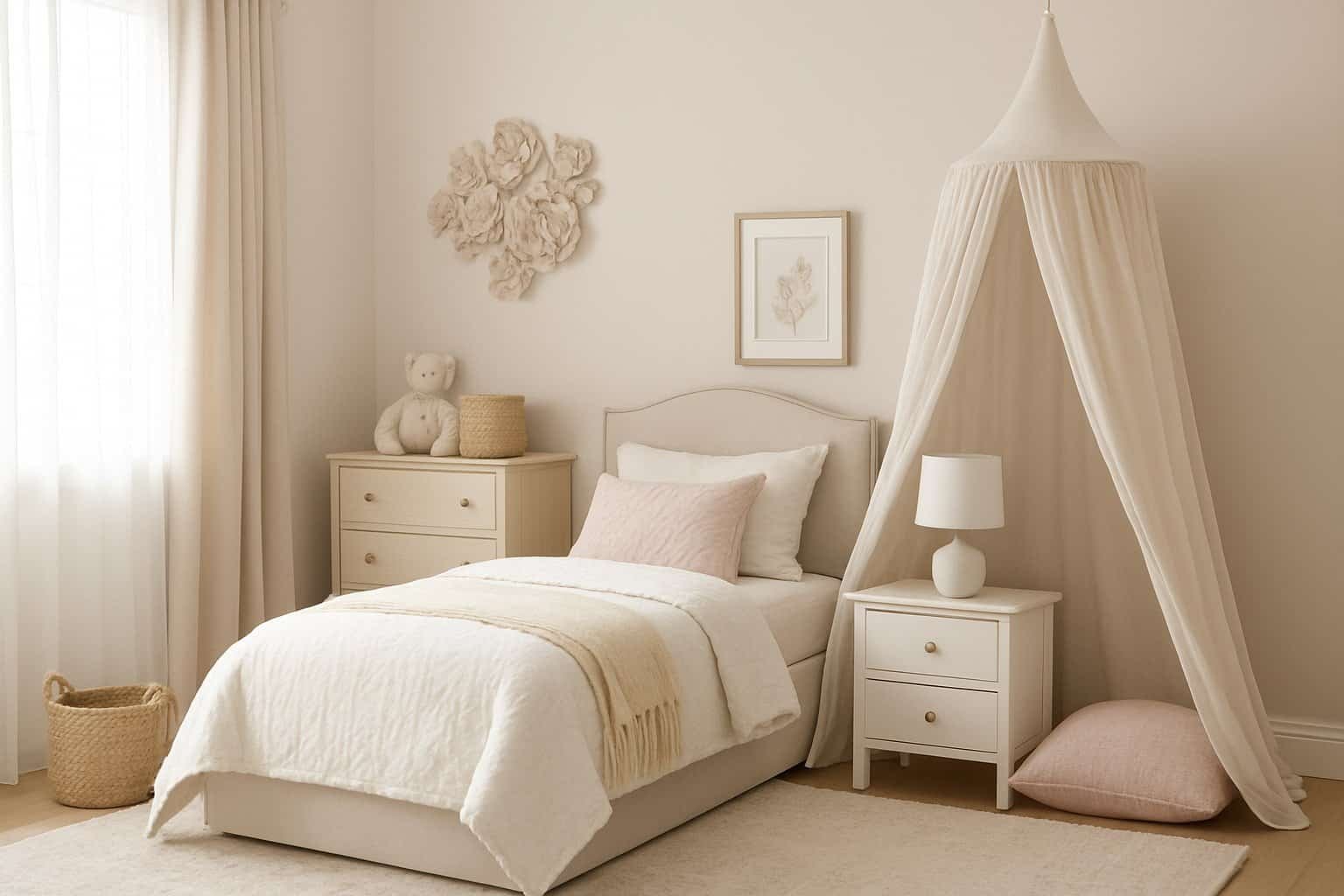

A soft transitional decor in a little girl’s room blends the warmth of traditional design with the clean simplicity of modern aesthetics. It creates a flexible environment that feels youthful and sweet without being overly themed or short-lived. Many parents are gravitating toward this style because it evolves gracefully as their daughter grows, reducing the need for frequent remodels.
This decor approach focuses on softness, subtle elegance, and timeless comfort. Instead of bold cartoon decor or fixed-age themes, it uses gentle hues, refined textures, and durable furniture pieces that serve well from toddlerhood to school age and beyond.
A few key qualities define this decor style:
- Comfort-first design featuring plush textiles, low-maintenance materials, and child-safe finishes
- Streamlined silhouettes that aren’t too ornate yet carry hints of classic charm
- Balanced visual softness, where no element overwhelms the room
- Long-term usability, allowing small adjustments as preferences change
Here’s a simple comparison to understand the difference between transitional and strictly modern or traditional design:
| Style Type | Main Characteristics | Suitability for a Child’s Room |
| Traditional | Ornate, vintage touches, warm tones | Cozy but can feel heavy or outdated for young children |
| Modern | Clean lines, minimal décor, cool neutrals | Stylish but may lack warmth and emotional softness |
| Soft Transitional | Blended styles, muted colors, comfortable textures | Ideal balance of charm, warmth, and longevity |
A thoughtfully executed transitional room can feel magical without being overly whimsical—perfect for a little girl who will soon develop her own personality and tastes.
In This Article
Core Design Principles Behind Soft Transitional Decor
Strong design principles create the foundation for a soft transitional decor in a little girl’s room. This design philosophy is not about purchasing the trendiest items; it’s about curating a room that feels balanced, adaptable, and peaceful.
Balancing Classic and Contemporary Elements
Transitional decor layers elements from two design worlds:
- Classic touches: crown molding, upholstered headboards, framed artwork
- Modern simplicity: clean furniture lines, minimal hardware, simple storage pieces
This blend keeps the room visually interesting without being busy.
Prioritizing Comfort, Softness, and Safety
Young children interact closely with their surroundings, so materials must feel gentle and promote well-being. Parents often choose:
- Soft cotton bedding
- Rounded-edge furniture
- Plush rugs or carpet tiles
- Low-VOC paint finishes
These features enhance comfort while also improving safety.
Flexibility for Growth
Transitional design is celebrated for being adaptive. The best rooms allow small adjustments without full makeovers. For example:
- A soft neutral wall color can stay for years
- Decorative pillows can be swapped from pastel butterflies to muted florals
- Shelving can transition from picture books to chapter novels
Interior decorators often emphasize this principle. One designer notes, “A timeless children’s room isn’t defined by the trends—it’s shaped by pieces that can evolve alongside the child.” This mindset drives the transitional style.
Color Palette Selection for a Soft Transitional Decor in a Little Girl’s Room
Color plays a defining role in creating a serene, cohesive atmosphere. A soft transitional decor thrives on hues that feel calming, sweet, and sophisticated rather than bold or trendy.
Using Soft Neutrals as the Foundation
Neutrals create an effortless backdrop. Popular choices include:
- Warm whites
- Creamy beige
- Soft greige
- Blush undertones
- Misty lavender or muted mauve
These shades allow décor items—from wall art to toys—to shine without competing visually.
Choosing Pastels with Purpose
Pastels add personality, but in a transitional room they’re applied with intention:
- Dusty rose instead of bright pink
- Powder blue with gray undertones
- Sage green for a natural, grounding feel
These tones are known to promote calmness, making them ideal for resting and reading areas.
Avoiding Overly Themed or High-Saturation Color Schemes
High-impact colors can quickly feel overwhelming or prematurely “babyish.” A transitional palette ensures the room stays charming through various growth stages.
Color Palette Examples
Below is a curated table with combinations that work beautifully in a soft transitional little girls’ room:
| Palette Name | Main Colors | Mood |
| Blush Bloom | Soft blush, ivory, champagne beige | Delicate, warm, feminine |
| Garden Mist | Sage, warm white, muted peach | Natural, airy, grounding |
| Lavender Cloud | Misty lavender, dove gray, porcelain white | Calm, serene, dreamy |
| Vintage Pastel | Muted teal, dusty rose, cream | Elegant, slightly nostalgic |
Selecting the right palette anchors the entire room’s aesthetic and sets the tone for harmonious design choices.
Furniture Choices That Support a Transitional Look
Choosing furniture for a soft transitional decor in a little girl’s room requires attention to longevity, comfort, and gentle aesthetics. The goal is to create a space that feels warm and youthful but is built around pieces that age gracefully with your child.
Timeless Furniture Silhouettes
Furniture with transitional appeal avoids extremes. It isn’t overly ornate like traditional French styles, nor as sharp and angular as ultra-modern designs. Instead, it embraces:
- Softly curved headboards
- Simple, clean drawer fronts
- Wooden dressers with light stains
- Upholstered chairs in neutral textures
These shapes feel both elegant and child-friendly.
Durable, Kid-Safe Materials
Parents often look for pieces that can withstand years of use. Effective material choices include:
- Solid wood (oak, maple, ash) for long-lasting strength
- Performance fabrics resistant to stains
- Rounded edges to reduce injury risks
- Non-toxic finishes to protect air quality
These choices ensure the room stays beautiful without compromising safety.
Multifunctional Pieces for a Growing Child
Transitional decor thrives on versatility. Smart furniture investments include:
- Convertible cribs that become toddler beds
- Bookshelves that hold toys today and school supplies later
- Benches with hidden storage
- Adjustable-height desks
A room designed with growth in mind saves parents from frequent redecorating and supports a smoother childhood transition.
Layering Textiles for Warmth and Softness
Textiles are vital to creating the soft, gentle atmosphere that defines a soft transitional decor in a little girl’s room. Fabrics bring warmth, texture, and comfort, turning the space into a nurturing retreat.
Bedding That Enhances Comfort
Bedding is both a decorative and functional element. Effective options include:
- Cotton quilts with delicate stitching
- Linen-blend duvet covers for breathability
- Soft pastel throws for added layering
- Hypoallergenic inserts and pillows
This layered approach not only enhances visual appeal but also helps with year-round comfort.
Rugs That Soften the Room
A plush rug acts as both a grounding element and a comfort tool for little ones who love to play on the floor.
Ideal rug choices for transitional kids’ rooms include:
- Wool-blend rugs with subtle patterns
- Cotton flatweaves with soft geometric details
- Neutral shag rugs for extra coziness
- Washable rugs for easy maintenance
These textures keep the room warm while protecting small feet during playtime.
Window Treatments that Provide Softness Without Clutter
Soft transitional décor avoids heavy drapery. Instead, it embraces:
- Light-filtering curtains in airy fabrics
- Roman shades in neutral or pastel tones
- Layered sheers for gentle diffusion of natural light
This combination helps maintain a clean and serene ambiance without sacrificing practicality.
Decorative Details That Enhance Softness and Subtle Charm
A soft transitional decor in a little girl’s room becomes truly memorable through its finishing touches. Decorative details add personality without overwhelming the eye, ensuring the space feels sweet, balanced, and inviting.
Minimalist Wall Décor
Wall décor should contribute to the room’s softness rather than dominate it. Popular transitional wall art ideas include:
- Framed illustrations in muted pastels
- Subtle floral prints
- Textured wall hangings
- Neutral-toned decals used sparingly
Parents often appreciate décor that grows with the child—something that doesn’t need to be removed once interests shift.
Soft Lighting for Ambience
Lighting plays a huge role in setting the room’s tone. For a transitional look, consider:
- Soft fabric lampshades
- Warm white LED bulbs
- Wall sconces with curved silhouettes
- Delicate string lights for a whimsical touch
Layered lighting allows the room to shift from playtime brightness to calming bedtime ambience.
Accessories That Add Character Without Clutter
Accessories should complement the room’s balanced feel. Effective options include:
- Handwoven baskets
- Plush toys in a soft color palette
- Decorative pillows with gentle embroidery
- Ceramic trinket trays for sentimental keepsakes
Here’s a quick reference table of accessory types and their contribution to the space:
| Accessory | Material | How It Complements Transitional Decor |
| Plush toys | Cotton or velour | Adds warmth and comfort |
| Baskets | Woven natural fibers | Creates organized, stylish storage |
| Pillows | Linen, cotton, velvet | Adds texture and softness |
| Wall art | Wood, canvas, paper | Enhances visual interest without heaviness |
These details bring the entire room together, allowing it to feel cozy, personal, and beautifully curated.
Storage Solutions That Keep the Transitional Style Intact
Effective storage is one of the defining strengths of a soft transitional decor in a little girl’s room. It supports the clean, uncluttered atmosphere that the style is known for, while still accommodating the everyday realities of childhood—books, toys, crafts, keepsakes, and evolving interests.
Storage That Blends Seamlessly With the Decor
Rather than relying on brightly colored bins or overly playful shelving, transitional design uses storage pieces that look refined and timeless:
- White or light wood dressers with slim hardware
- Built-in shelving with soft arches
- Neutral woven baskets and lidded hampers
- Storage benches at the end of the bed
- Under-bed drawers for discreet organization
This approach ensures every storage piece adds to the room’s visual harmony.
Multifunctional Storage for Longevity
To prevent clutter as the child grows, multifunctional designs are essential:
- Bookshelves can shift from picture books to chapter books.
- Toy chests become blanket storage later.
- Closet systems with adjustable rods support changing wardrobe sizes.
Case Study: Soft Transitional Storage Success
A family renovating their daughter’s room added a built-in wall with adjustable shelving, a lower cubby system, and a cushioned reading nook in the center. The result was a space that felt polished yet playful—no loose bins, no mismatched plastic storage. Ten years later, the same system still works, now holding art supplies, novels, and keepsakes instead of toddler toys.
Using Storage as a Design Feature
In transitional rooms, storage enhances rather than distracts. Coordinated baskets, matching containers, and wood-toned shelves frame the room with order and subtle beauty. The key is consistency: use similar tones and materials so everything feels calm and intentional.
Flooring, Rugs & Soft Underfoot Elements
Flooring sets the stage for comfort, especially in a little girl’s room where playtime often happens on the floor. A soft transitional decor embraces textures that feel cozy underfoot while maintaining long-term durability.
Choosing Comfortable, Child-Friendly Flooring
Hard flooring types like wood or laminate pair beautifully with transitional design. Their neutral warmth forms the perfect base for layered rugs. Popular choices include:
- Oak hardwood in natural or pale finishes
- Maple for a smooth, bright look
- Luxury vinyl planks (LVP) for a budget-friendly, scratch-resistant alternative
Parents often prefer light tones, which make the room feel airy and large.
Area Rugs That Anchor the Space
Rugs contribute to safety, comfort, and visual cohesion. Transitional rugs often feature:
- Soft geometric patterns
- Tone-on-tone florals
- Vintage-wash pastel motifs
- Thick, neutral shags for added warmth
These rugs define zones—play, reading, dressing—and add visual softness.
A Practical Look at Rug Types
| Rug Type | Benefits | Best For |
| Wool-blend rug | Durable, naturally stain-resistant | High-traffic play areas |
| Washable rug | Easy to clean, child-proof | Toddler-stage rooms |
| Flatweave rug | Lightweight, low maintenance | Under beds & desks |
| Shag rug | Plush, cozy texture | Reading nooks |
Introducing multiple textures creates depth without overwhelming the space.
Soft Underfoot Elements Beyond Rugs
A soft transitional decor sometimes includes extra floor elements such as:
- Cushioned play mats disguised as neutral tiles
- Fabric poufs for sitting or reading
- Braided floor cushions in muted pastels
These add comfort while blending seamlessly into the overall aesthetic.
Integrating Personalized Elements Without Breaking the Style
A soft transitional decor in a little girl’s room should feel special—not generic. Personalization is important, but it must be done in a way that maintains the room’s balanced, timeless character.
Subtle Personal Touches
Instead of bold themes, transitional rooms embrace soft, meaningful details:
- Wooden name plaques in delicate script
- Embroidered initials on pillows
- Custom artwork in muted colors
- A small gallery wall of family photos or drawings
- Personalized growth charts in natural wood tones
These elements celebrate individuality without overwhelming the space.
Display Personal Items Elegantly
Personal items should feel curated, not cluttered. Good display strategies include:
- Shadow boxes for mementos
- Unframed watercolor art clipped on a simple wire display
- Glass jars for hair accessories, bracelets, or craft items
- Neutral shelves for awards, books, and cherished keepsakes
This ensures items remain meaningful but visually cohesive.
Seasonal or Changeable Decor Done with Restraint
Children’s preferences evolve quickly. Transitional rooms welcome seasonal changes but keep them subtle so the overall design remains consistent. Examples include:
- Spring-themed floral pillows
- Winter-inspired soft throw blankets
- Holiday décor in neutral tones
- Small pastel accessories swapped out yearly
Rotating smaller accents rather than large furniture gives the room a refreshed look while preserving long-term harmony.
Quote for Inspiration
A child’s room should reflect who they are today, yet be calm and open enough to welcome who they will become tomorrow.
This captures the core philosophy of transitional personalization—gentle, adaptable, meaningful.
Creating Zones: Play, Study, and Rest in a Soft Transitional Decor in a Little Girl’s Room
Designing defined yet harmonious zones helps the room function beautifully as your daughter grows. A soft transitional decor thrives on flow, balance, and subtle structure, so zoning becomes a thoughtful way to merge practicality with elegance.
Play Zone: Open, Safe, and Imaginative
The play area should feel playful but not chaotic. Instead of bold primary colors, soft transitional styling favors textures, gentle patterns, and curated pieces that encourage imagination.
Key elements for the play zone:
- Low, rounded-edge storage units to prevent visual bulk
- Soft rugs or cushioned floor mats for safe movement
- Neutral-toned bins or woven baskets for easy clean-up
- One statement item, such as a tent canopy or cushioned reading nook, to anchor the space
Study Zone: Calm, Focused, and Adaptable
A well-designed study corner helps a child transition naturally from play to concentration.
Practical additions:
- A small desk with timeless lines
- Soft task lighting with warm diffusion
- A pinboard or magnetic board for curated displays
- Adjustable chair height or seat cushions for ergonomic comfort
A transitional style thrives on flexibility, so choosing a desk that pairs classic wood with modern legs fits the theme beautifully.
Rest Zone: The Heart of Comfort
The sleep area should embody softness, ease, and gentle visual interest.
Elements that reinforce the transitional feel:
- Upholstered headboard or spindle-style bed
- Layered bedding with natural textures (cotton, linen, muslin)
- Soft-tone canopy, sheer drapery, or quilted wall panel behind the bed
- Warm ambient lighting that creates a nurturing glow
A restful environment ensures that a soft transitional decor in a little girl’s room is not just stylish but also deeply supportive of healthy sleep habits.
Lighting Strategy for Soft Transitional Ambience
Lighting plays a central role in shaping a soft transitional aesthetic. It determines the mood, highlights textures, and helps the room feel both airy and grounded.
Layered Lighting for Flexibility
A soft transitional decor relies on layered illumination—creating depth without overwhelming any zone.
Types of lighting to include:
| Lighting Type | Purpose | Suggested Fixtures |
| Ambient | General room brightness | Ceiling flush-mount, linen-covered pendant |
| Task | Focus for study or reading | Adjustable desk lamp, wall-mounted reading light |
| Accent | Soft highlights for décor | LED strips in shelves, gentle fairy lights |
Gentle diffusion is essential, so choose lampshades with fabric or frosted finishes.
Warmth Over Brightness
Harsh white light disrupts the calming environment. Warm bulbs (2700K–3000K) create a soft golden tone that pairs well with pastel and neutral palettes. This spectrum also complements natural materials like rattan, wood, and linen.
Child-Safe Considerations
Safety matters as much as mood.
- Ensure all cords are concealed or clipped
- Choose low-heat LED bulbs
- Avoid placing lamps near drapery or plush toys
- Opt for wall sconces if the child is very young
The right lighting plan elevates every element in a soft transitional decor in a little girl’s room and makes daily routines smoother.
Wall Treatments & Paint Techniques for a Soft Transitional Decor in a Little Girl’s Room
Wall finishes serve as the backdrop to the entire design story. In transitional styling, walls should express softness, structure, and long-term adaptability.
Soft Neutrals with Subtle Depth
Neutral tones help the room feel open and timeless, allowing accessories and textiles to be rotated without losing cohesion.
Popular transitional-inspired shades:
- Warm white with creamy undertones
- Blush-beige or dusty rose
- Muted lavender
- Soft dove gray
- Powder peach or sand tones
These hues create the quiet foundation that defines a soft transitional decor in a little girl’s room.
Patterned Wallpaper With Restraint
Wallpaper can introduce youthful charm while staying sophisticated.
Elegant wallpaper ideas:
- Watercolor florals
- Miniature botanical prints
- Soft geometrics
- Cloud-like abstract patterns
- Tone-on-tone stripes
Choose patterns that won’t feel outdated as the child grows.
Textured Wall Installations
Texture helps the space feel layered and memorable.
Options that complement the transitional aesthetic:
- Wainscoting or beadboard
- Upholstered wall panels behind the bed
- Half-painted walls with a soft dividing trim
- Hand-painted stenciling using muted pigments
A case study from interior designers often highlights that children remain engaged longer in rooms where textures subtly stimulate their senses. One mother shared: “Once we installed wainscoting and switched to soft wallpaper, my daughter’s room instantly felt calmer and more pulled together.”
Durability Matters
High-quality paint finishes prevent scuffs and are easy to clean. Eggshell or satin finishes work well for children’s rooms because they maintain softness while staying practical.
For more paint and finish guidance, parents often consult trusted interior sources such as House Beautiful (https://www.housebeautiful.com) for updated trends and child-safe design inspiration.
How to Transition the Room as the Child Grows
Creating a space that evolves effortlessly is one of the biggest advantages of choosing a soft transitional decor in a little girl’s room. The goal is to design a foundation that lasts, while making age-appropriate updates through accessories and small décor changes.
Choose Furniture With Longevity
Investing in adaptable core pieces ensures you don’t have to start over every few years.
Smart long-term choices include:
- A full-size bed instead of a toddler bed
- A desk that converts from craft space to homework station
- Storage shelves with adjustable heights
- Neutral wood furniture that pairs with any color change
These ensure the room matures gracefully without losing its transitional softness.
Swap in Age-Relevant Accessories
Accessories deliver personality and are the easiest way to shift from toddlerhood to the preteen years.
Examples of accessories to rotate:
- Wall art that progresses from storybook themes to abstract prints
- Soft toys replaced later with accent cushions or decorative figurines
- Light pastel bedding exchanged for natural linens or textured quilts
- A reading canopy updated with more structured drapery
The bones of the room stay the same; the storytelling simply changes.
Adapt Functional Zones Over Time
A zone that once served for imaginative play may eventually become a dedicated study corner. Transitional design makes these changes intuitive.
Zone evolution examples:
- Play area → Study nook
- Reading tent → Window-seat bench
- Toy storage → Organized shelving for books & hobbies
This flexible layout preserves harmony while addressing new needs at each stage of growth.
Budget-Friendly Tips for Achieving Soft Transitional Decor
A beautiful room doesn’t require an extravagant budget. With strategic choices, a soft transitional decor in a little girl’s room can be achieved affordably while still looking polished and high-end.
Invest in Key Foundation Pieces
Certain items should be higher quality because they anchor the whole room and must withstand everyday use.
Worthwhile investments:
- Bed frame
- Rug
- Window treatments
- Storage units
These pieces determine the longevity of the room’s style and are expensive to replace often, so choose timeless designs.
Save With Smart Décor Choices
Style comes from layers, and layers don’t have to be pricey.
Cost-saving ideas:
- DIY wall art using watercolor techniques
- Mix high-end fabric throw pillows with simple ones
- Repurpose baskets or crates
- Use peel-and-stick wallpaper for accent walls
- Opt for washable duvet covers instead of multiple bedding sets
Soft transitional design thrives on simplicity, which naturally supports a lower budget.
Use Second-Hand or Refinished Furniture
Vintage furniture with smooth lines fits seamlessly into transitional styling.
Refinishing a wooden dresser with a matte pastel coat or updated knobs can transform it into a custom-looking statement piece for a fraction of retail cost.
Create a Visual Budget Table
| Category | Save | Spend |
| Wall décor | DIY art, decals | High-quality wallpaper for one accent wall |
| Textiles | Mix-and-match budget fabrics | Premium rug or blackout curtains |
| Furniture | Refinished second-hand pieces | Bed + major storage |
| Accessories | Thrifted baskets, minimal décor | Custom-made name sign |
Thoughtful planning ensures the room feels luxurious without overspending.
Final Thoughts: Creating a Soft Transitional Decor That Feels Magical Yet Practical
Designing a soft transitional decor in a little girl’s room isn’t just about aesthetics—it’s about creating a nurturing environment that grows with your child. This style blends tenderness with timeless design, offering a space that feels magical for a young child yet refined enough to evolve through the school years.
Key Takeaways
- Soft palettes and natural textures create soothing foundations
- Transitional furniture ensures long-term value
- Defined zones keep the room functional and organized
- Walls, lighting, and textiles should deliver warmth without clutter
- Small changes have big emotional impact as your child grows
A Parent’s Perspective – A Small Case Insight
One parent shared:
“Once we switched to a soft transitional style, our daughter’s room finally felt calm. The muted colors helped her wind down at night, and the flexible furniture layout means we only update the décor—not the entire room—each year.”
This reflects the true strength of transitional design: practicality wrapped in beauty.
For parents seeking deeper insights into timeless children’s interiors, Better Homes & Gardens offers reliable design guidance and trend updates: https://www.bhg.com

I’m the creator behind EasyDecora, a home–decor lover who enjoys discovering simple, beautiful ways to make every room feel cozy and intentional. I share practical tips, creative ideas, and inspiration for anyone who wants to build a home they truly love.