
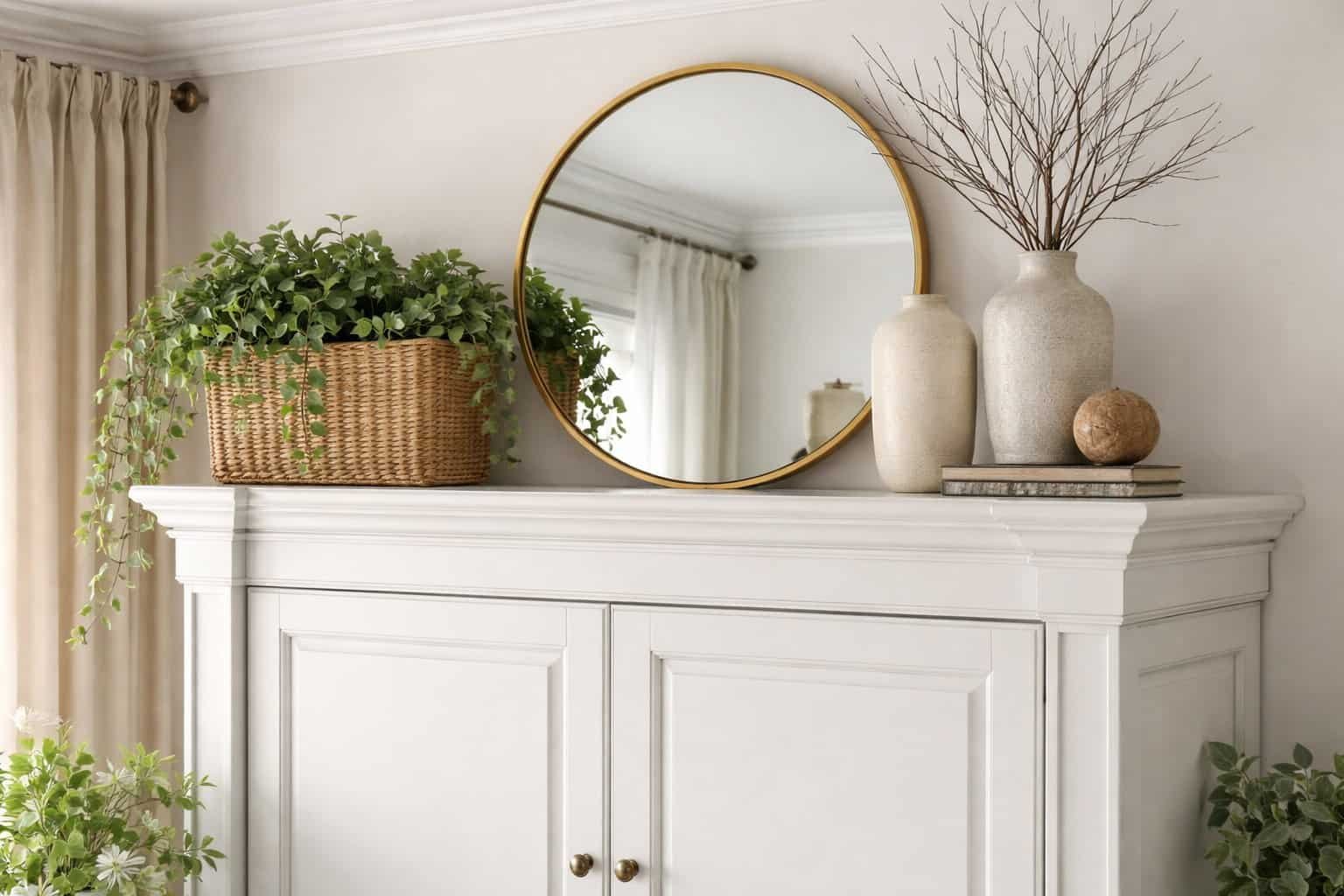

Learning how to decorate the top of an armoire can completely change how a room feels. That empty space above an armoire often becomes a visual dead zone, drawing the eye upward without offering anything interesting to look at. When styled intentionally, it can add warmth, height, and personality while making the entire room feel finished.
An armoire is typically one of the tallest furniture pieces in a home, often standing 72–84 inches (183–213 cm) tall. That height naturally makes it a focal point. Leaving the top bare can make ceilings feel lower, while overcrowding it can overwhelm the room. The goal is balance: décor that enhances the armoire without stealing attention from it.
Interior designers often treat this area as a “bridge” between furniture and ceiling. As designer Emily Henderson once noted, “Tall furniture should visually taper as it rises, not abruptly stop.” This idea sits at the heart of decorating the top of an armoire successfully.
In This Article
Understanding the Visual Role of the Armoire Top
Before placing a single object, it helps to understand what the armoire top actually does for a room. It is not just a storage surface; it plays a critical role in vertical visual flow.
How the Top of an Armoire Affects Room Balance
The eye naturally travels upward when encountering tall furniture. The top of an armoire acts as a visual pause between the furniture and the ceiling. Thoughtful styling can:
- Make ceilings appear taller
- Soften harsh vertical lines
- Anchor large furniture pieces visually
- Prevent the armoire from feeling boxy or heavy
When styled poorly, the opposite happens. Items that are too small disappear, while oversized décor creates a top-heavy look.
Ceiling Height and Proportion Matter
Ceiling height should guide your choices when deciding how to decorate the top of an armoire.
| Ceiling Height | Recommended Styling Approach |
| 8 ft (2.4 m) | Low-profile décor, negative space |
| 9 ft (2.7 m) | Medium-height groupings |
| 10+ ft (3+ m) | Taller statement pieces or layered décor |
Lower ceilings benefit from subtle, airy arrangements, while higher ceilings allow more dramatic styling without crowding the space.
When to Decorate — and When to Keep It Simple
Not every armoire needs heavy decoration on top. In minimalist or modern interiors, a restrained approach often works better. Leaving intentional empty space can feel more refined than filling every inch.
Signs you should keep it minimal:
- The armoire already has ornate detailing
- The room feels visually busy
- Ceilings are under 8 feet
How to Decorate the Top of an Armoire Based on Room Style
Room style should always dictate décor choices. A mismatched approach can make the armoire feel out of place, even if the individual items are beautiful.
Traditional and Classic Interiors
Traditional spaces benefit from symmetry and timeless materials. When deciding how to decorate the top of an armoire in these rooms, think elegant and grounded.
Effective options include:
- Framed artwork leaning against the wall
- Ceramic urns or covered jars
- Antique books stacked horizontally
- Sculptural finials or busts
Neutral tones, aged finishes, and balanced groupings work best here.
Modern and Contemporary Spaces
Modern interiors call for restraint. Clean lines and fewer objects create impact.
Best practices:
- One bold sculptural object
- A single oversized art piece
- Matte black or stone décor
- Minimal color palette
Avoid clutter. Negative space is part of the design.
Farmhouse, Rustic, and Vintage Styles
Farmhouse and rustic rooms thrive on texture and warmth. This style welcomes layered elements and organic materials.
Popular choices:
- Woven baskets or crates
- Wooden architectural salvage
- Vintage signs or weathered frames
- Faux olive branches or eucalyptus
Imperfection adds charm, so items do not need to match exactly.
Scandinavian and Minimalist Rooms
Scandinavian design focuses on lightness and function. The top of an armoire should feel intentional but understated.
Recommended décor:
- Light-toned ceramics
- Simple vases with branches
- Neutral artwork with clean lines
Limiting décor to one or two carefully chosen pieces preserves the calm, airy feel these styles are known for.
Choosing the Right Scale for Armoire Top Decorations
Scale is one of the most important — and most misunderstood — elements when learning how to decorate the top of an armoire. Even beautiful décor can look awkward if the size relationship feels off. The goal is to create visual harmony between the armoire, the objects placed above it, and the surrounding wall space.
Proportion Guidelines That Actually Work
A reliable design rule is to keep décor height between ⅓ to ½ of the armoire’s height above its top. For a 78-inch-tall armoire, that means décor should generally stay within 10–18 inches tall unless ceilings are exceptionally high.
Helpful proportion tips:
- Short armoires benefit from taller décor
- Tall armoires look better with medium-height groupings
- Oversized décor works best when used alone
Layering Heights for Visual Interest
Flat arrangements feel unfinished. Mixing heights creates depth and draws the eye naturally.
A balanced arrangement often includes:
- One taller anchor piece
- One or two medium-height elements
- A lower object to ground the grouping
This staggered approach prevents the top of the armoire from looking static or cluttered.
Avoiding Common Scale Mistakes
Some of the most frequent errors include:
- Using décor that is too small and visually disappears
- Lining up objects at the same height
- Placing too many similarly sized items
A simple trick designers use is stepping back 6–8 feet to assess balance. If items blend into the wall or feel overwhelming, scale needs adjusting.
How to Decorate the Top of an Armoire Using Greenery
Greenery remains one of the easiest and most effective ways to soften large furniture. When done well, it brings life, movement, and contrast to the top of an armoire without requiring constant updates.
Faux vs. Real Plants: What Works Best
Both real and artificial plants can work, but each has practical considerations.
| Type | Pros | Cons |
| Real plants | Natural look, air quality benefits | Light and watering challenges |
| Faux plants | Zero maintenance, consistent shape | Lower-quality options look artificial |
Because armoires often sit away from natural light, high-quality faux greenery tends to be the most practical choice.
Cascading vs. Structured Greenery
Greenery style influences the overall mood of the room.
- Cascading plants (ivy, pothos) soften edges and work well in relaxed spaces
- Structured plants (olive trees, boxwood) suit classic or modern interiors
Cascading greenery also helps visually connect the armoire to lower furniture pieces.
Seasonal Greenery Swaps
One underrated benefit of greenery is flexibility. Switching plant styles seasonally refreshes the room without major effort.
Seasonal ideas:
- Spring: light branches or faux blossoms
- Summer: airy eucalyptus or olive stems
- Fall: muted greenery with warm undertones
- Winter: pine, cedar, or frosted branches
This approach keeps the décor current without redoing the entire arrangement.
Decorating the Top of an Armoire with Artwork and Mirrors
Artwork and mirrors add height, reflect light, and introduce personality — making them powerful tools when exploring how to decorate the top of an armoire.
Leaning Artwork Safely and Stylishly
Leaning art feels casual and layered, especially in lived-in spaces.
Best practices:
- Use larger frames to avoid visual clutter
- Layer smaller frames in front of larger ones
- Add museum putty for extra stability
Frames with neutral mats and thin borders tend to blend more seamlessly into most interiors.
Mirrors for Light and Space
Mirrors work especially well in darker rooms or narrow spaces. Placing a mirror above an armoire can:
- Reflect natural light
- Make rooms feel larger
- Balance heavy furniture visually
Arched or round mirrors soften sharp furniture lines, while rectangular mirrors complement modern designs.
Choosing Between Art and Mirrors
The decision often comes down to function.
Choose artwork if:
- The room needs personality or color
- Walls feel too plain
Choose mirrors if:
- The space lacks light
- The room feels closed in
Many designers combine both by layering art in front of a mirror for added depth and dimension.
Decorating the Top of an Armoire for Small Rooms
Small rooms demand precision. When learning how to decorate the top of an armoire in limited spaces, restraint and intention matter more than ever. The objective is to add interest without increasing visual weight.
Keep the Visual Profile Light
Heavy décor crowds a small room quickly. Lighter elements help the armoire blend into the space rather than dominate it.
Smart choices include:
- Open, airy objects instead of solid blocks
- Neutral or light-toned décor
- Slim silhouettes rather than bulky shapes
Glass, light ceramics, and pale wood finishes reflect light and reduce visual density.
Use Negative Space as a Design Tool
Empty space is not wasted space. Leaving part of the armoire top intentionally clear allows the eye to rest.
Effective negative space strategies:
- One centered statement piece with space on either side
- Asymmetrical styling that leaves one side open
- Low-profile décor that stops well below the ceiling
This approach prevents the room from feeling crowded or top-heavy.
Emphasize Vertical Lines Without Clutter
Vertical emphasis makes ceilings appear higher, which is especially valuable in compact rooms.
Ways to achieve this:
- Tall, narrow vases
- Upright artwork leaning against the wall
- Branches or stems that draw the eye upward
Avoid wide or horizontal décor, which visually shortens the room.
How to Decorate the Top of an Armoire Seasonally
Seasonal styling keeps a room feeling current without a full redesign. The top of an armoire is ideal for subtle seasonal updates that do not disrupt the entire space.
Spring and Summer Styling Ideas
Warm seasons call for freshness and lightness.
Recommended elements:
- Soft greenery or faux florals
- Light-colored ceramics
- Natural textures like rattan or linen
These elements introduce energy without overwhelming the armoire.
Fall and Winter Décor Swaps
Cooler seasons benefit from depth and warmth.
Popular choices:
- Muted greenery with warm undertones
- Textured baskets or wood accents
- Sculptural décor in deeper hues
Swapping a few items instantly shifts the mood while maintaining the same overall structure.
Holiday Decorating Considerations
Holiday décor should feel integrated, not temporary or forced.
Tips for subtle holiday styling:
- Use neutral holiday elements instead of bright colors
- Limit décor to one or two seasonal pieces
- Maintain the original scale and balance
This keeps the armoire festive without looking cluttered or out of place.
Color Coordination When Decorating the Top of an Armoire
Color ties everything together. Thoughtful color coordination ensures the décor feels intentional and cohesive.
Matching Décor to the Armoire Finish
The armoire’s finish should guide color choices.
| Armoire Finish | Best Complementary Colors |
| White or cream | Soft neutrals, muted pastels |
| Dark wood | Light ceramics, greenery |
| Black | Warm woods, metallic accents |
| Natural wood | Whites, earth tones |
This contrast highlights the armoire rather than blending décor into it.
Using Contrast for Visual Interest
Contrast adds depth and prevents flat design.
Effective contrast techniques:
- Dark décor on light armoires
- Light décor on dark finishes
- Matte objects paired with subtle shine
Contrast should feel balanced, not abrupt.
Neutral Palettes vs. Accent Colors
Neutral palettes feel timeless and flexible, while accent colors add personality.
A practical rule:
- 80% neutral décor
- 20% accent color
This ratio keeps the top of the armoire visually calm while allowing personal expression.
Safety and Practical Considerations
Beauty should never come at the expense of safety or usability. When mastering how to decorate the top of an armoire, practical details ensure the space remains functional, clean, and hazard-free.
Securing Décor Pieces Properly
The top of an armoire sits above eye level, making falling objects a real concern—especially in homes with children or pets.
Smart safety measures include:
- Using museum putty or removable adhesive for smaller objects
- Placing heavier items toward the back
- Avoiding fragile glass near frequently used doors
Stability matters just as much as style.
Dust, Maintenance, and Accessibility
Décor placed too high often becomes a dust magnet. Choosing pieces that are easy to clean keeps the display fresh.
Low-maintenance options:
- Smooth ceramics instead of intricate carvings
- Faux greenery over real plants
- Larger objects rather than many small ones
Accessibility also matters. Items that require frequent adjustment or watering rarely belong on top of an armoire.
Keeping Function in Mind
An armoire is still a functional furniture piece. Décor should never interfere with doors, lighting, or ceiling fans.
Before finalizing the arrangement:
- Open doors fully to check clearance
- Ensure nothing touches the ceiling
- Confirm lighting is not blocked
A beautiful setup that disrupts daily use quickly becomes frustrating.
Final Styling Tips: How to Decorate the Top of an Armoire Like a Designer
The difference between a styled space and a designer-level result lies in editing. Knowing how to decorate the top of an armoire means knowing when to stop.
Step Back and Edit Ruthlessly
Once décor is in place, step back and observe the overall balance.
Ask yourself:
- Does the armoire feel lighter or heavier than before?
- Does the décor enhance or distract from the room?
- Is there enough breathing room between objects?
Removing one item often improves the entire arrangement.
Think in Layers, Not Objects
Designers focus on composition, not individual items.
A successful armoire top usually includes:
- One anchoring element (art, mirror, or sculpture)
- One textural piece (basket, wood, ceramic)
- One organic element (greenery or branches)
This layered approach creates depth without clutter.
Less Truly Is More
A restrained display almost always ages better than an overfilled one. Timeless styling relies on proportion, material quality, and intentional spacing—not quantity.
For further insight into professional styling principles and furniture balance, the Architectural Digest interior design guides offer reliable, expert-backed perspectives on scale and visual harmony:https://www.architecturaldigest.com
When styled with intention, the top of an armoire becomes more than empty space—it becomes a quiet design statement that elevates the entire room.

I’m the creator behind EasyDecora, a home–decor lover who enjoys discovering simple, beautiful ways to make every room feel cozy and intentional. I share practical tips, creative ideas, and inspiration for anyone who wants to build a home they truly love.